
Where the Past Rides Shotgun
Day four of our Backroads adventure had us loading into a bus to shuttle out of the Netherlands, pass briefly through Germany (blink and you’ll miss it), and into Belgium. Our destination was the Vennbahn—a bike path that follows the old Prussian railway line. Think “Virginia Creeper,” but with more schnitzel history. Apparently, after Germany lost WWI, they had to hand this sliver of land over to Belgium, which led to an odd little quirk: you ride your bike in Belgium, but Germany is ten yards to your left and to your right. It’s like cycling through a border dispute.
The bike paths on this trip have been a gift. No dodging traffic, no near-misses with mopeds, just peaceful riding—until you miss the path entirely, as I did once earlier in the trip. One moment I was blissfully pedaling on what I thought was the correct shoulder, the next a car was honking with what I can only assume was multilingual outrage. Our guide zipped by and hollered, “Other side!” Mystery solved. My bad.
As I mentioned, today’s biking route followed a now-closed railroad line, still marked with 1930s-era signals and signage. It was easy to picture trains of soldiers and weapons heading one direction, and locked boxcars of people going the other. We really can be terrible to one another.
Now, if you’re wondering what the difference is between the Netherlands and Belgium, I have one word for you: hills. Suddenly that electric assist on my bike wasn’t a luxury—it was a survival mechanism. And Chad, who had been dragging a bit with his head cold, started perking up. Nothing like a little cardio and some German border confusion to clear the sinuses.
The architecture took a turn too. Stone houses with hedges thick enough to hide a marching band. Gone were the tidy Dutch porches—most of the Belgian homes didn’t even have eaves. Everything looked like it was modeled after the Monopoly board’s red hotels: boxy, no-nonsense.
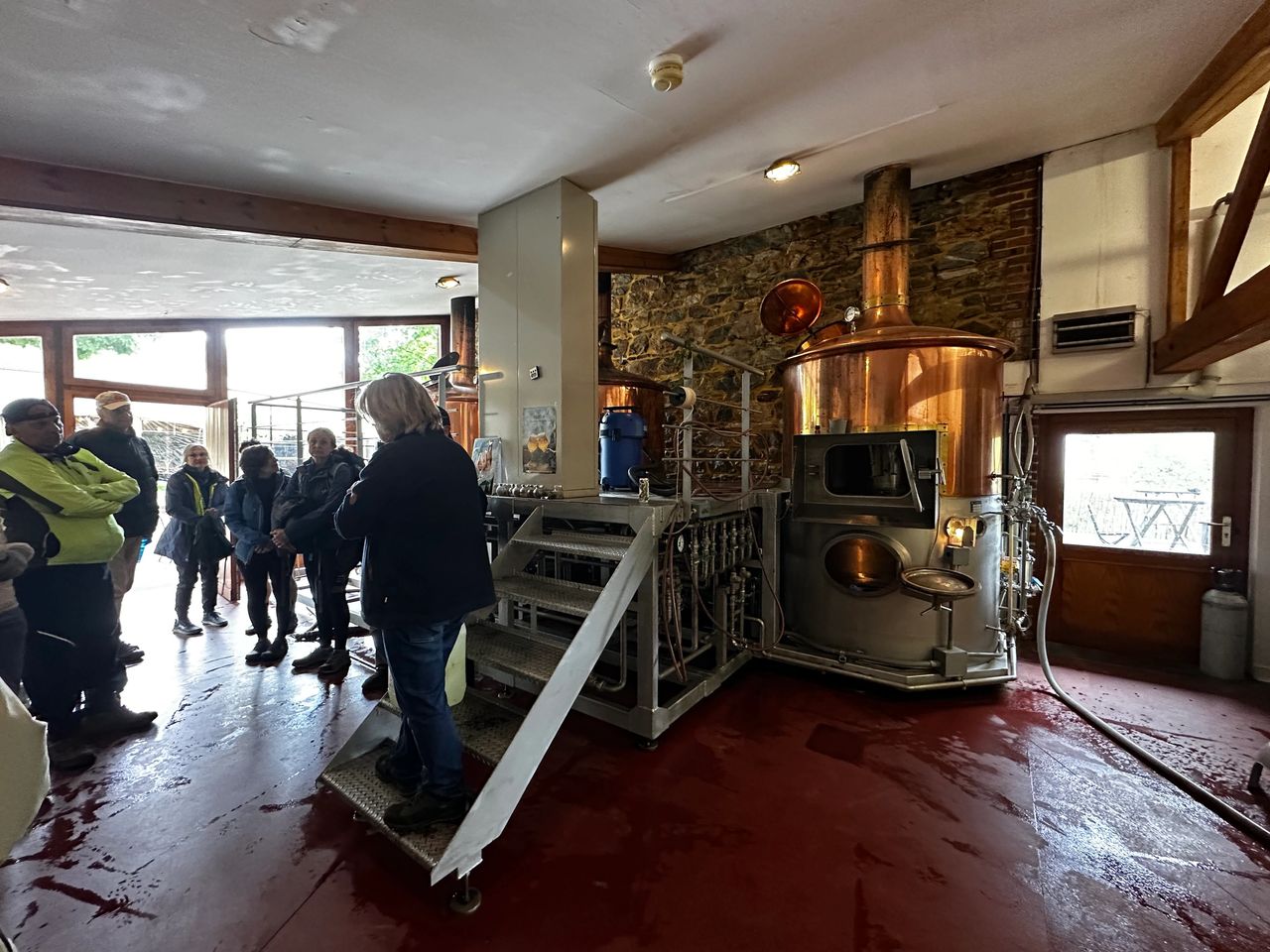
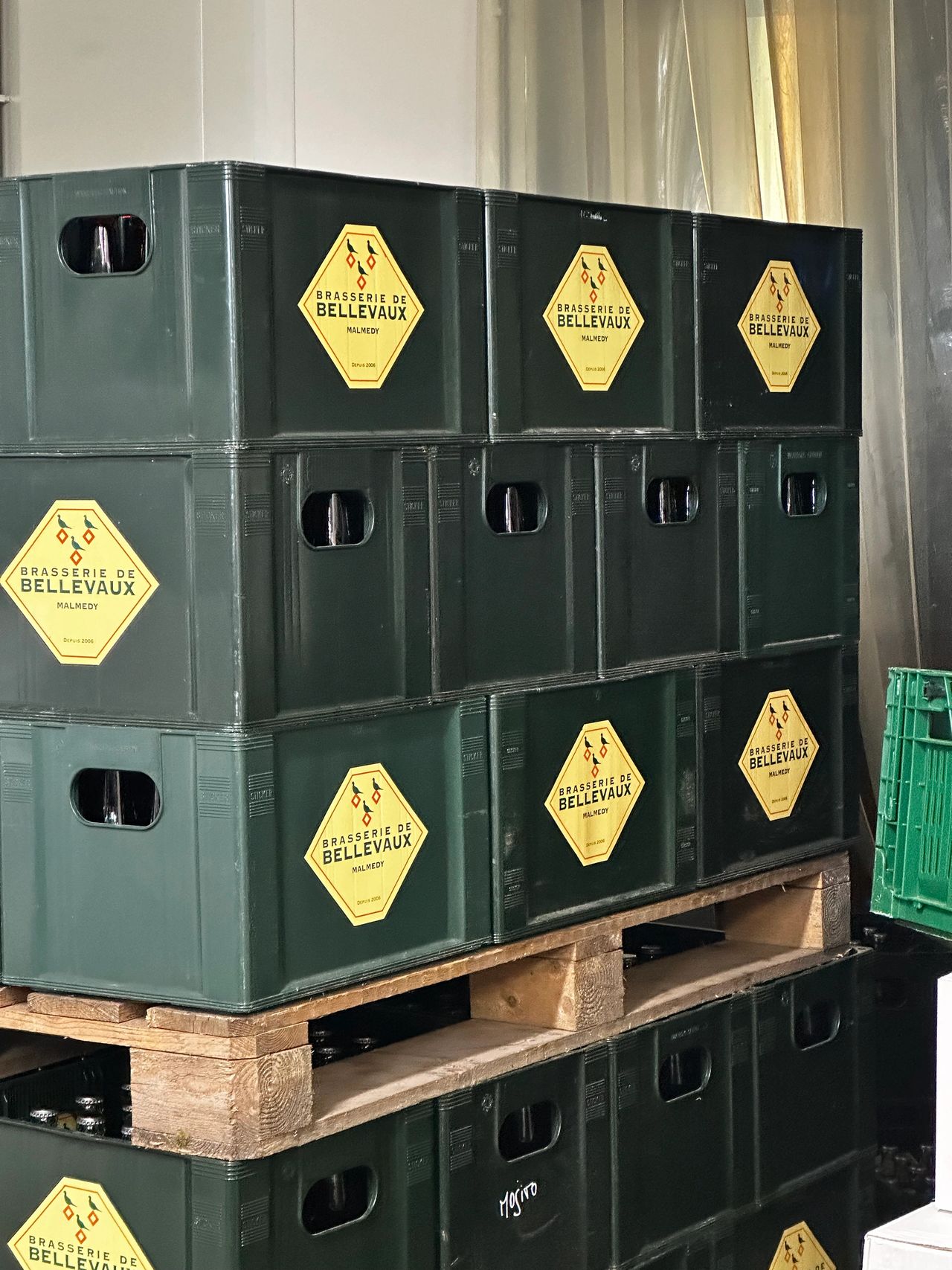
As we rolled into the Ardennes Forest, we stopped at Brasserie de Bellevaux, a charming brewery tucked into the trees. They greeted us with a buffet spread and a few of their beer offerings—an elegant way to say, “Welcome, sweaty strangers!” The owner came out to share how her husband’s casual hobby of brewing beer turned into a full-time operation. Sounded familiar. I nodded in solidarity.
After lunch, she gave us a tour of the brew house—two stories of hops and history. When she got to the part about germinating grains, I felt myself start to lean in. I wanted to jump in and explain the process like it was my job. Old habits. I resisted the urge to grab the group and say, “Now remember when you where in first grade and growing a plant from a lima bean!”
The brewery itself was built inside an old farmhouse, partially destroyed during World War II. Most of the buildings in the area were, in fact. Everything had been rebuilt from whatever stones and rubble were left behind. Belgium: come for the beer, stay for the historical trauma.
Chad and I decided that fighting a head cold was better done in a warm hotel bed than from the saddle of a moving bicycle, so we ditched the bikes and hitched a ride on the hustle shuttle straight to the Manoir de Lébioles, just outside the town of Spa. Now this was a trip of a hotel. Originally built as a private residence between 1905 and 1910, it’s passed through many hands, each presumably with their own vision of what to do with a giant neo-Gothic manor in the Ardennes.
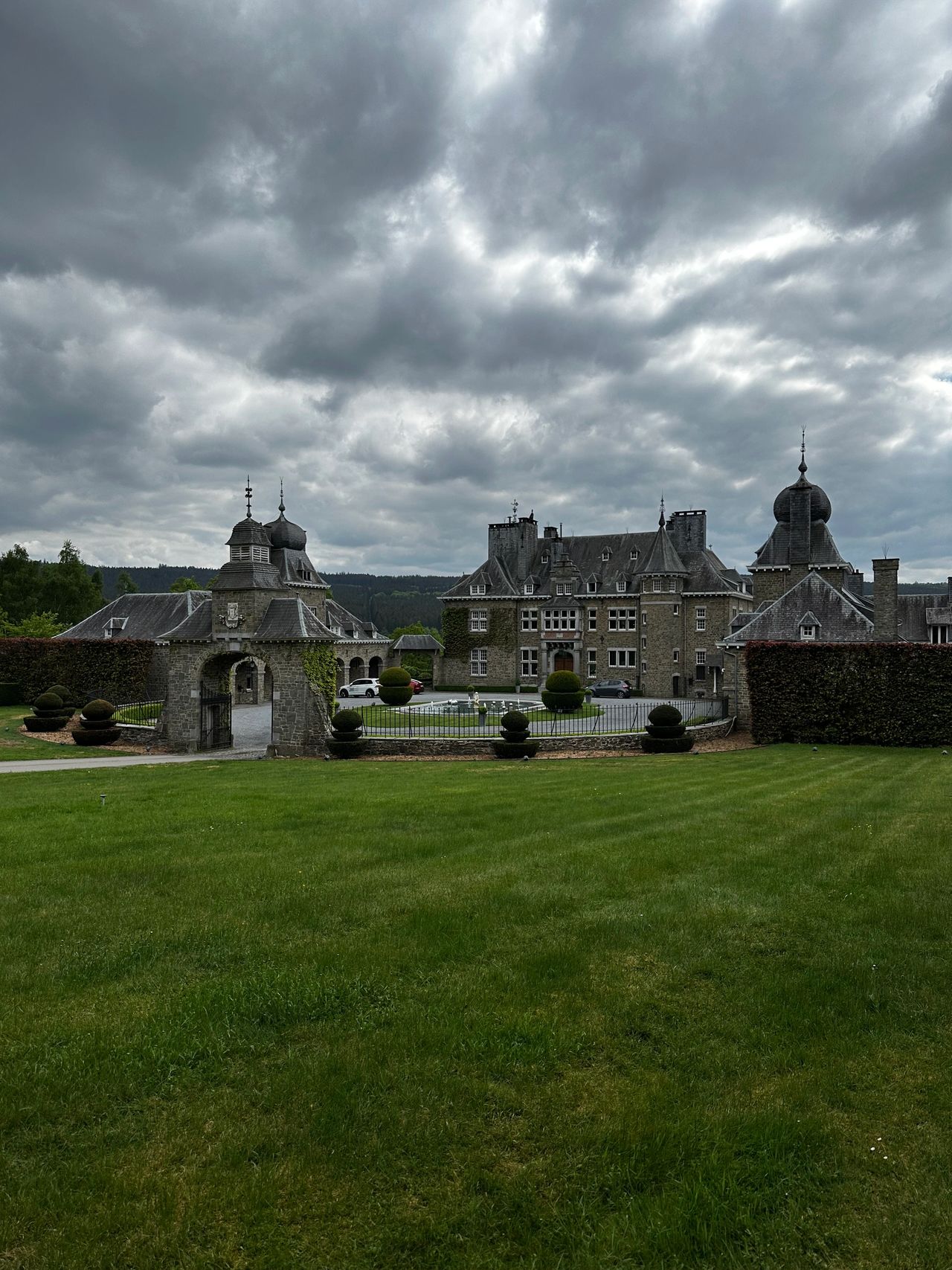
From the outside, it looks like something out of a BBC period drama—grand, imposing, maybe haunted, but in a classy way. Inside, it was clear they’d tried their best to update it with “hip” luxury touches, but some things are harder to modernize than others. You can slap a dimmer switch on a chandelier, but you can’t make hundred-year-old wood paneling feel minimalist. Still, our room was cozy, and we spent the next two nights blissfully horizontal. The bed was comfortable, the naps were restorative, and the food—oh, the food—was easily the best part. So while the décor felt like an eccentric grandmother’s idea of a boutique spa, dinner and breakfast were absolutely on point.
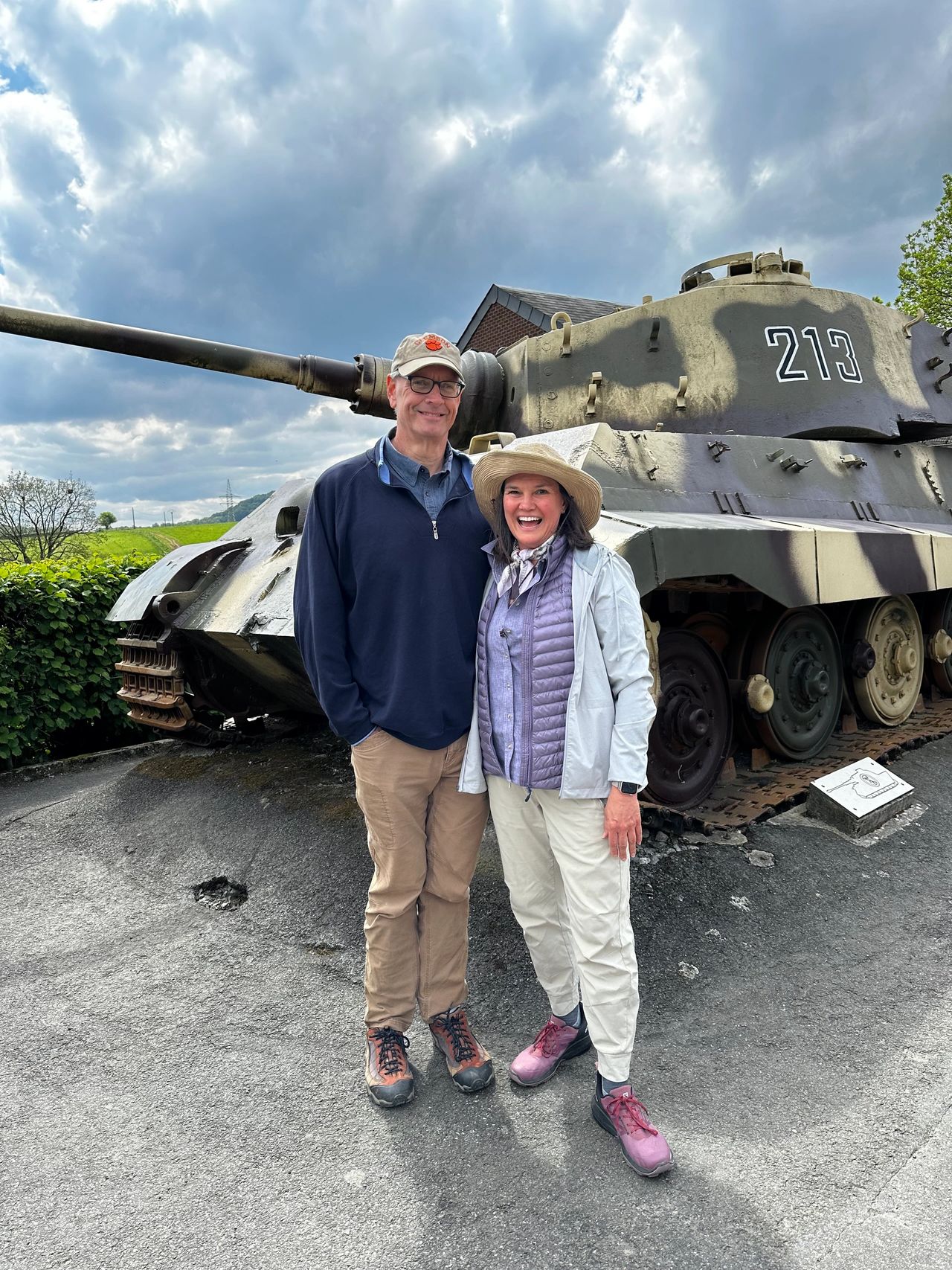
The next morning, we bid farewell to our trusty bikes and laced up our hiking shoes. We were now in the region of the Battle of the Bulge, the site of Hitler’s last major offensive in December of 1944. To give us some historical perspective (and probably to make us feel like our uphill hikes were not that hard, relatively speaking), Backroads brought in Bob Konings, a local historian and gifted storyteller.
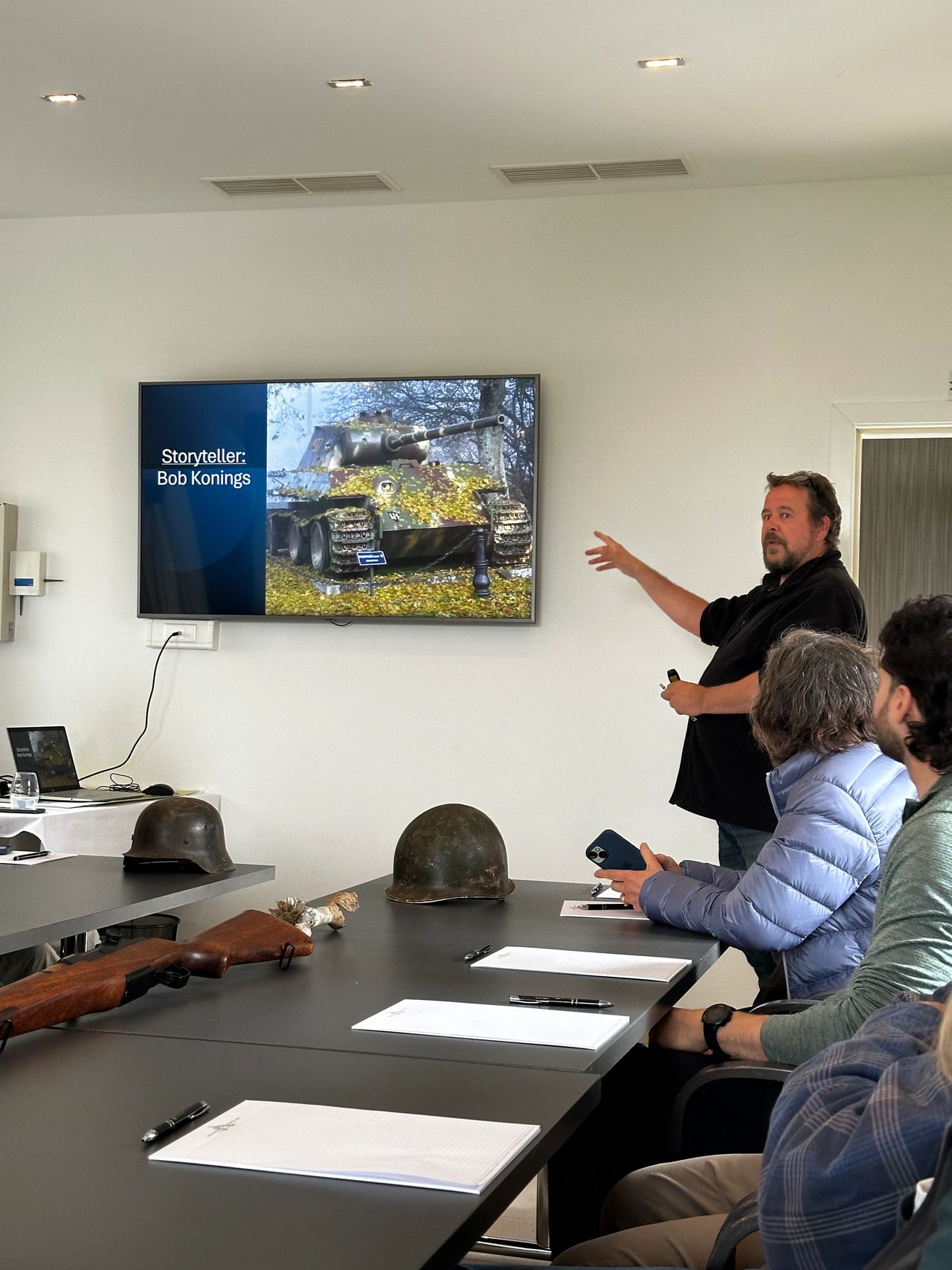
Bob didn’t just walk us through facts and dates; he shared the kind of stories that stick with you. The most powerful was about two American soldiers who survived the Malmedy Massacre. After being shot at by German troops, they ran—wounded—over a ridge and into the arms of two Belgian brothers. One of the Americans was badly injured, so the brothers put him on a bicycle and pushed him to safety. Years later, the soldier’s family returned to thank the Belgian family and see the very bike that helped save his life. Bob called this the “Touch of War.” I called it the moment I actively avoided making eye contact with anyone in the room. I wasn’t crying. You were crying.
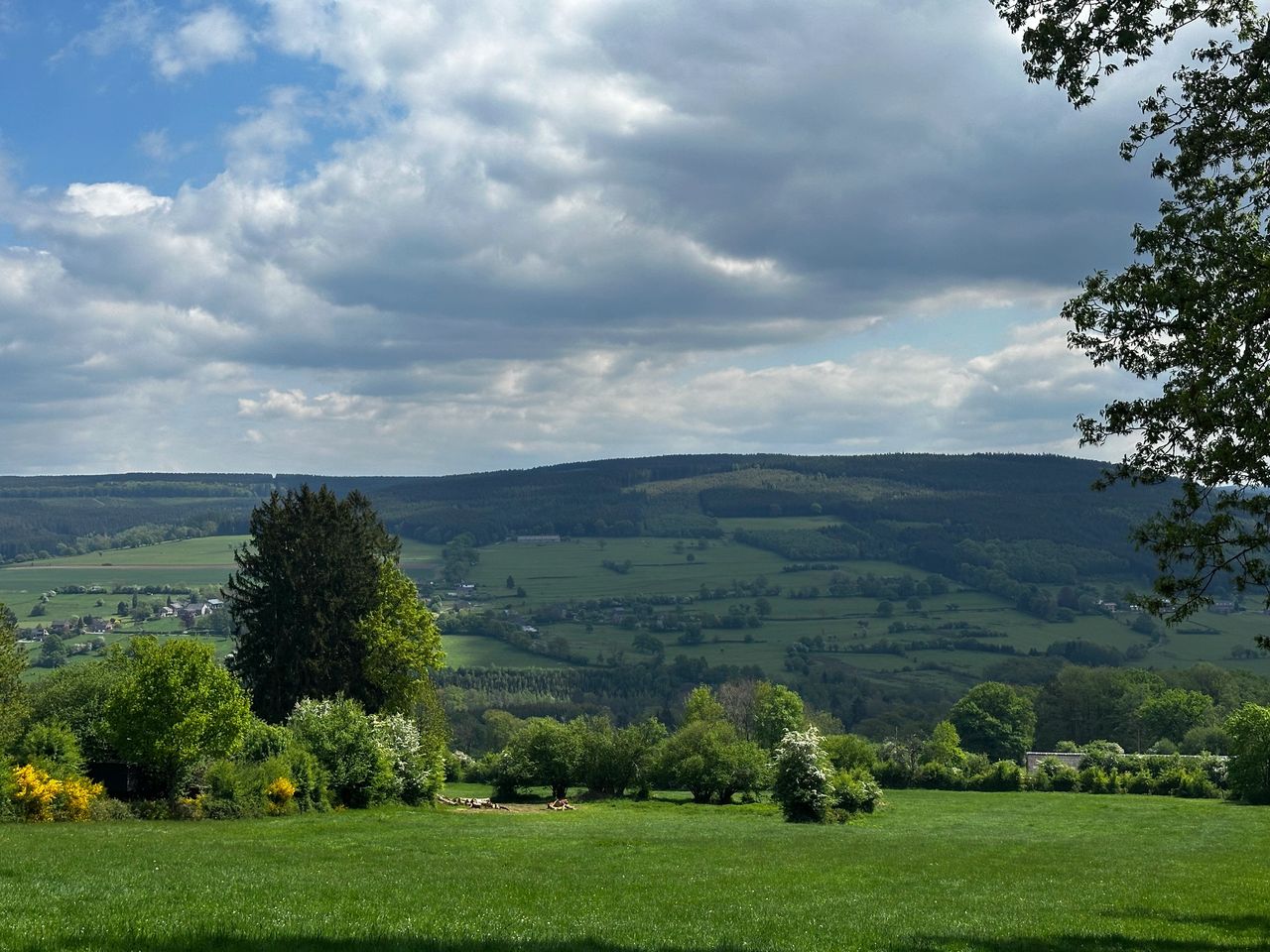
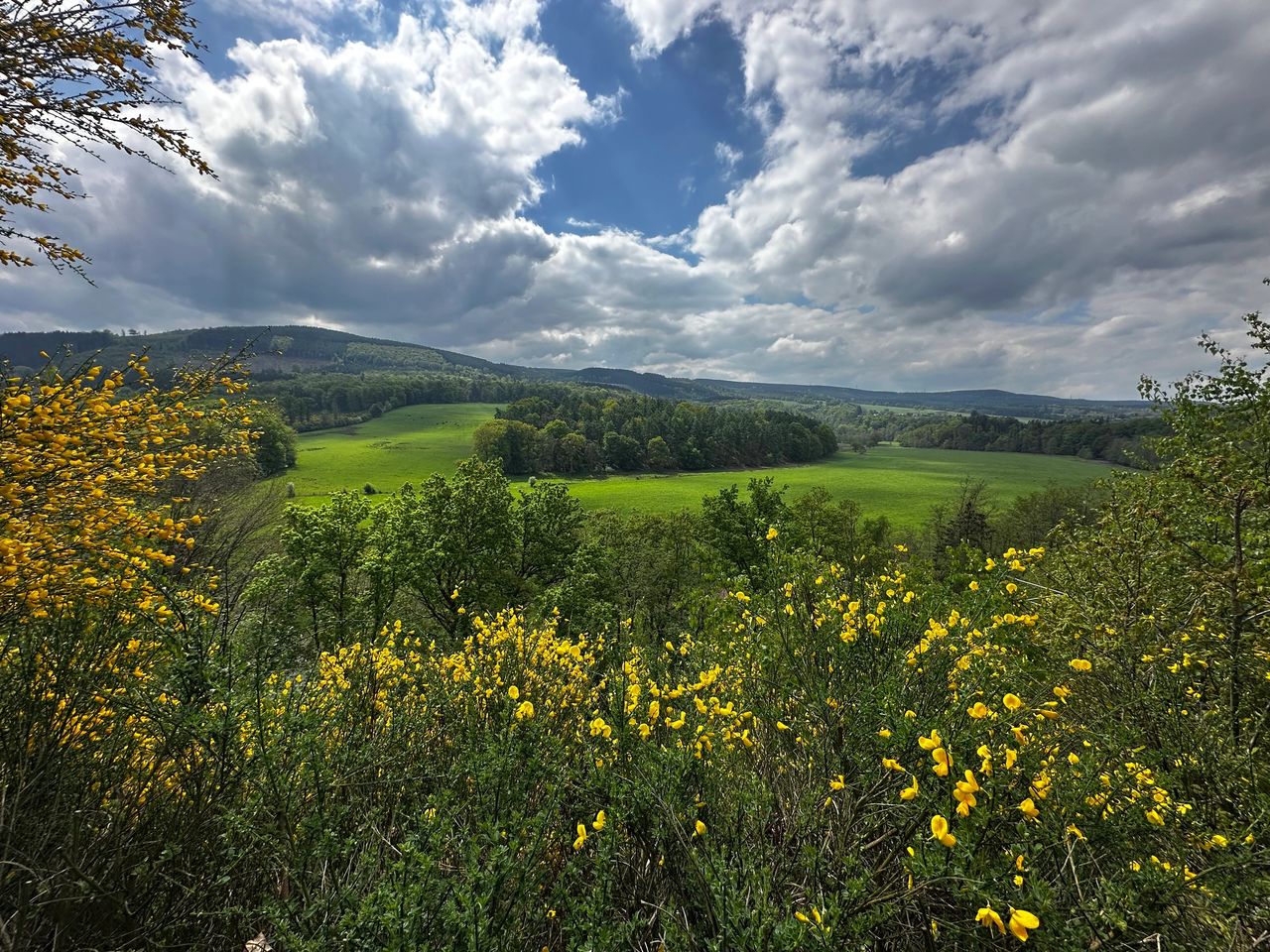
With Bob’s stories in our heads, we set out to hike through the surrounding pastures and small villages. Everything felt a little more layered—farmhouses that had seen too much, rolling hills that once echoed with gunfire. It gave the day a kind of hush, even with our group of chatty hikers.
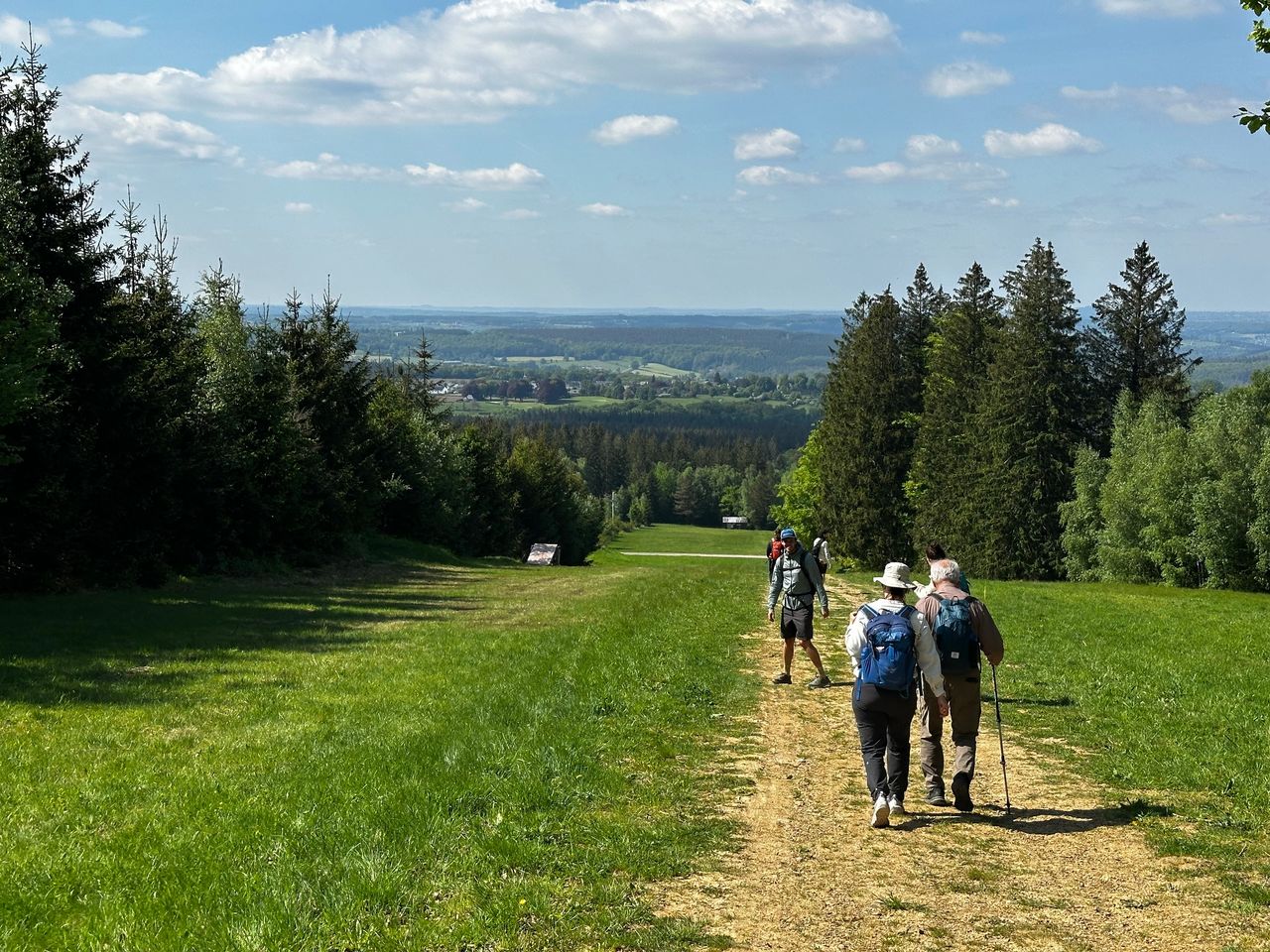
Backroads lived up to their reputation of thoughtful pacing and good snacks. We had a Belgian waffle break (because patriotism, I assume), and lunch was at a cozy local restaurant that served the best meatballs we’ve ever had—and we’ve had some meatballs. Chad chose the short route for the afternoon while I opted for the full “Belgian Vista,” which ended up being about 12 miles. Worth it – you bet.
That evening we headed into Spa for dinner at La Reine, where I had a dessert that claimed to be tiramisu but somehow tasted better than any tiramisu I’ve ever had. I didn’t ask questions. We finished our evening with full stomachs and quiet thoughts, and slept better than we had in days.