

The Italian Alps: Cowbells, Witch Brooms, and No Air Conditioning
We left Milan with Randy and Alisa and headed north to Bolzano, a small-but-not-too-small town tucked into the mountains of northern Italy. The drive was about three hours, although somehow it felt much shorter. Maybe because it was Sunday and half of Italy was apparently home eating pasta with their grandmother instead of tailgating us at 90 miles an hour.
The reason for Bolzano was simple: this is where we were meeting up for another Backroads adventure — this time through the Italian Dolomites and eventually down toward Lake Garda. Now, before this trip, if you had asked me where the Dolomites were located, I honestly could not have told you. There was at least a 30% chance I thought “Dolomites” might be a regional pasta dish. But it was a Backroads trip, and historically those tend to work out well for us. I was correct.
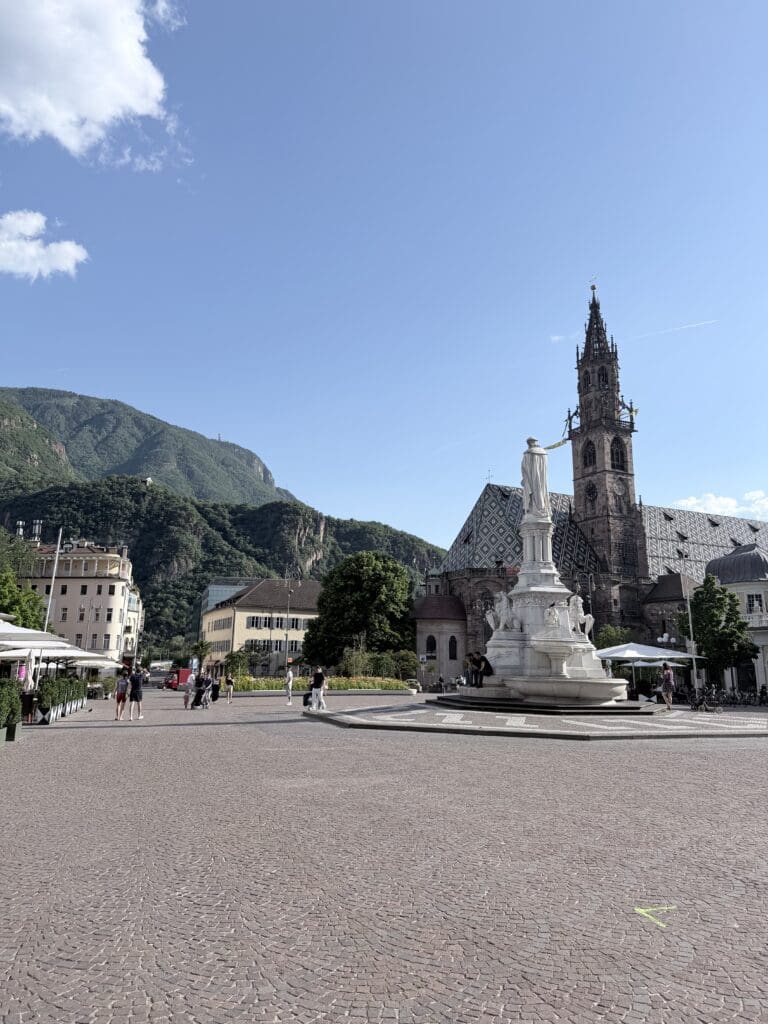
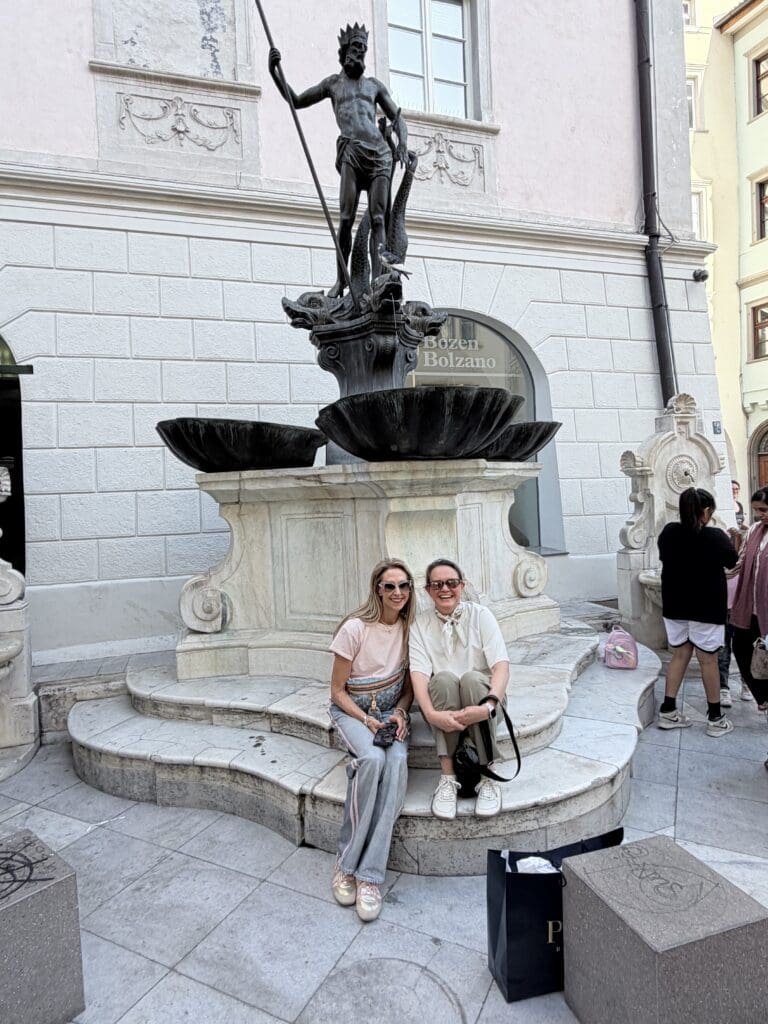
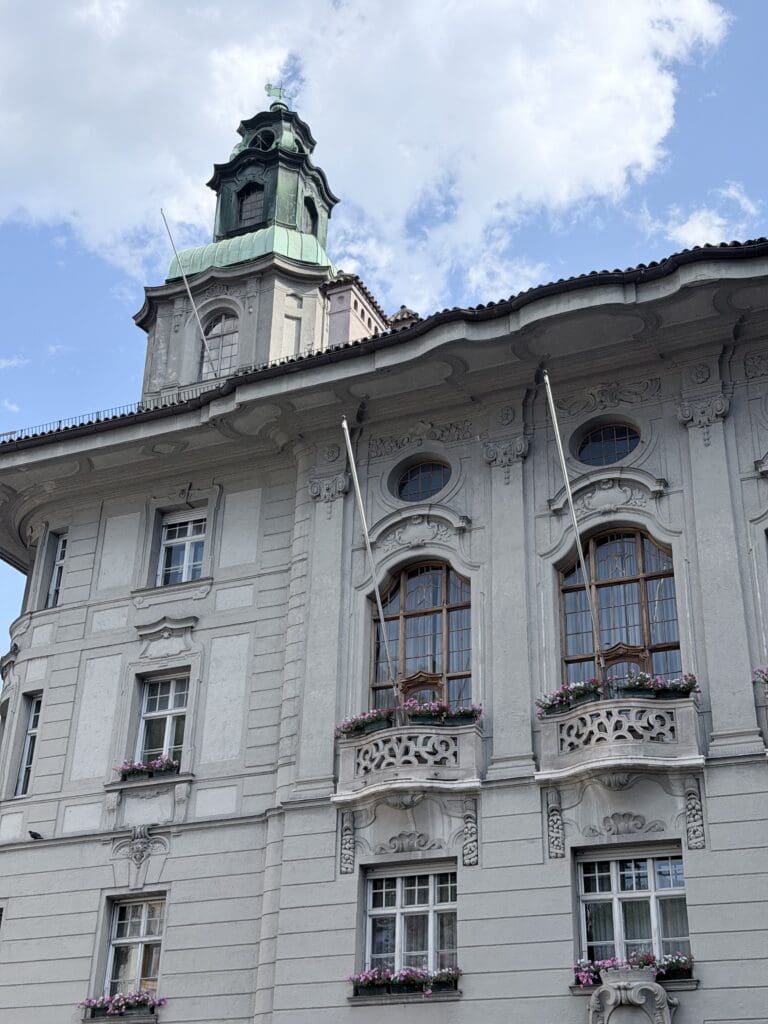
But first, Bolzano itself deserves some attention because it is delightful. We wandered into the old town on Sunday afternoon, where about 75% of the stores were closed, yet somehow the streets still felt lively and full of energy. Europeans have figured out something Americans refuse to accept: every single store does not need to be open every second of every day. Civilization can continue even if someone cannot immediately buy a scented candle at 4:30 on a Sunday.
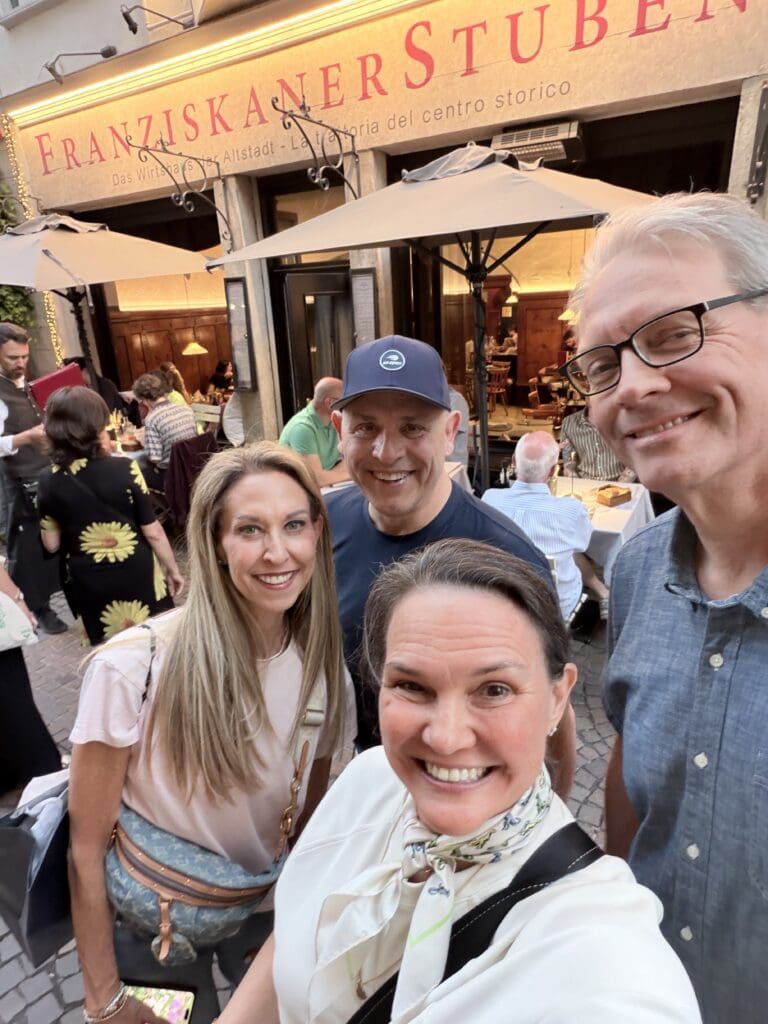
We found Franziskaner Stuben and had a fantastic meal. One of the interesting things about northern Italy is that it doesn’t always feel entirely Italian. The area was tied to Austria and the German-speaking world for centuries, so everything is written in Italian, German, and then English for tourists who are standing there trying to figure out whether they just ordered dumplings, sausage, or roof insulation.
The next morning we met our Backroads group in the hotel lobby. As usual, it was a collection of middle-aged people looking for adventure, but with a carefully managed support system. People who want to “really experience nature” as long as their luggage appears magically in the next hotel room by 4 PM.
Honestly, I love these groups. There is a shared worldview among Backroads people: we should still be out exploring things while our knees technically still function.
And then there are the guides.
Backroads guides, Aitor and Camilla, operate at an energy level that suggests either elite athletic conditioning or perhaps a light morning dusting of cocaine. They are aggressively cheerful before breakfast. Human golden retrievers with hiking poles.
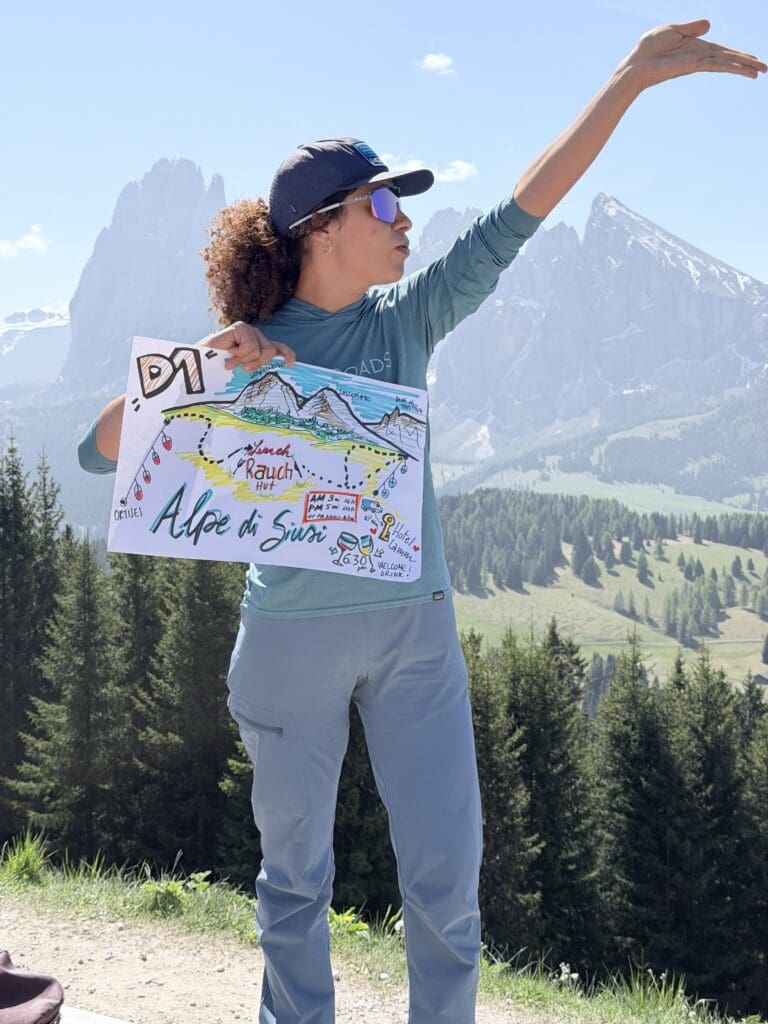
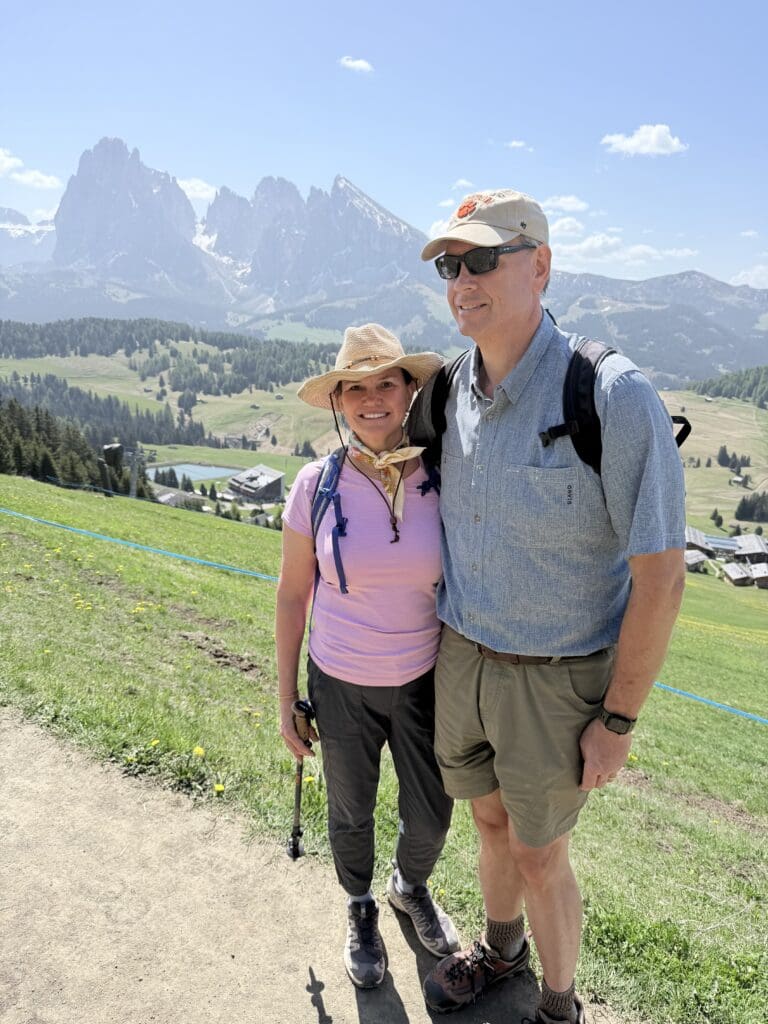
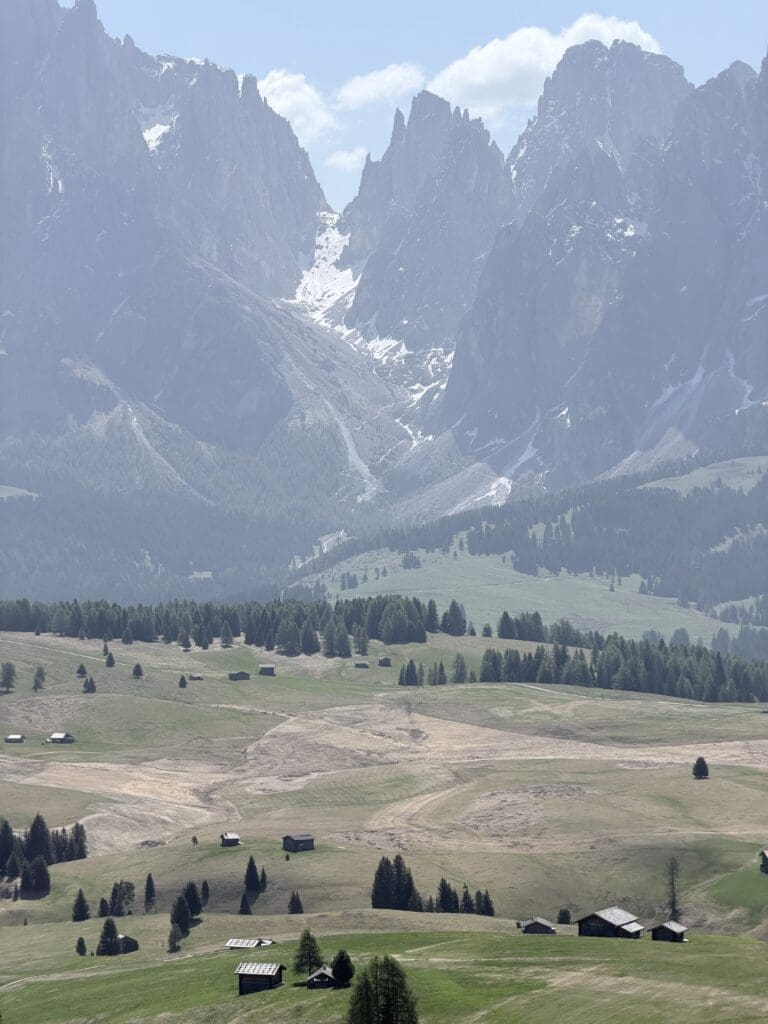
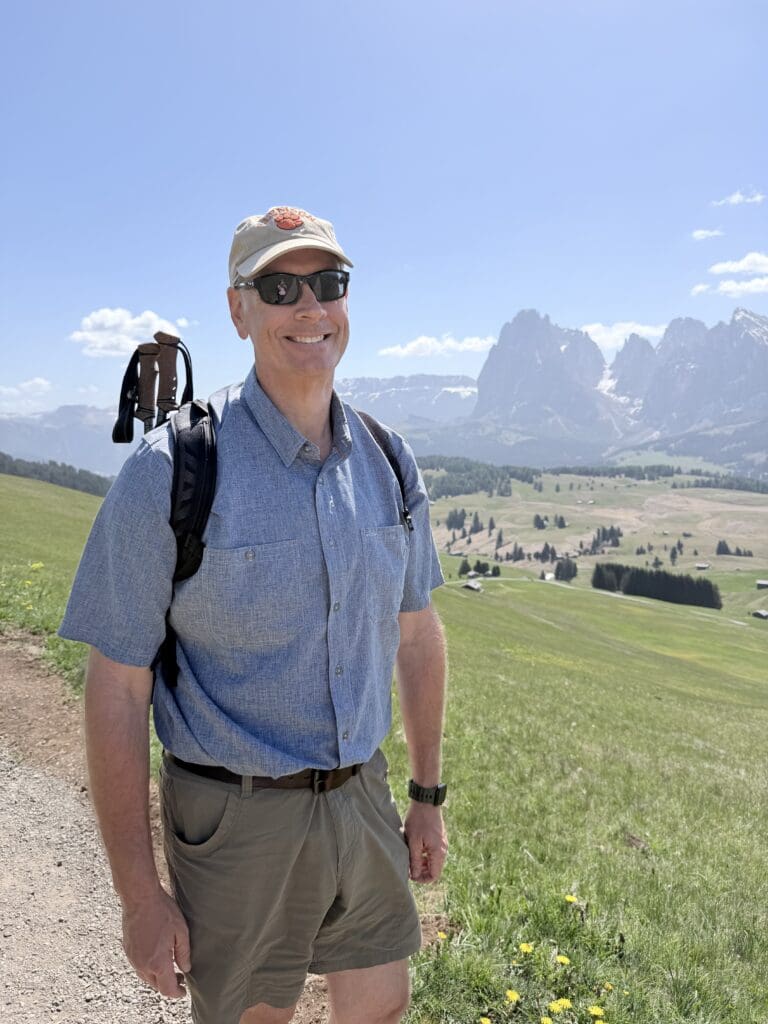
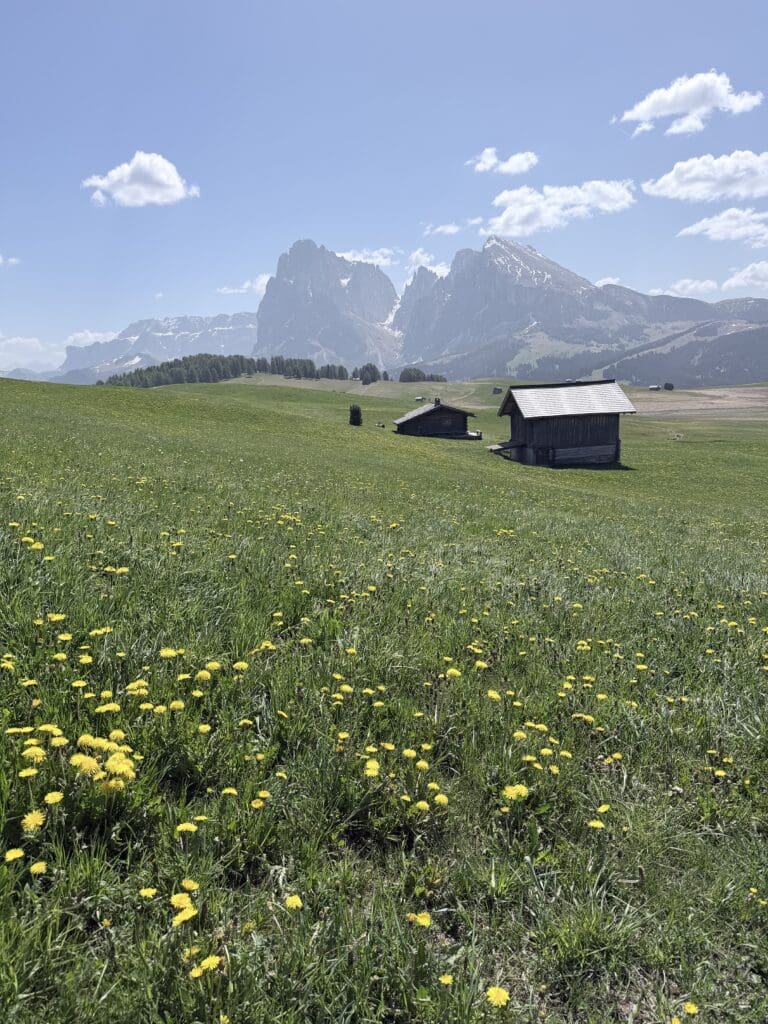
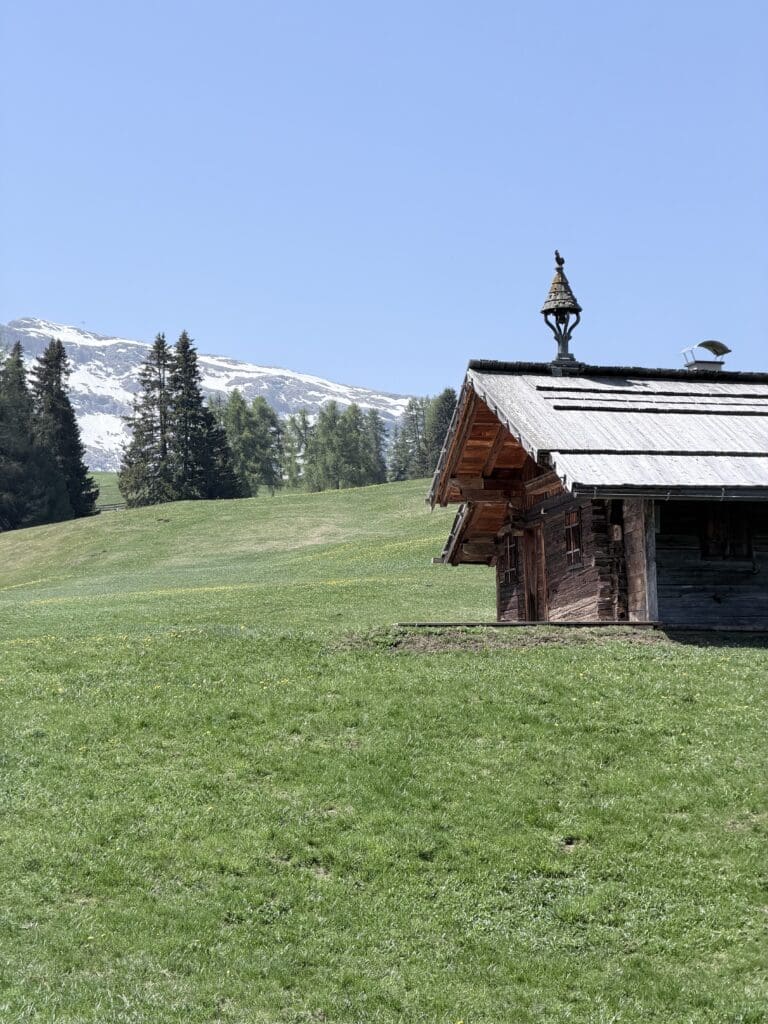
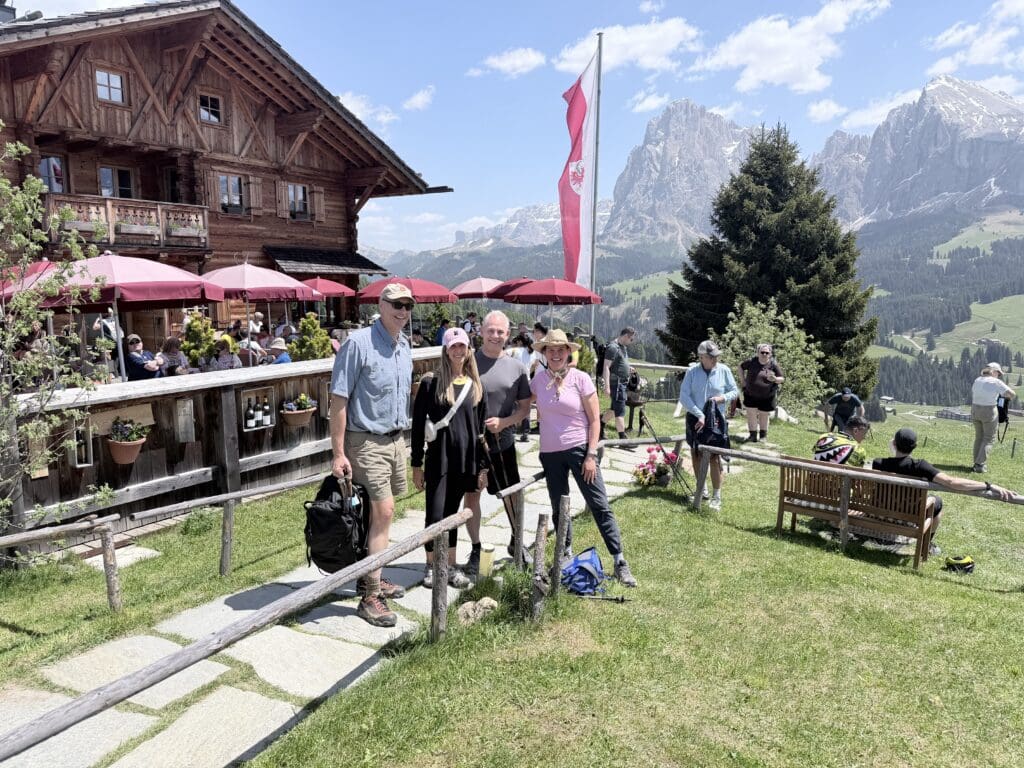
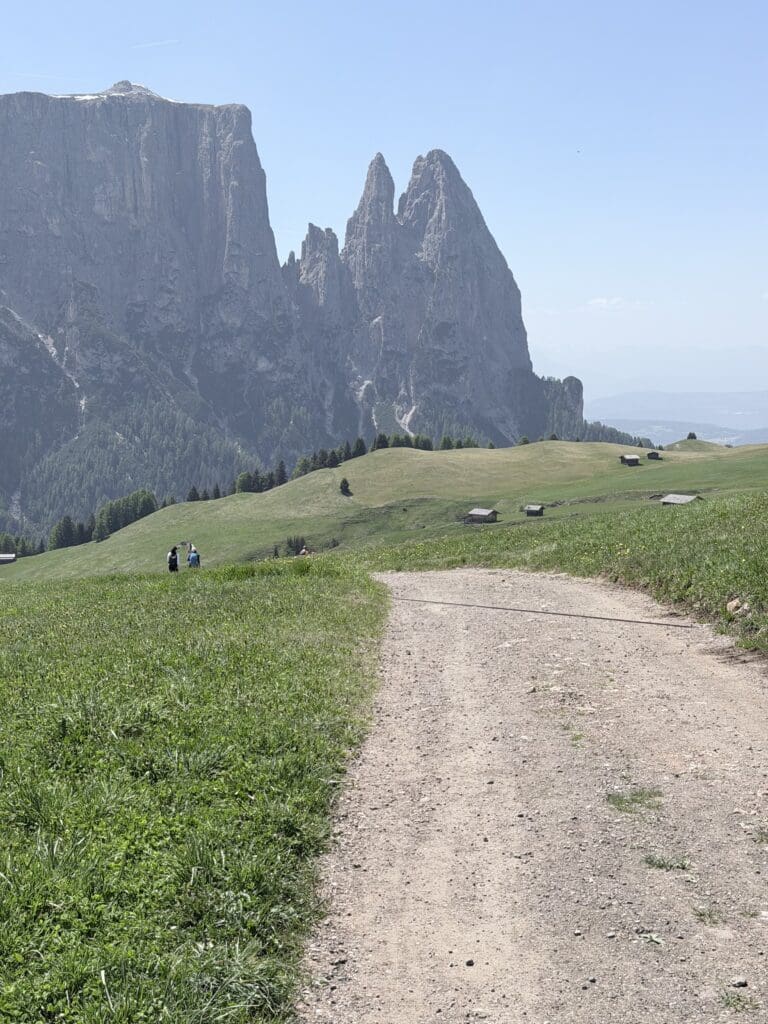
They loaded us onto a bus and headed toward Ortisei, where we immediately boarded a gondola up into the mountains to hike across Alpe di Siusi, the largest alpine meadow in Europe.
A few observations from the first fifteen minutes:
- Wow. This is stunning.
- Why does everything look like a German ski village?
- WOW.
I later learned the answer why I felt like I was in Germany. Italy did not become a unified country until 1861. Before that it was basically a patchwork quilt of kingdoms, duchies, and territories controlled by whoever happened to be invading at the time. This entire South Tyrol region was heavily tied to Austria and the German-speaking world, which is why many people here still speak German as their first language and why every building looks like it should be serving schnitzel and hosting an Olympic ski team.
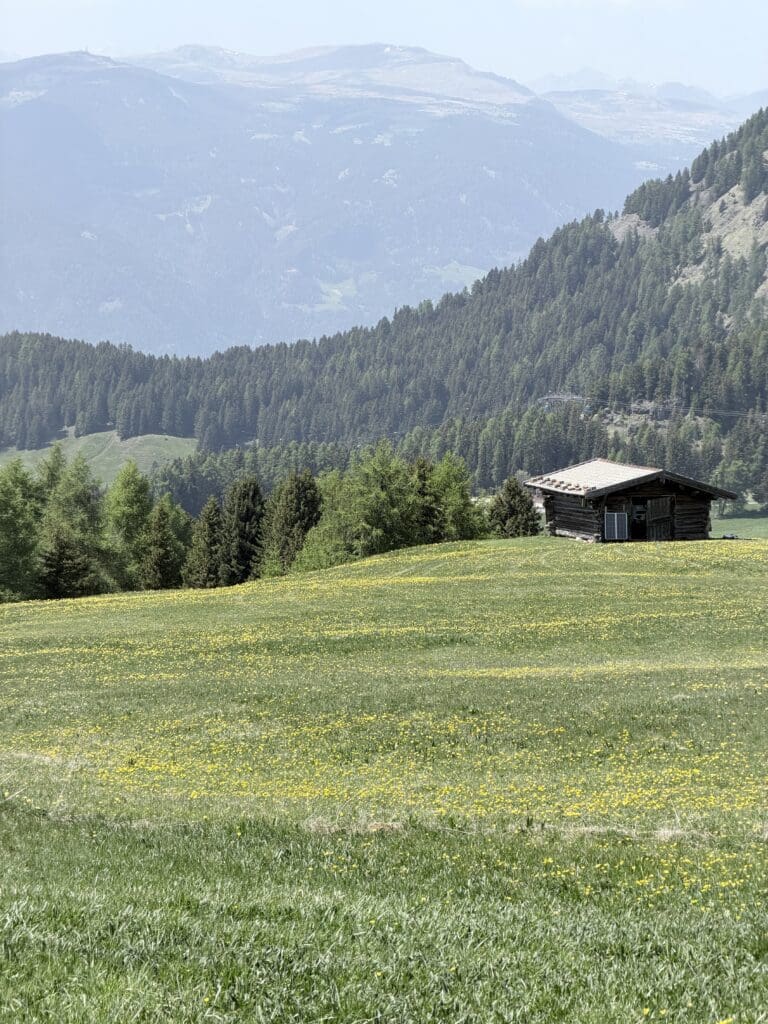
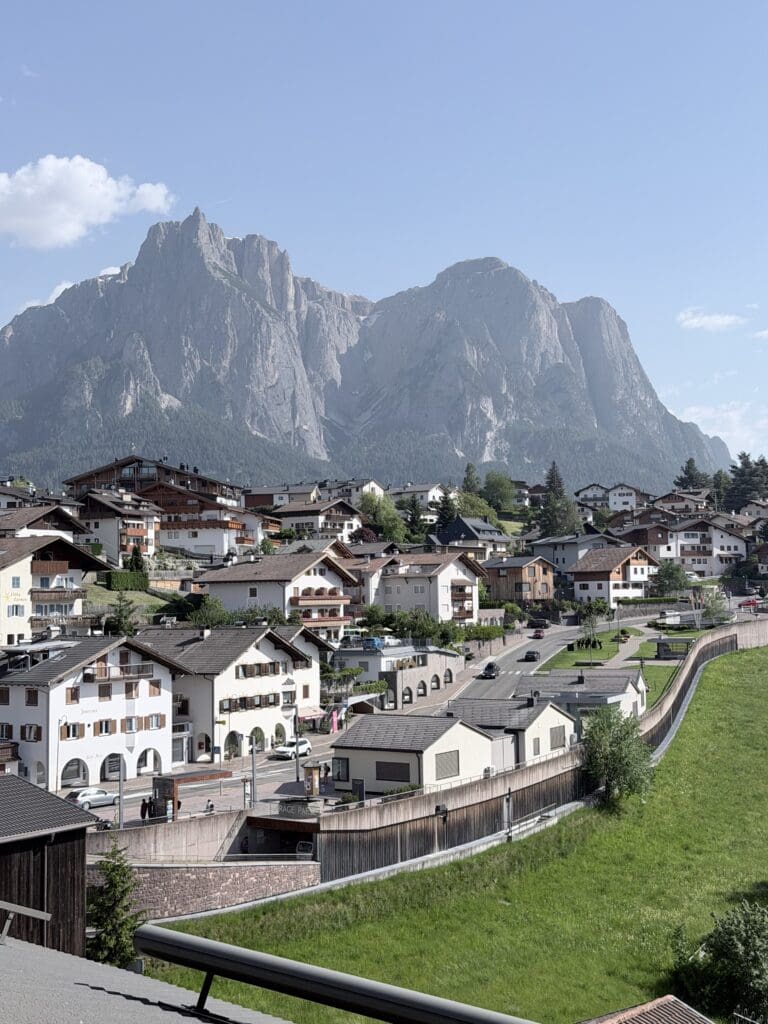
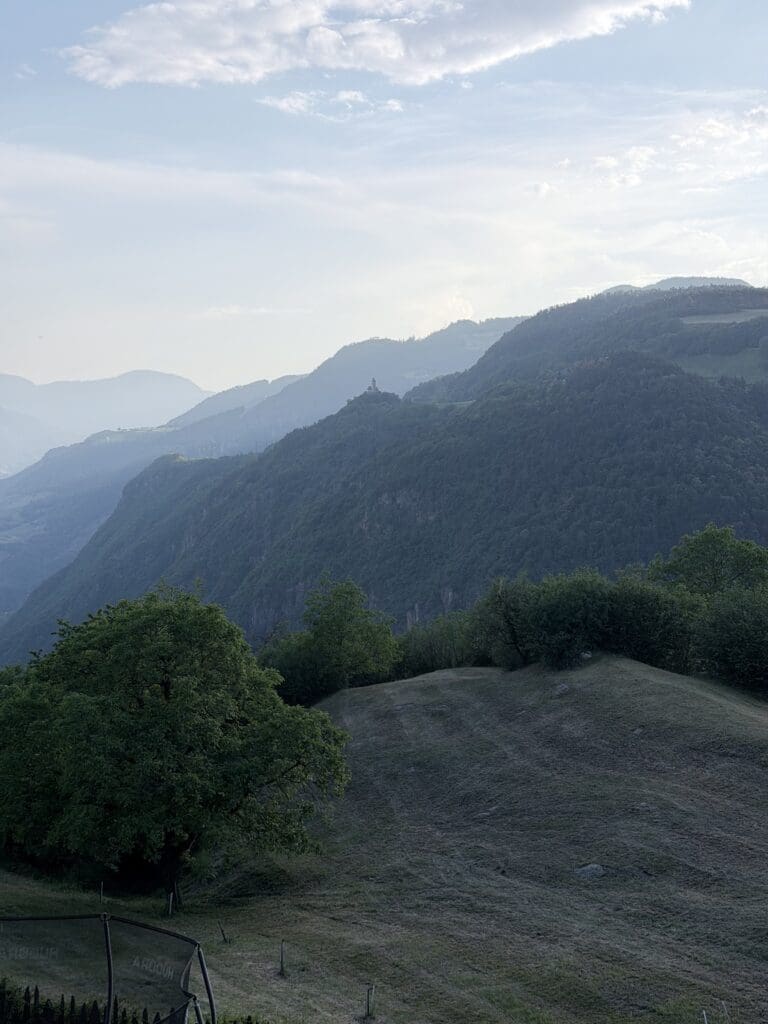
The scenery was almost annoyingly beautiful. Every time we rounded a bend the view somehow became even more dramatic. Giant green meadows, jagged gray mountains, little wooden huts with flower boxes overflowing in a way that feels fake when Americans try it.
At lunch, Chad peeled off from the group because if you know Chad, you know hiking is not exactly his passion. Chad likes scenery best when it can be viewed from two wheels and that was not until later in the trip.
So after lunch I spent the afternoon walking with Martha, who was delightful company. We talked mile after mile, occasionally interrupted by both of us stopping mid-sentence to say, “WOW,” like tourists in a very expensive toothpaste commercial.
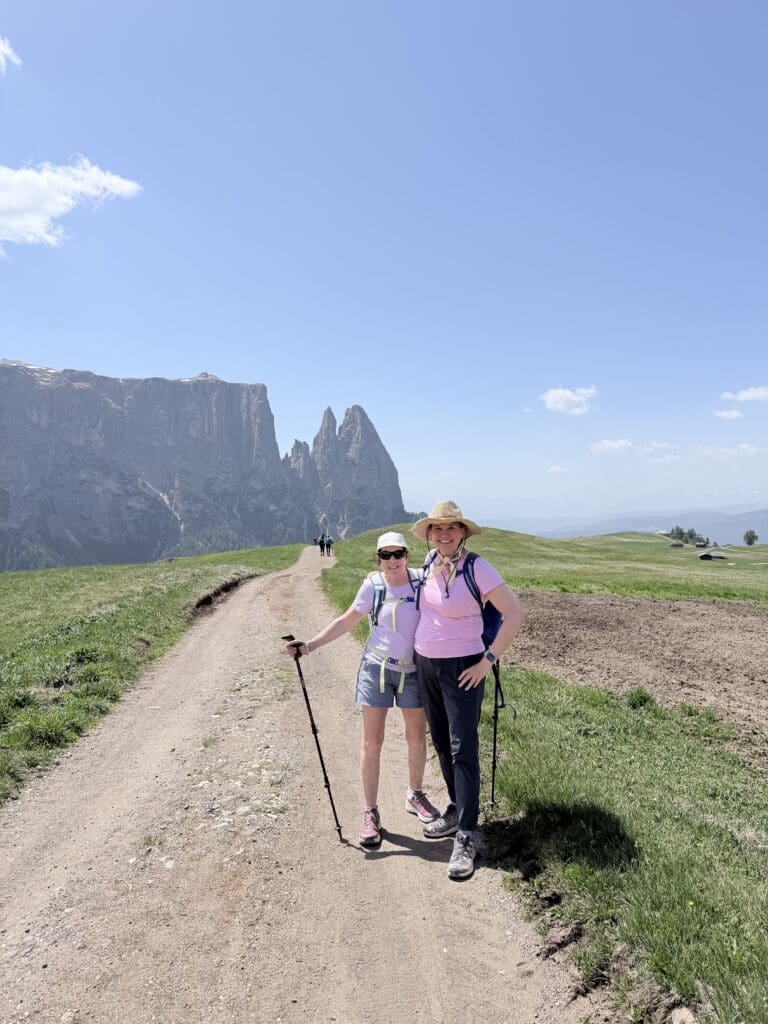
Along the trail we passed a giant sculpture of a witch’s broom. I asked Anna, one of our guides, what it meant. She admitted she didn’t know, which honestly I respected. But I told her she should just confidently invent something. I mean, I’m a tourist — how would I know? Tell me it wards off evil goats. Tell me it honors women who flew into the mountains during tax season. Make it fun.
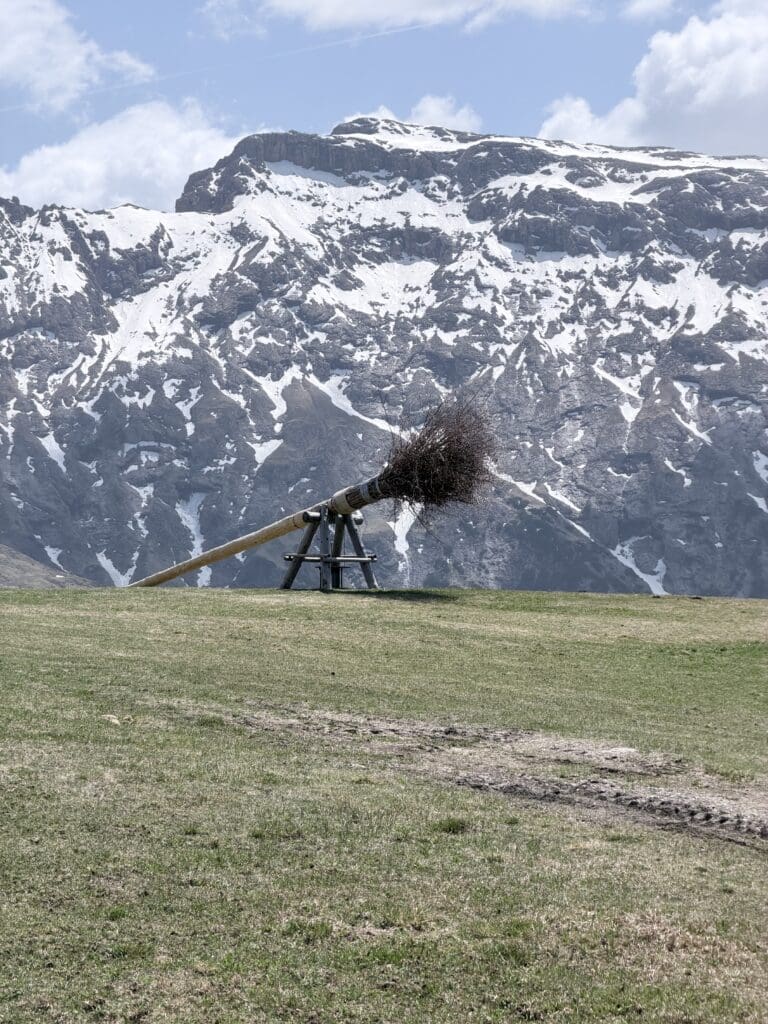
Later we learned there actually is local folklore about witches gathering in the mountains above Castelrotto and Siusi allo Sciliar for nighttime dances and storms. So the broom is a nod to those old legends. Of course, once you think about actual historical women being labeled witches, the whole thing becomes a little less whimsical and a little more dark-European-history.
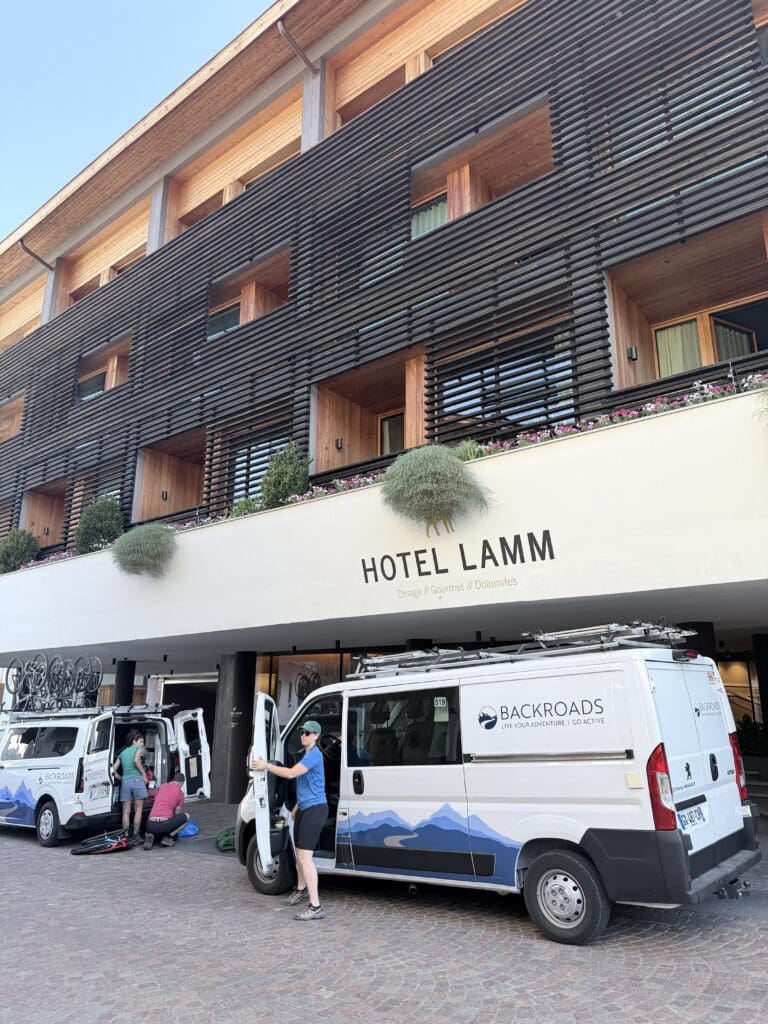
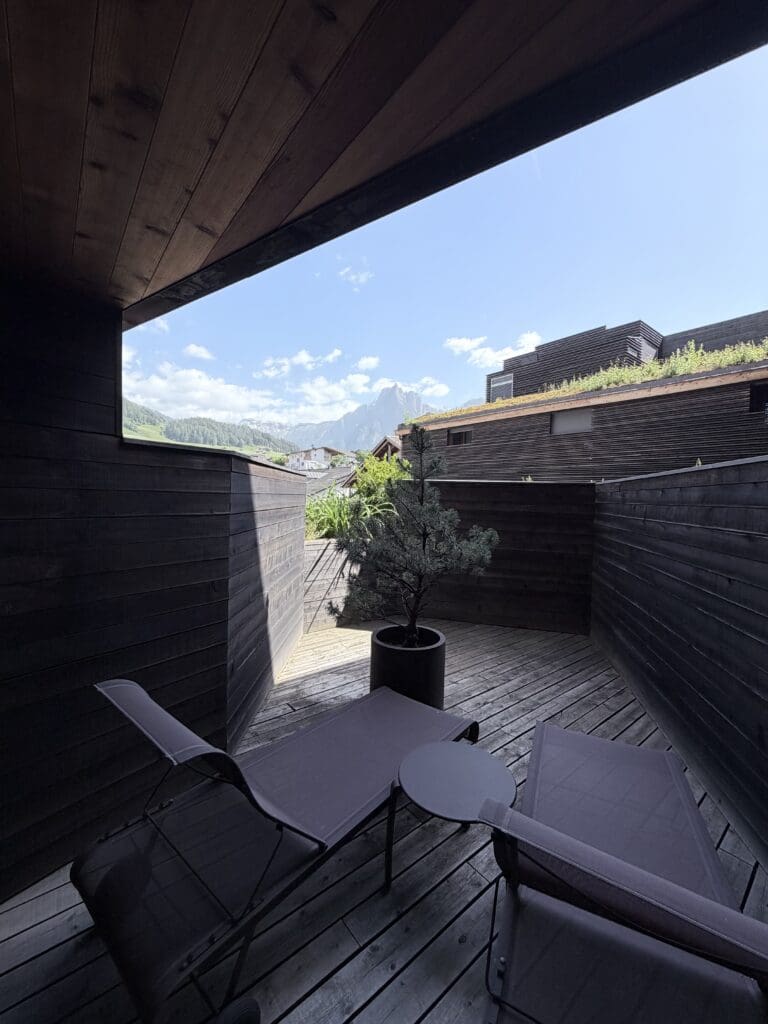
By late afternoon we descended into Kastelruth and checked into Hotel Lamm, where we would stay for two nights.
The guides had warned us ahead of time that the hotel was lovely but did not have air conditioning because of the high elevation and local regulations. Normally that would not matter. Unfortunately, we had arrived during a heat wave.
Now technically the temperatures were only in the high 80s, but at that elevation, standing in direct sunlight felt like being slowly roasted in an artisanal pizza oven. The mountains were stunning, the flowers were blooming, the air was crisp… and yet somehow I still felt one degree away from becoming a rotisserie chicken.
So after hiking all day in the blazing mountain sun, we headed up to the rooftop pool where many of our fellow travelers had gathered. It was one of those moments where everyone collectively looked exhausted and happy at the same time. Now this was a pool I could get behind. No screaming cannonballs. No swim team practice. No child asking me to watch them do the same underwater handstand seventeen times. Just adults soaking in mountain views while pretending our legs were not slightly angry with us.
Because it was our first official night with Backroads, we had the traditional group introductions followed by dinner at the hotel. It turned out to be one of those meals where you start questioning your own cooking abilities. I had one of the best salmon dishes I can remember eating — perfectly cooked, rich but light, probably prepared by someone who has strong opinions about olive oil.
Backroads: once again, undefeated.
Day Two
I survived the night without air conditioning by alternating between being too hot, too cold, and lying awake trying to determine if I was experiencing heat exhaustion or menopause. At some point the fan became less of an appliance and more of an emotional support system.
But thankfully nothing stays terrible after a proper Italian coffee.
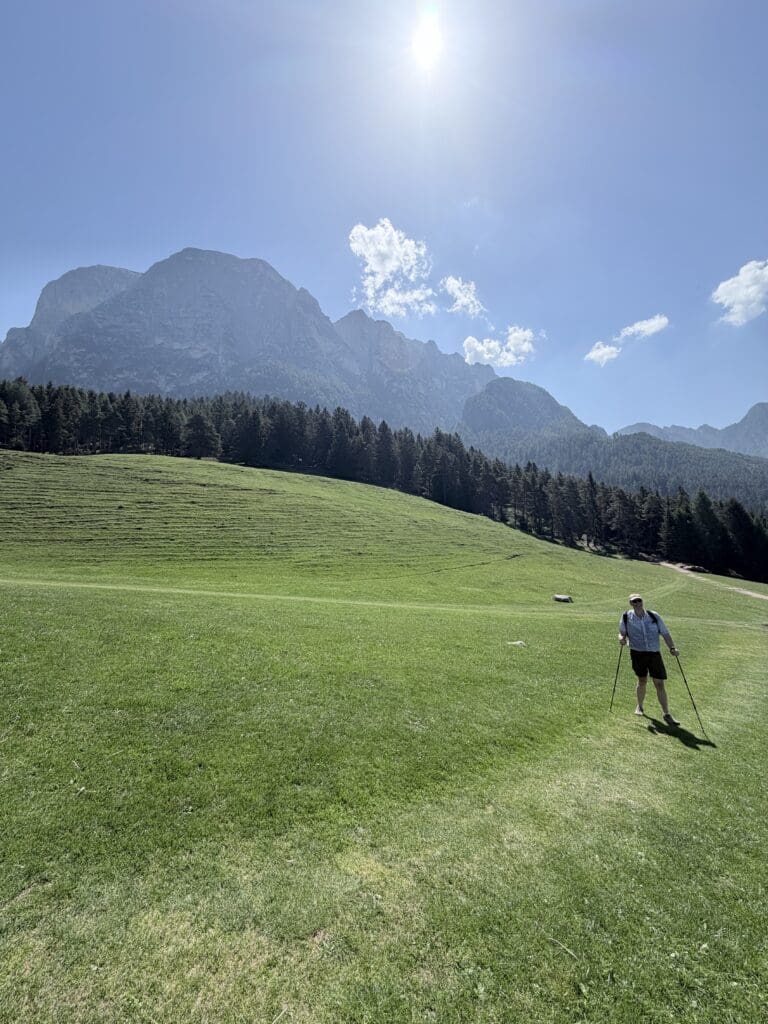
Our second day of hiking kept us slightly lower in elevation with incredible views of the Sciliar mountain range. The hiking was beautiful in that classic alpine way — green meadows, wildflowers, dramatic peaks — when suddenly I started hearing bells.
Not church bells. Not distant wedding bells. Tiny random clank-clank-clank bells echoing through the mountains.
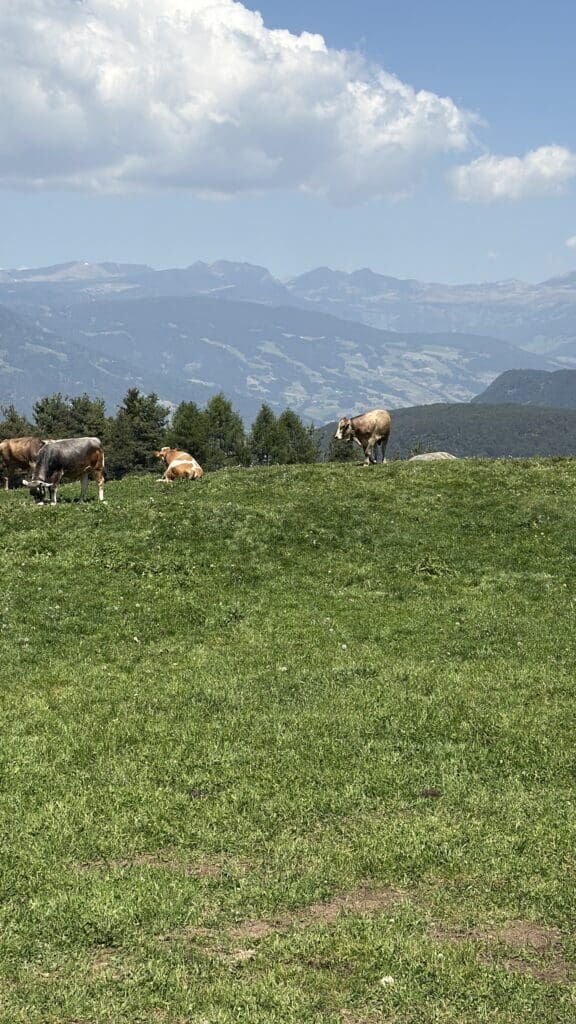
We rounded the bend and there they were: cows wandering through the meadow wearing giant bells around their necks like something out of a children’s book or an extremely wholesome yogurt commercial.
Apparently the bells help farmers locate them in the mountains, which makes practical sense, although it still felt deeply amusing to watch a cow casually stroll by sounding like a percussion section.
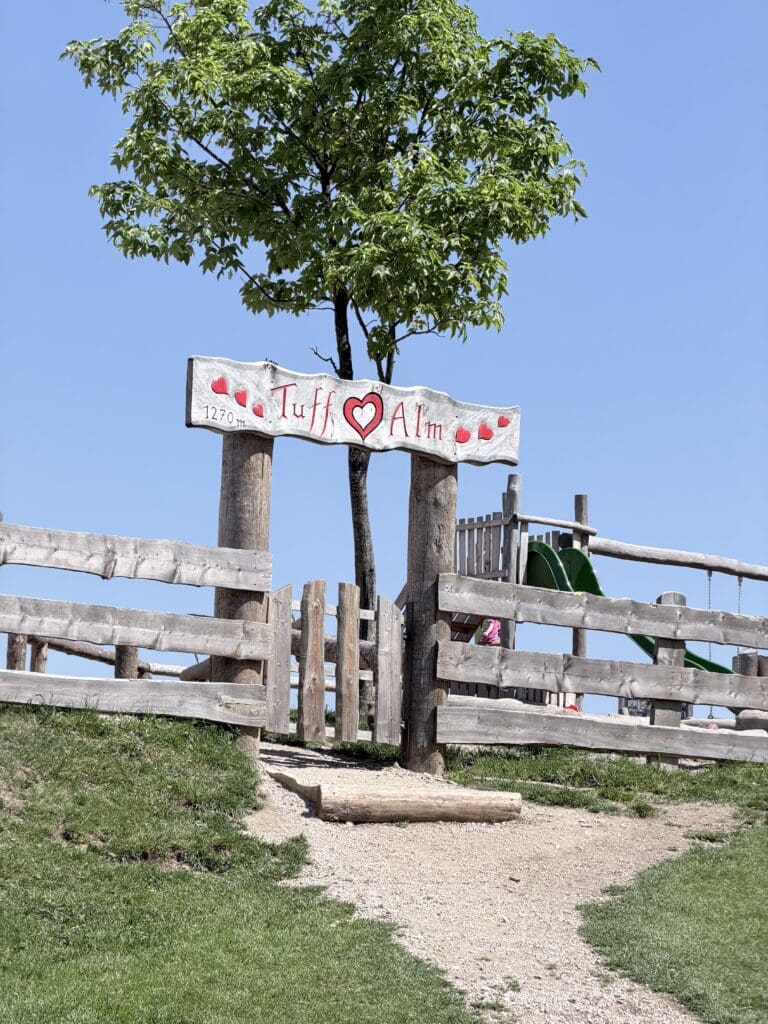
To Chad’s credit, he was a very good sport about a second straight day of hiking. Mostly because this hike had a purpose. A destination. A reward. — Tuff Alm.
Now when someone says “mountain hut,” I picture a rough wooden shack with maybe a guy named Hans serving lukewarm soup from a pot while staring silently into the distance. This was not that.
Tuff Alm was stunning — a gorgeous alpine restaurant sitting in the middle of a meadow surrounded by animals, flower boxes, and spectacular mountain views. It looked like Pinterest and a ski catalog had a baby.
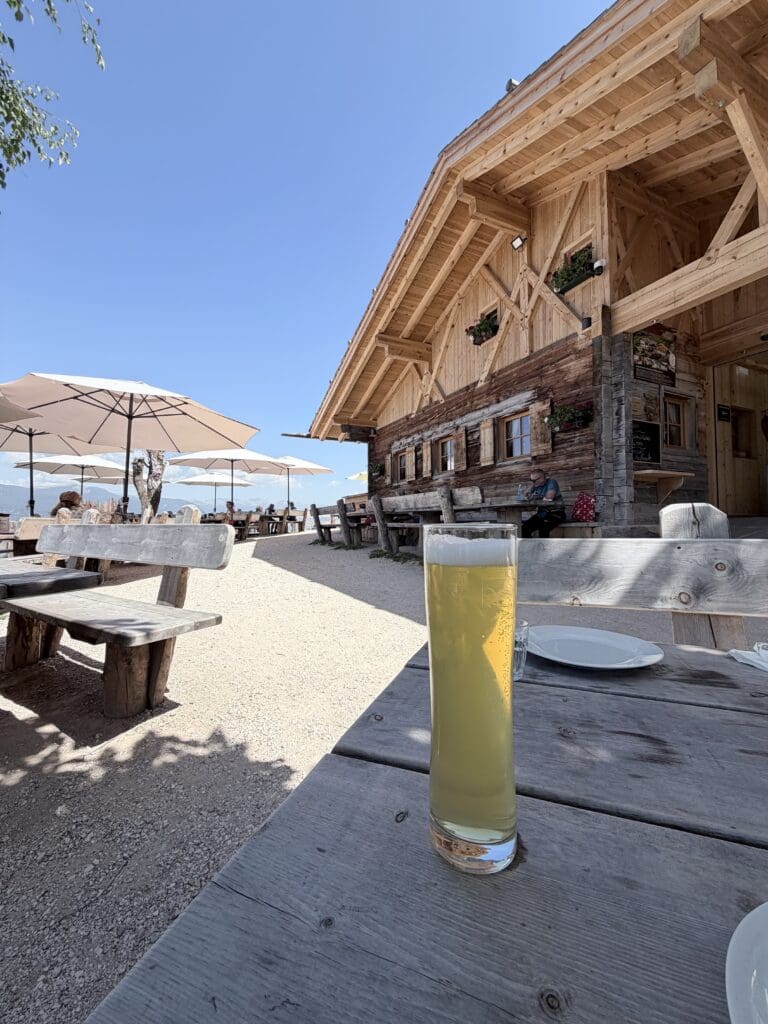
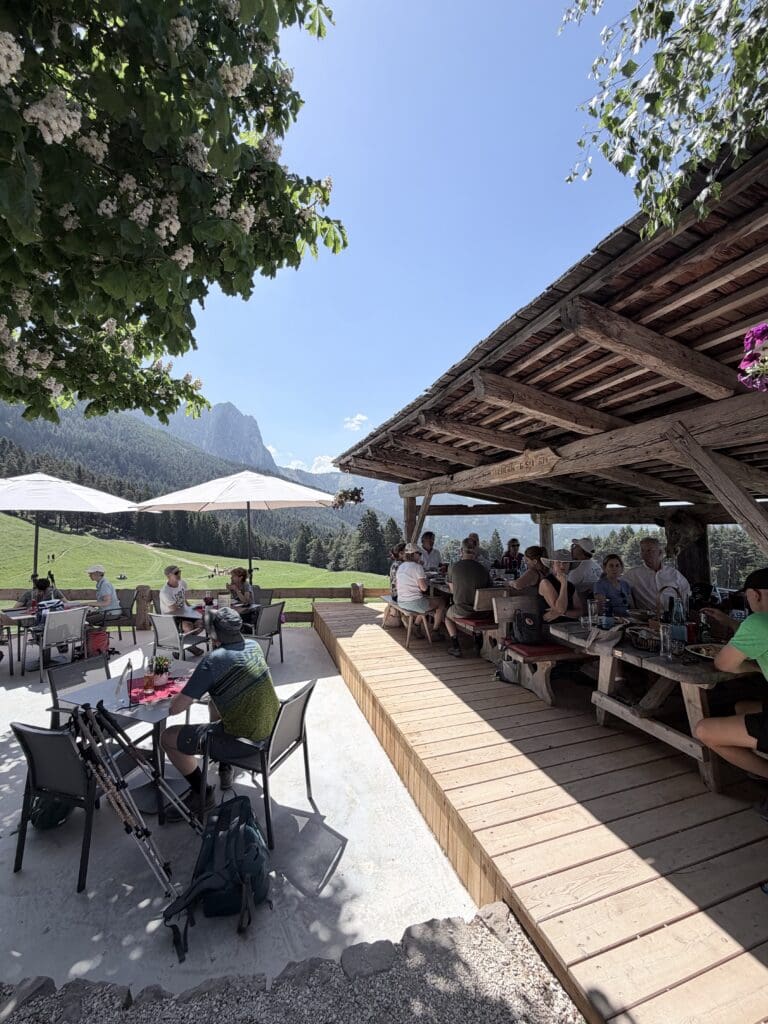
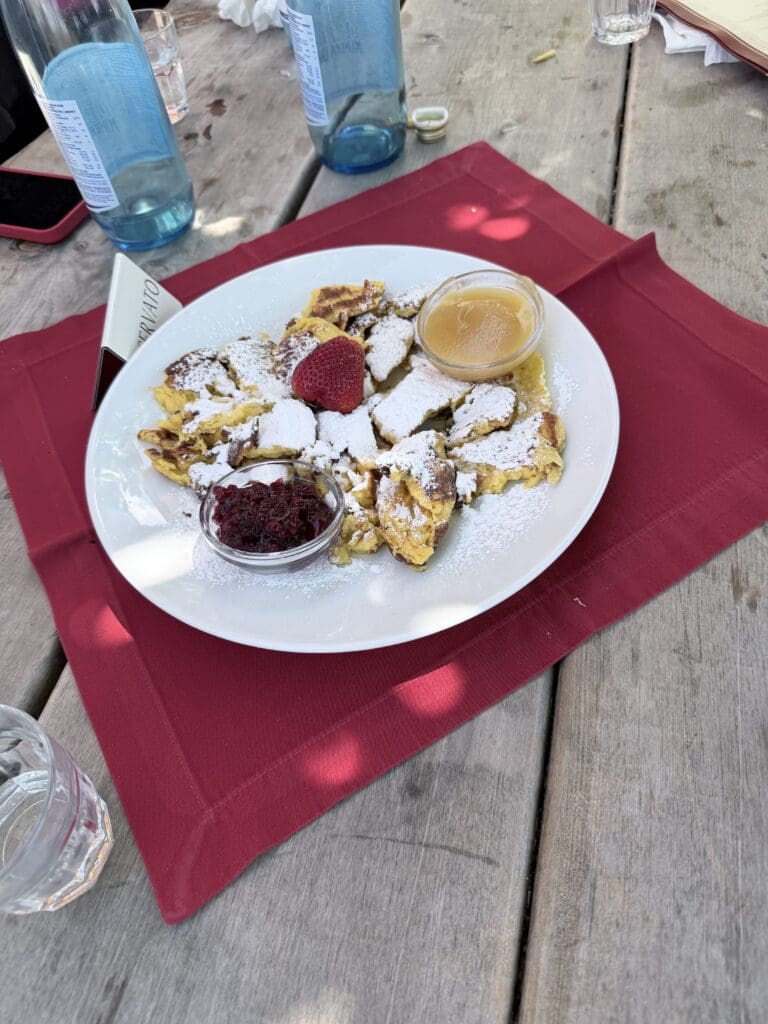
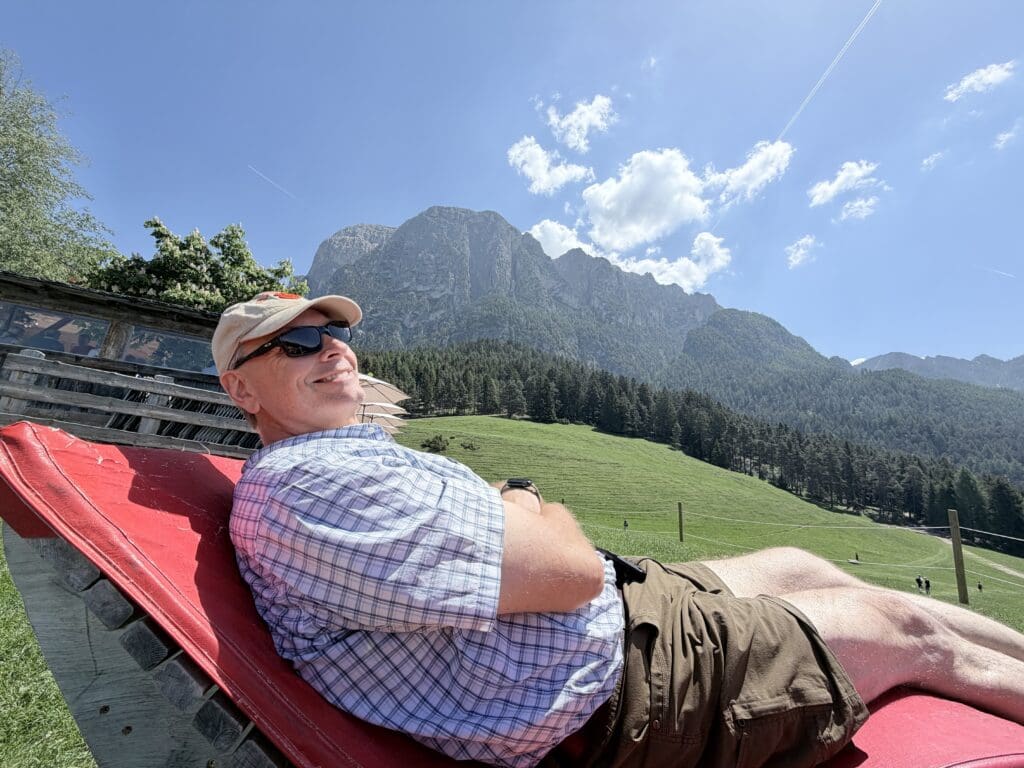
And the food? Incredible. Alpine Italian comfort food with cold Radler beer after a long hike may actually be one of humanity’s better ideas.
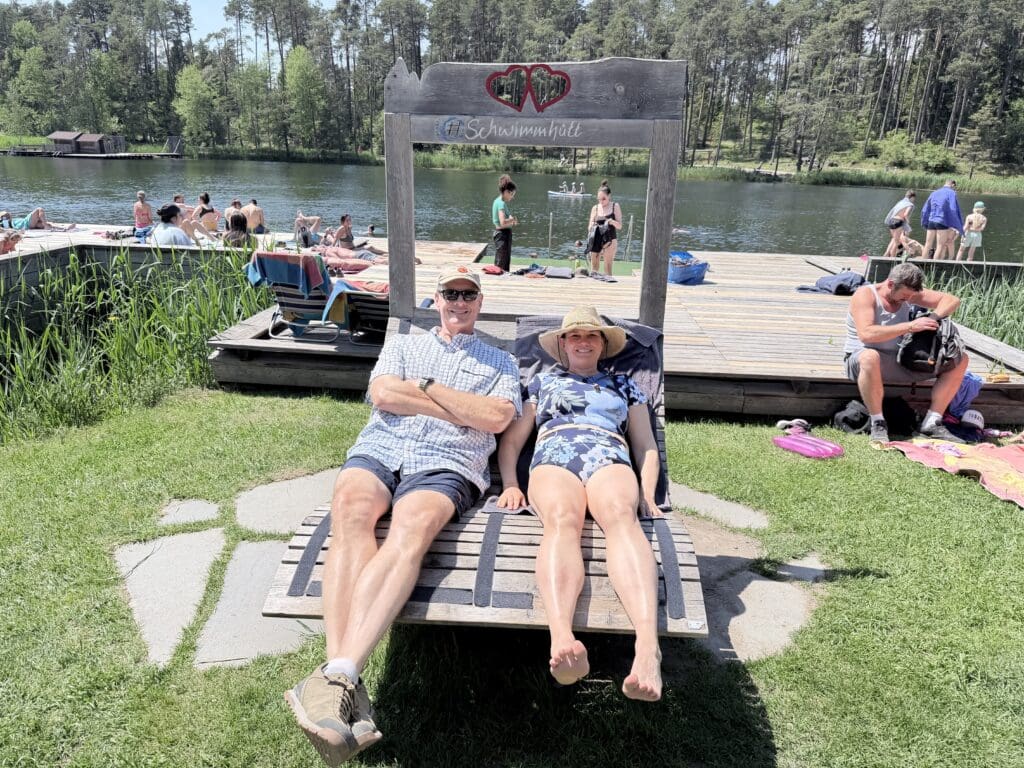
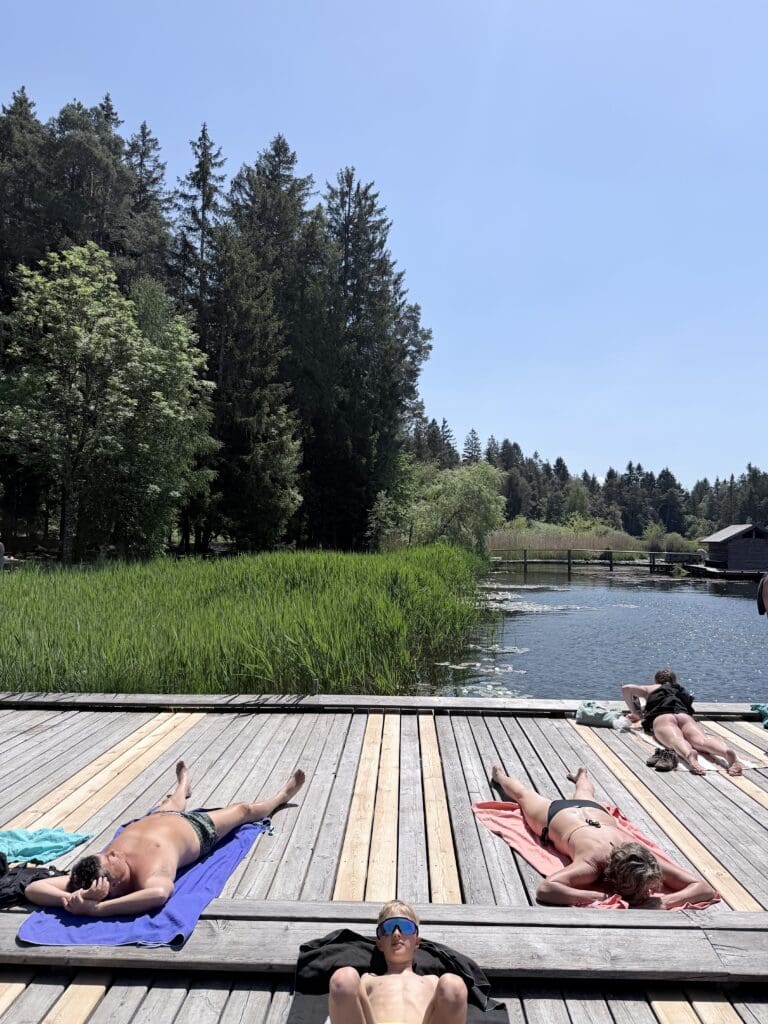
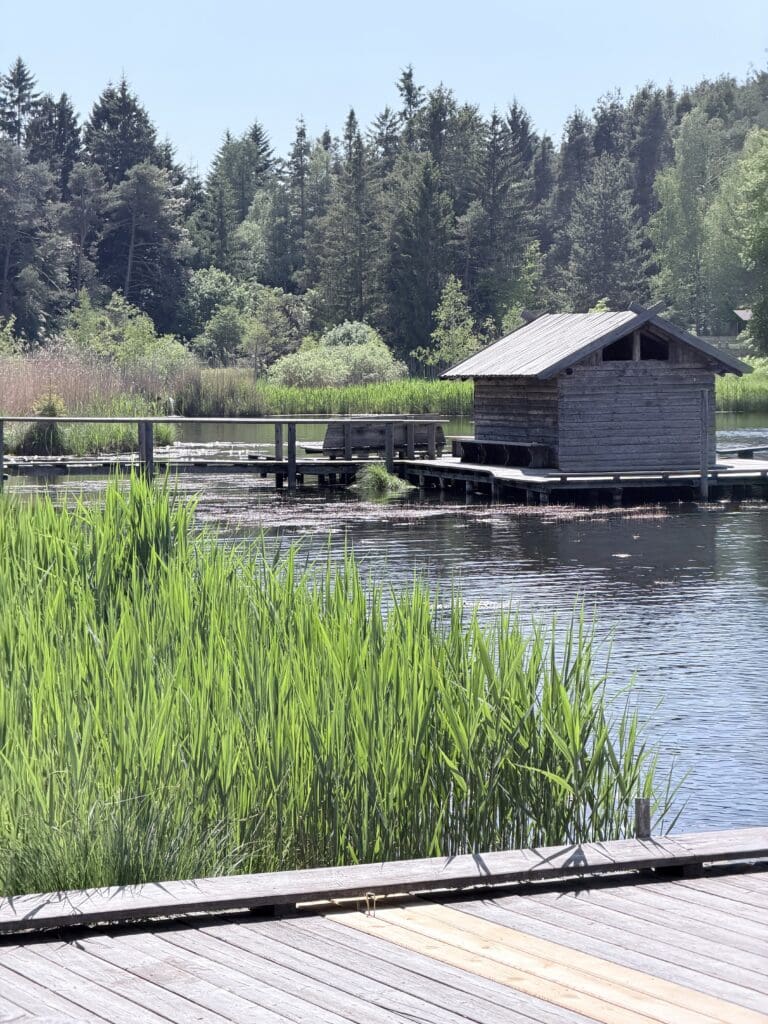
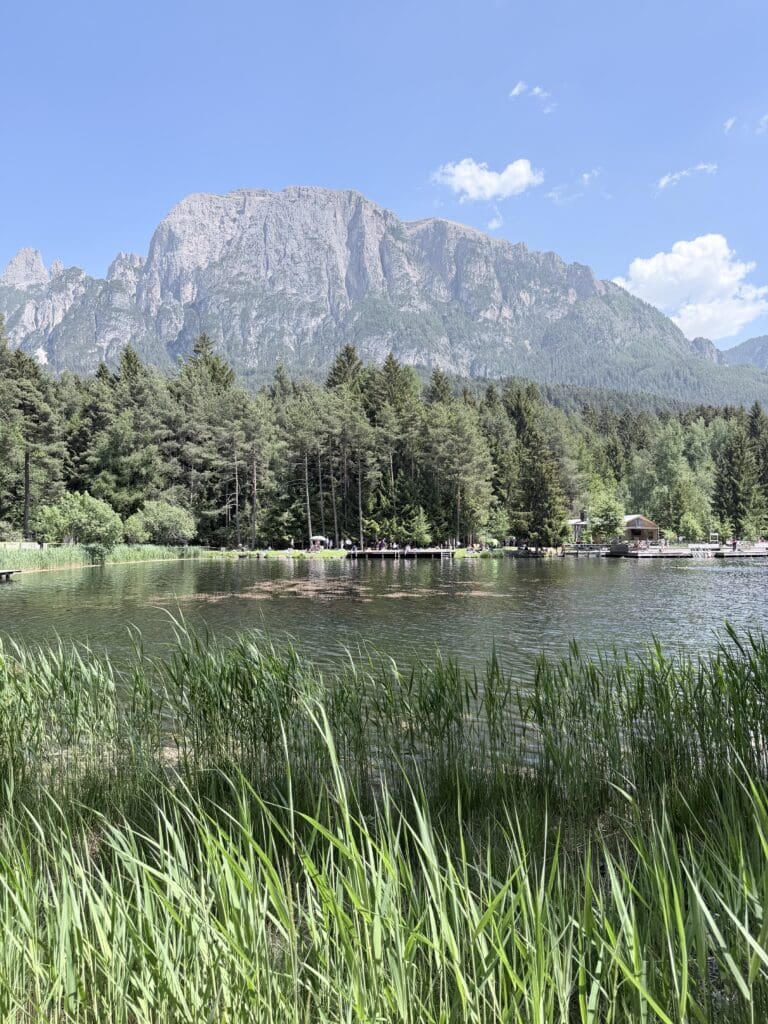
At that point our guides gave us options: hike another two miles OR go swimming in a nearby alpine lake. Now I can hike anytime. North Carolina is full of trails.
But I do not regularly get opportunities to jump into a crystal-clear mountain lake in the Italian Dolomites like some sort of middle-aged mermaid with hiking boots.
So the choice was obvious.
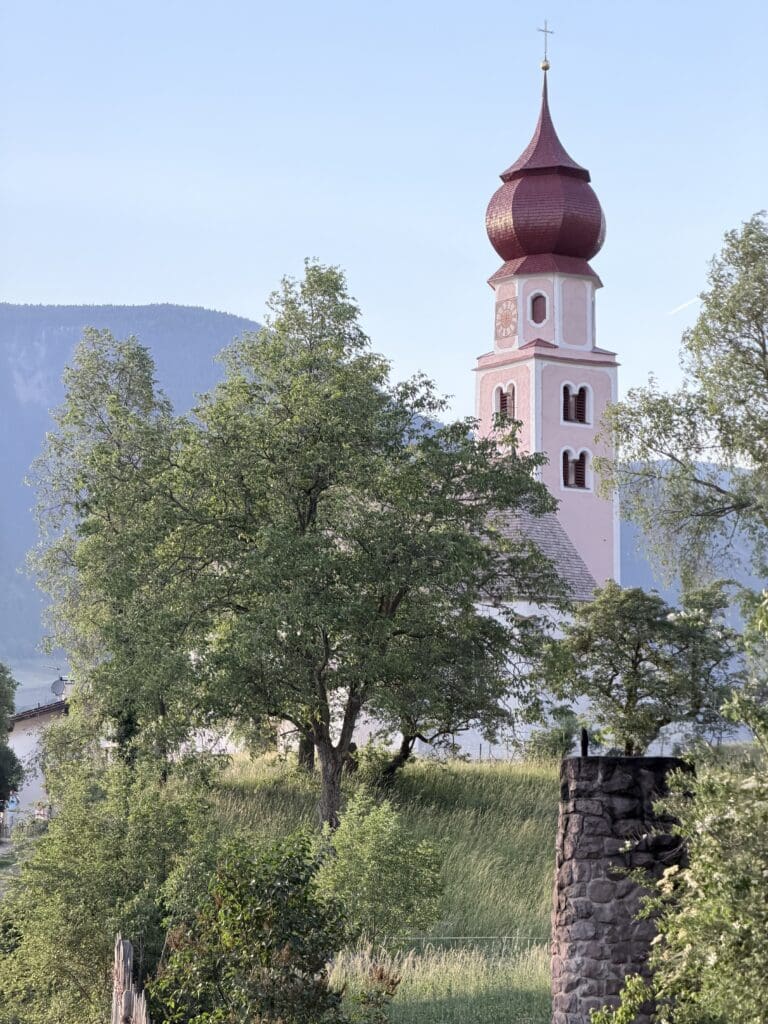
For dinner that night we piled into taxis and headed to a tiny nearby town — population maybe 150 people — with a name I absolutely cannot remember because every town in this area sounds either like a medieval village or a prescription medication.
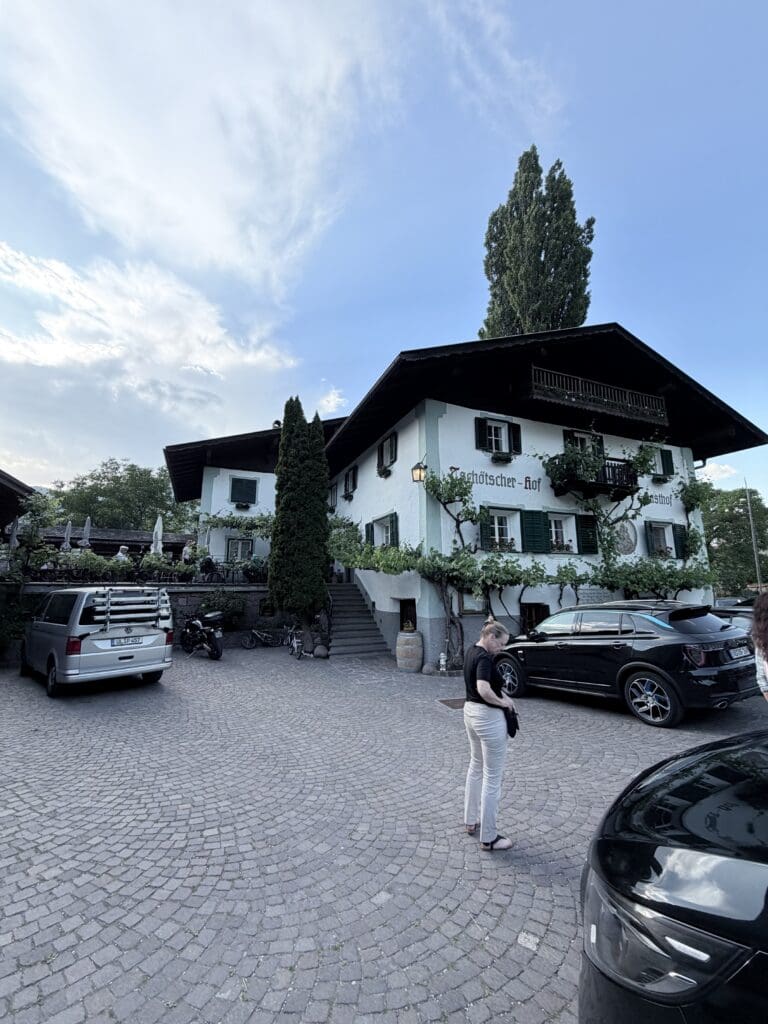
We arrived at a family farm and restaurant tucked into the hills. The house was quaint and beautiful in that effortless European way where even the barns somehow look curated. Attached to the home was an old wooden barn, and climbing up the side of it was a grapevine we were told was over 150 years old. Which in America would immediately become a tourist attraction with admission tickets and a gift shop selling grape-themed tea towels.
Walking out to greet us was the patriarch of the family, Michel, wearing a blue apron.
Now earlier in the day we had learned about the significance of the blue apron in South Tyrol. After World War I, when this region was transferred from Austria to Italy, the Italian government tried hard to “Italianize” the area — changing town names, pushing the Italian language, and suppressing much of the German-speaking Tyrolean culture. The blue apron became a quiet symbol of resistance among local farming men. A way of saying: we may technically be Italian now, but we have not forgotten who we are.
And there stood Michel — warm, welcoming, proud — wearing his blue apron like part clothing, part history lesson.
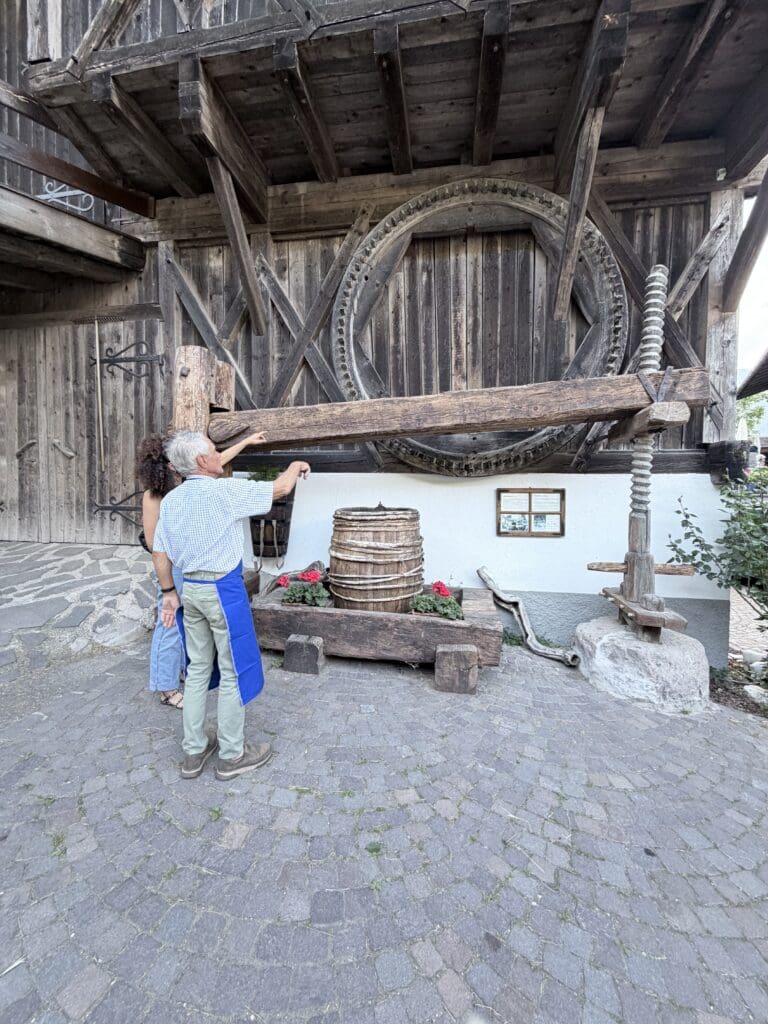
As he greeted us, he explained that over the years he had collected old items from around the farm and turned them into displays throughout the property. Rusted tools, farm equipment, household objects — little pieces of daily life preserved instead of discarded.
Because farms everywhere operate under the exact same philosophy:
“You never throw that away because someday you might need it.”
The difference was that Michel’s version looked charming, historical, and tidy — very German.