
The City of Marble and Late Reservations
Milan has energy. Not the frantic energy of New York where everyone looks slightly annoyed and under-caffeinated, but the polished, stylish energy of a city where people somehow make “walking to get coffee” look like a luxury brand campaign.
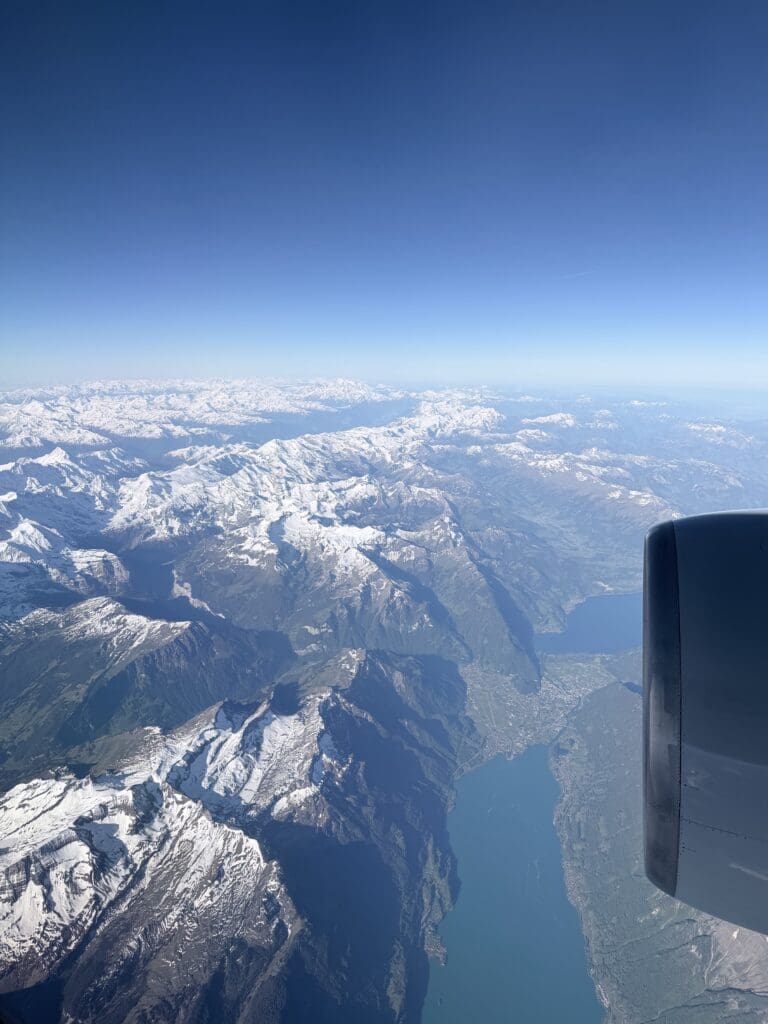
We arrived early in the morning on an overnight flight, and for once I executed my airplane plan perfectly. I drank only water. I ate the meal but skipped dessert, which honestly deserves some sort of medal or at least airline recognition points. Then I put on my eye mask, noise-canceling headphones, and attempted to cocoon myself into unconsciousness while sitting next to strangers.
And it worked. Or at least worked enough that landing in Milan felt survivable instead of like I had been medically tranquilized and rolled through customs.
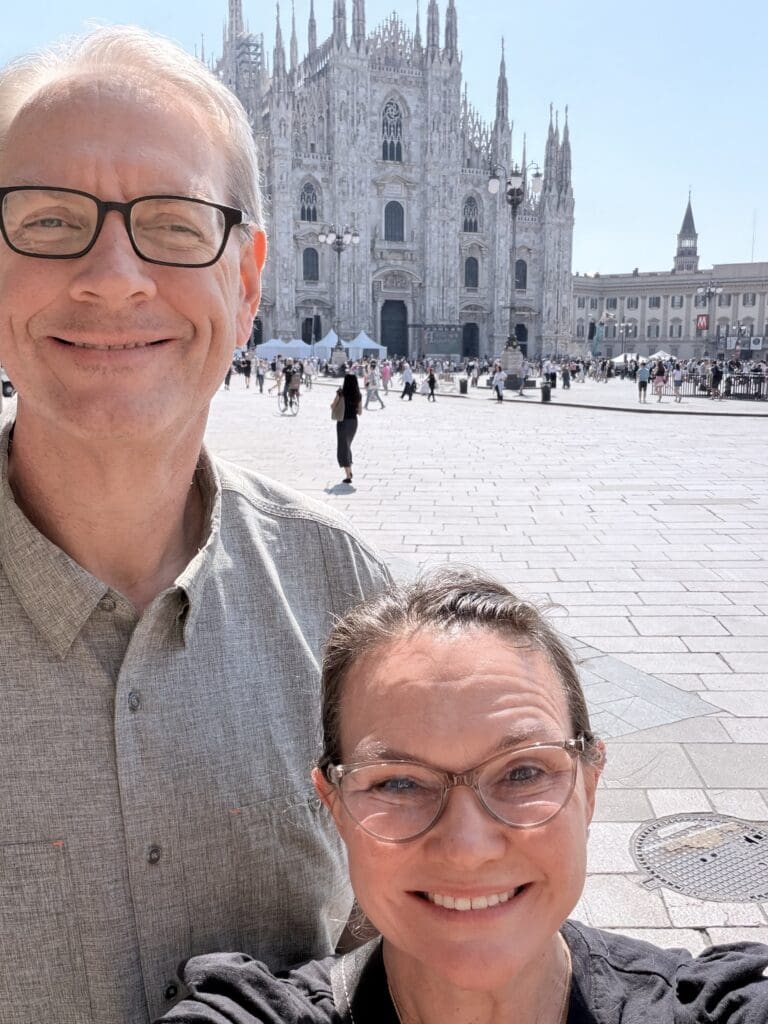
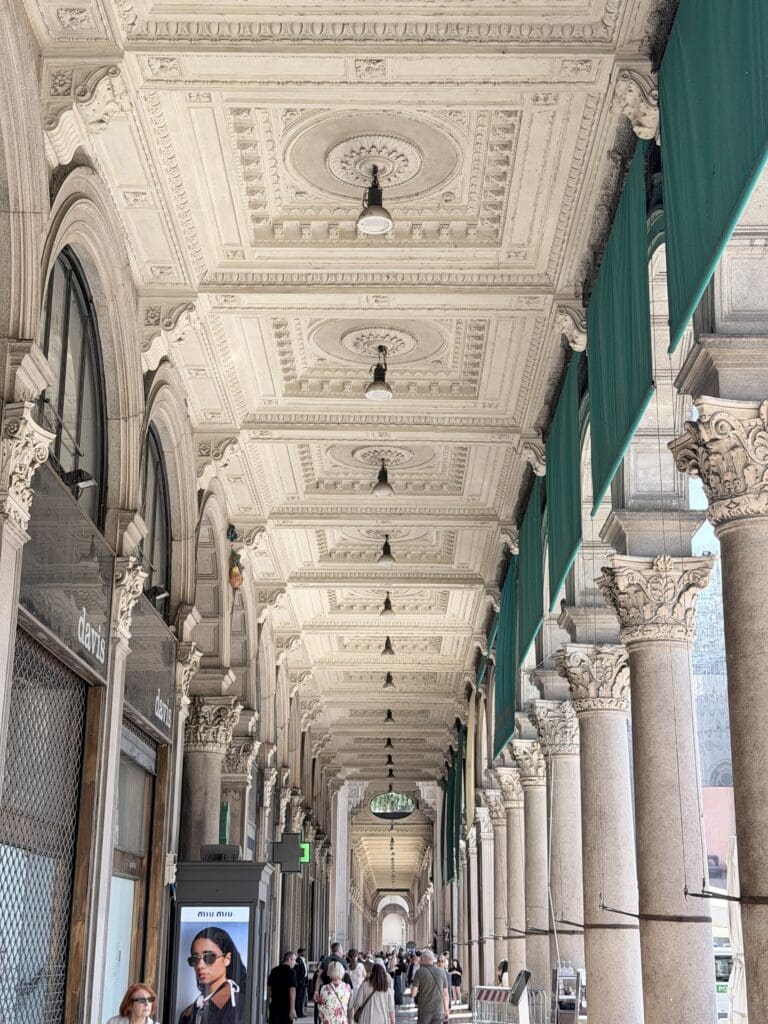
Our hotel was right in the middle of the city beside the Milan Cathedral, the Duomo, and next to the famous shopping Galleria. Since we were scheduled to tour both the next day, I wanted to find something else to do besides looking at handbags that cost more than my first car.
Hello, Interwebs.
Hello, Cimitero Monumentale (cemetery).
Now the cemetery is a little outside the main square, so we hopped in a taxi and suddenly found ourselves wandering through one of Europe’s great cemeteries. And this is not a regular cemetery with modest tombstones and tasteful flowers. This place looks like wealthy families competed for generations in the Marble Grief Olympics.
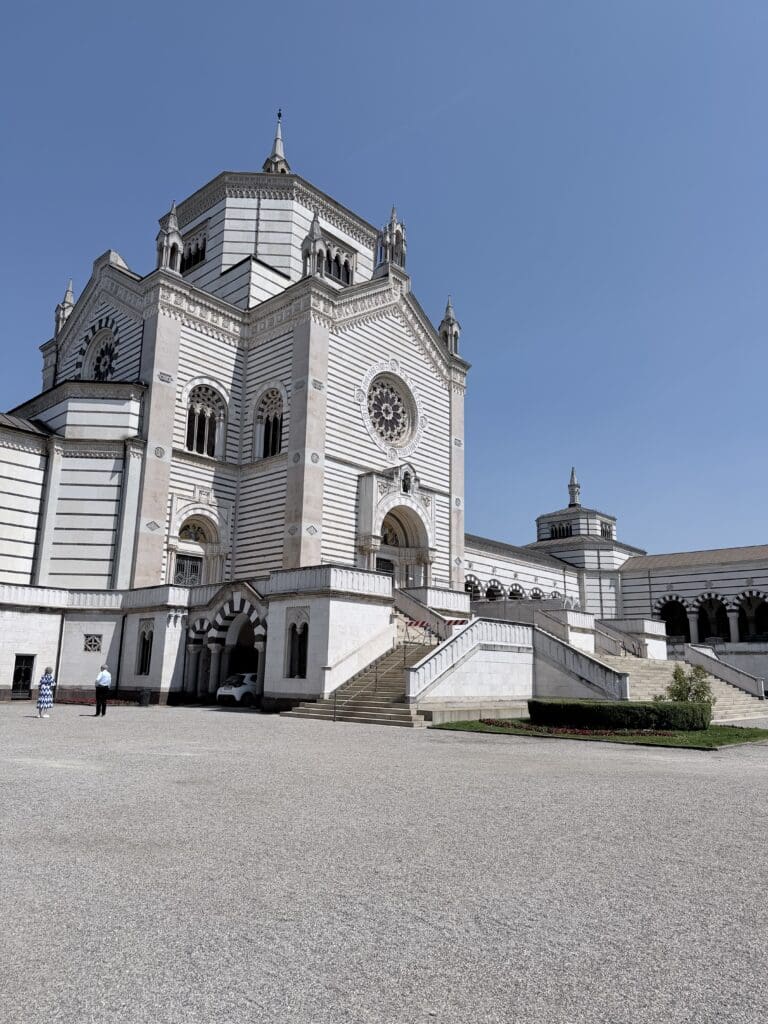
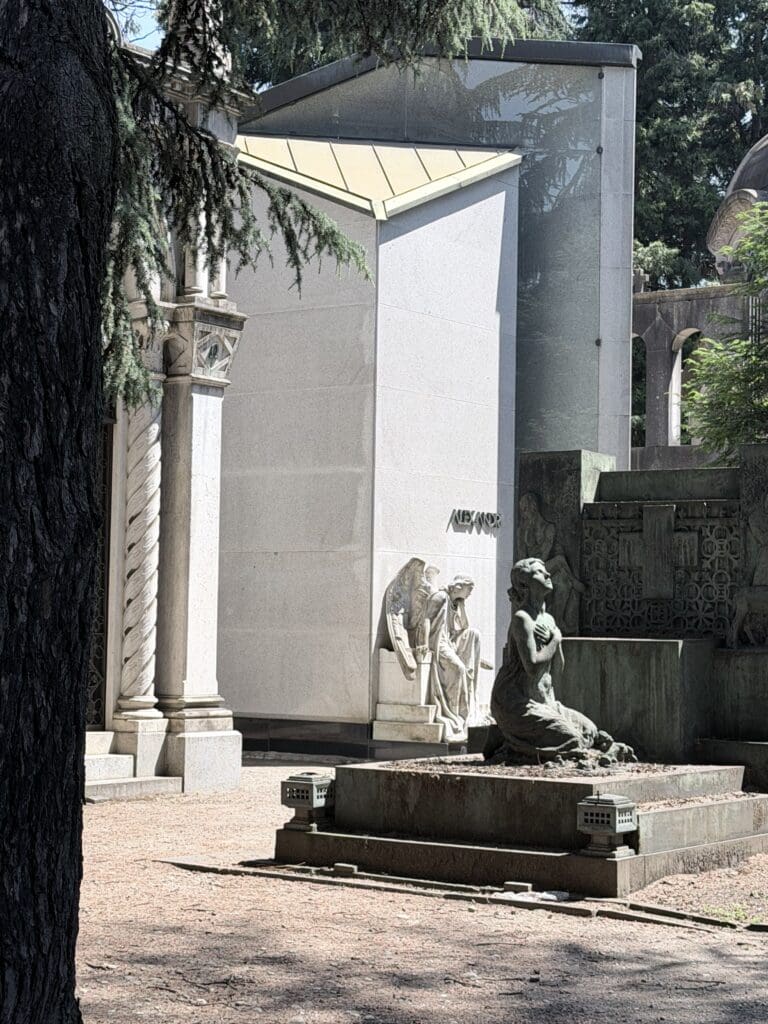
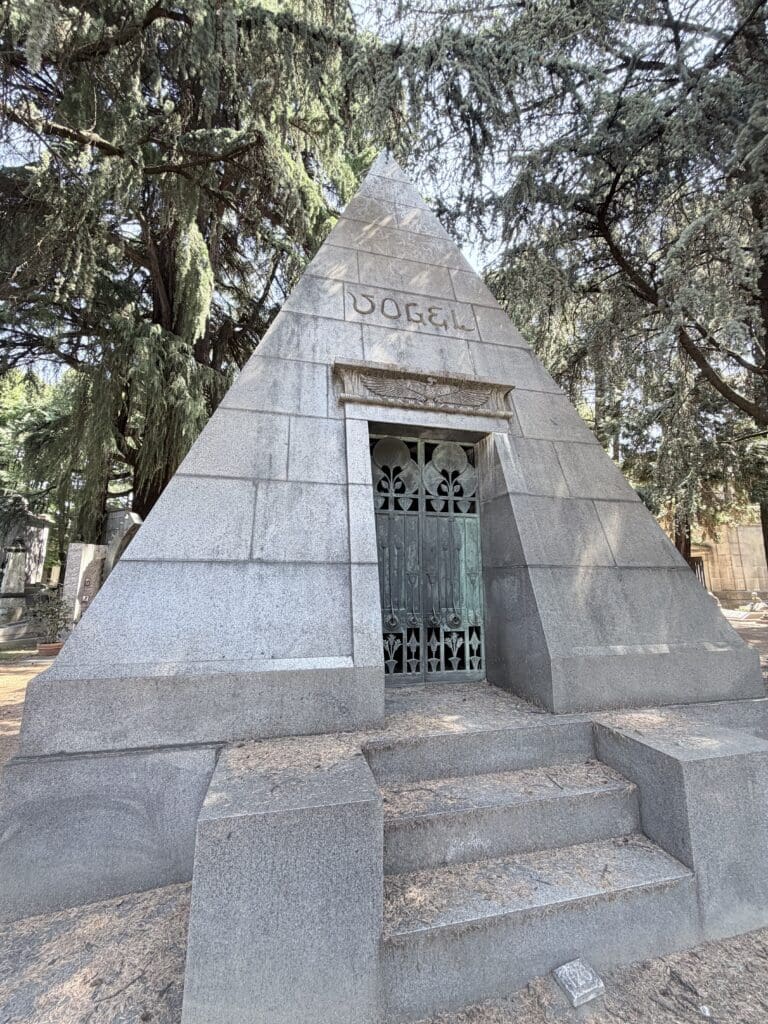
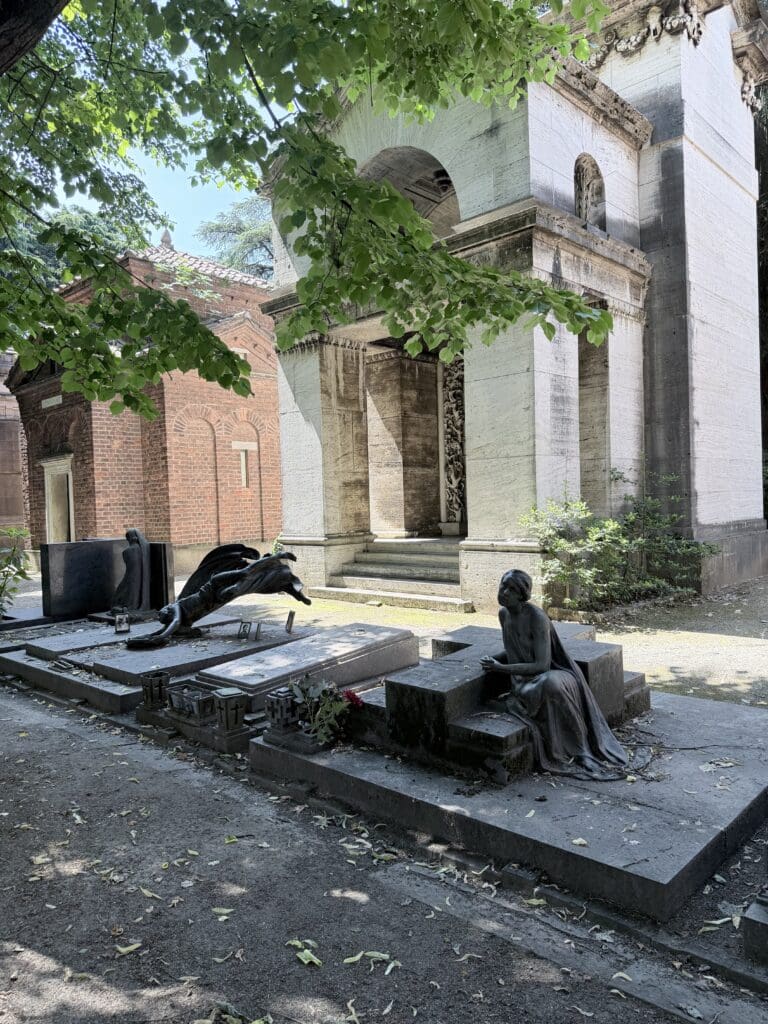
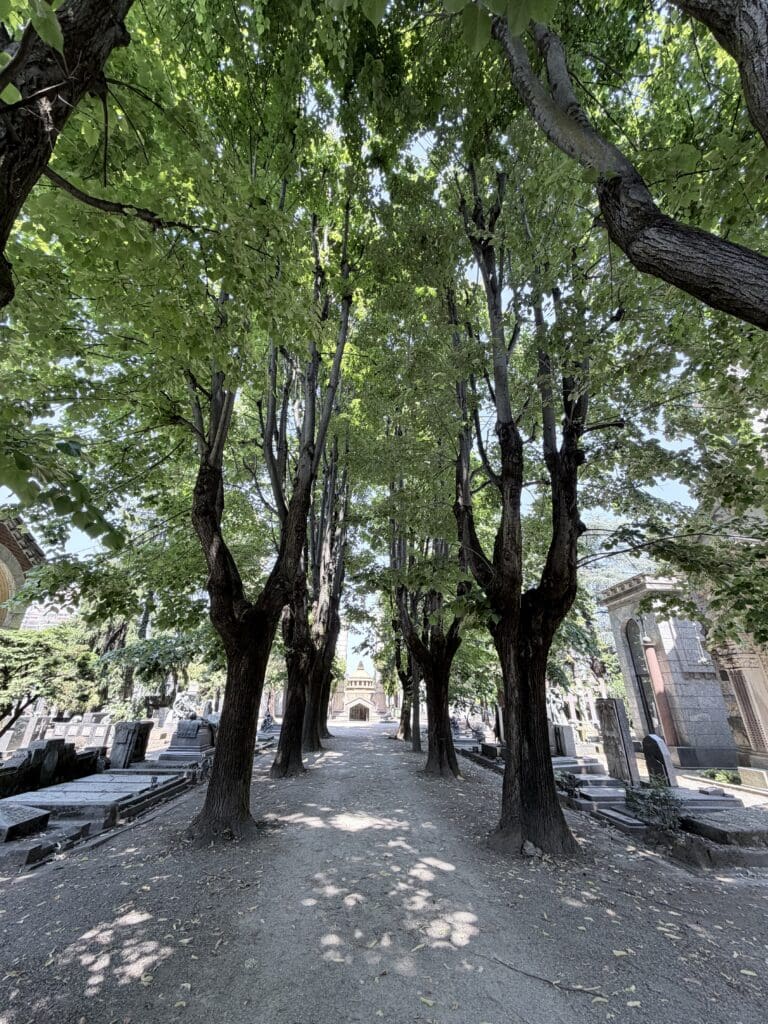
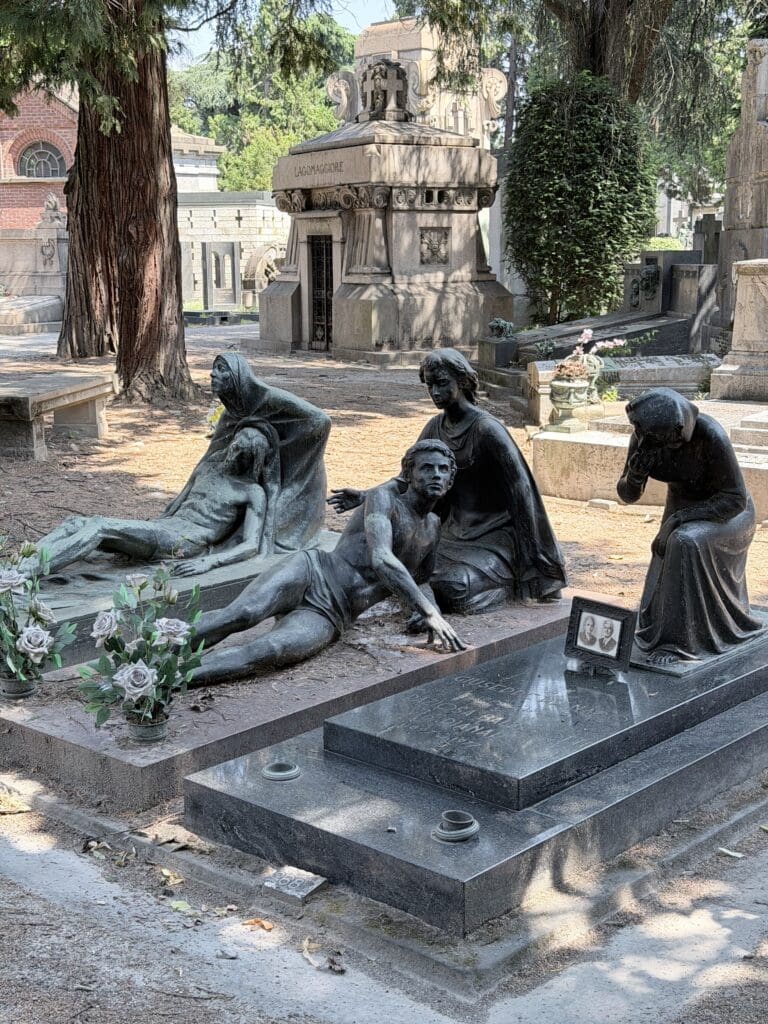
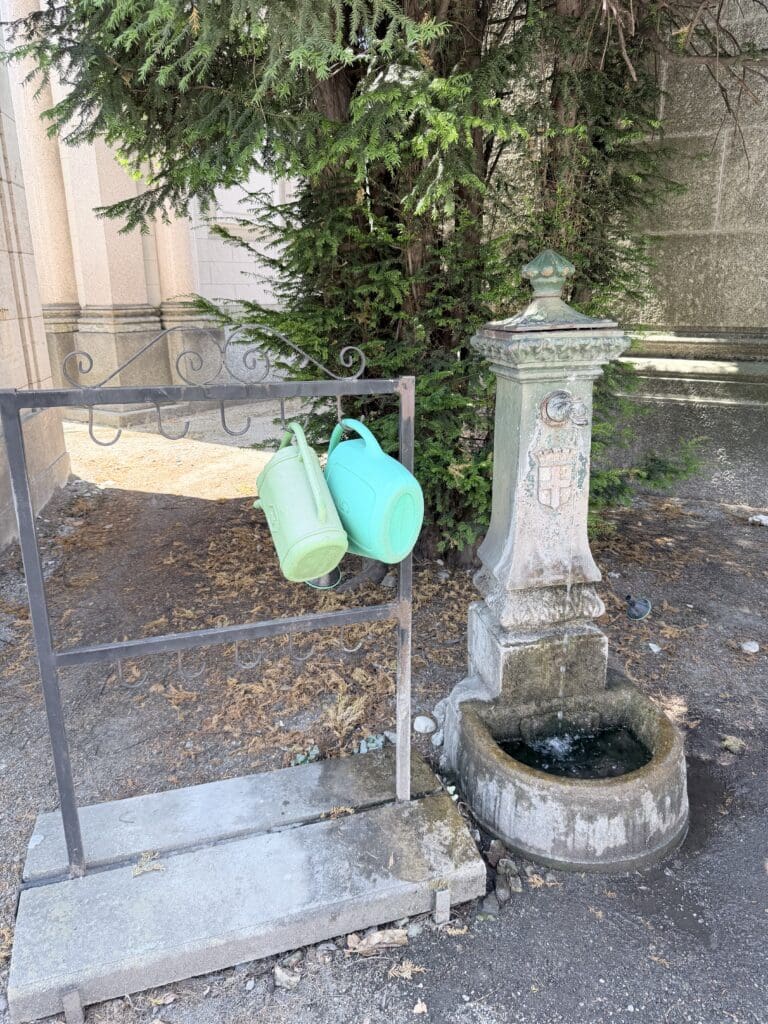
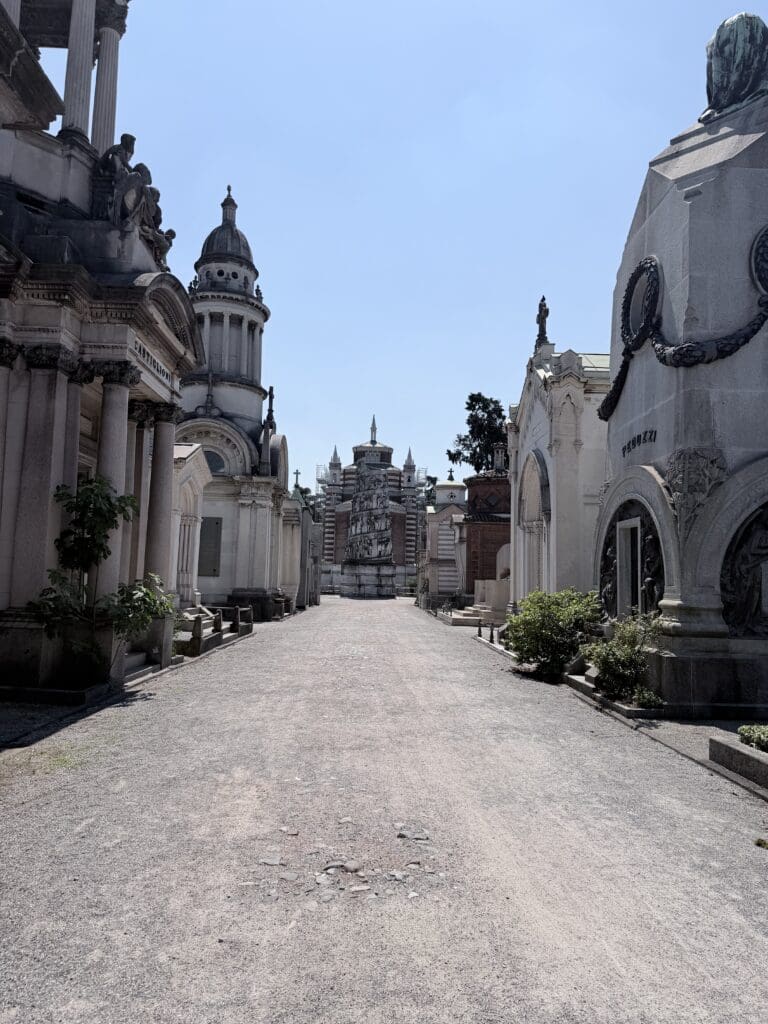
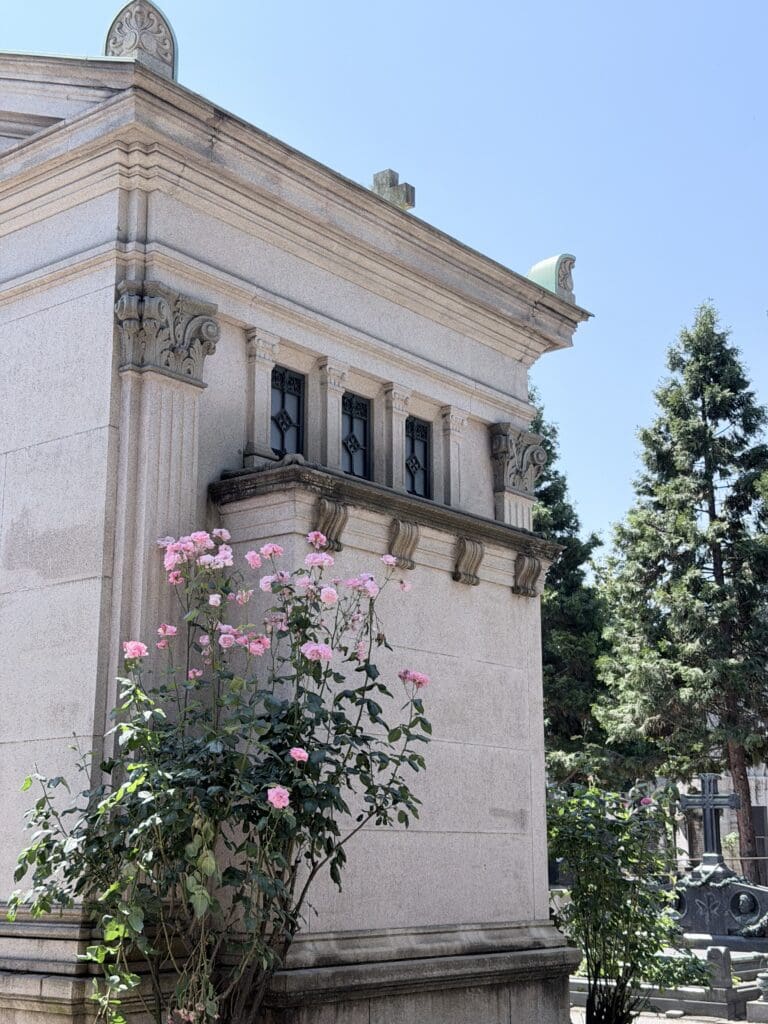
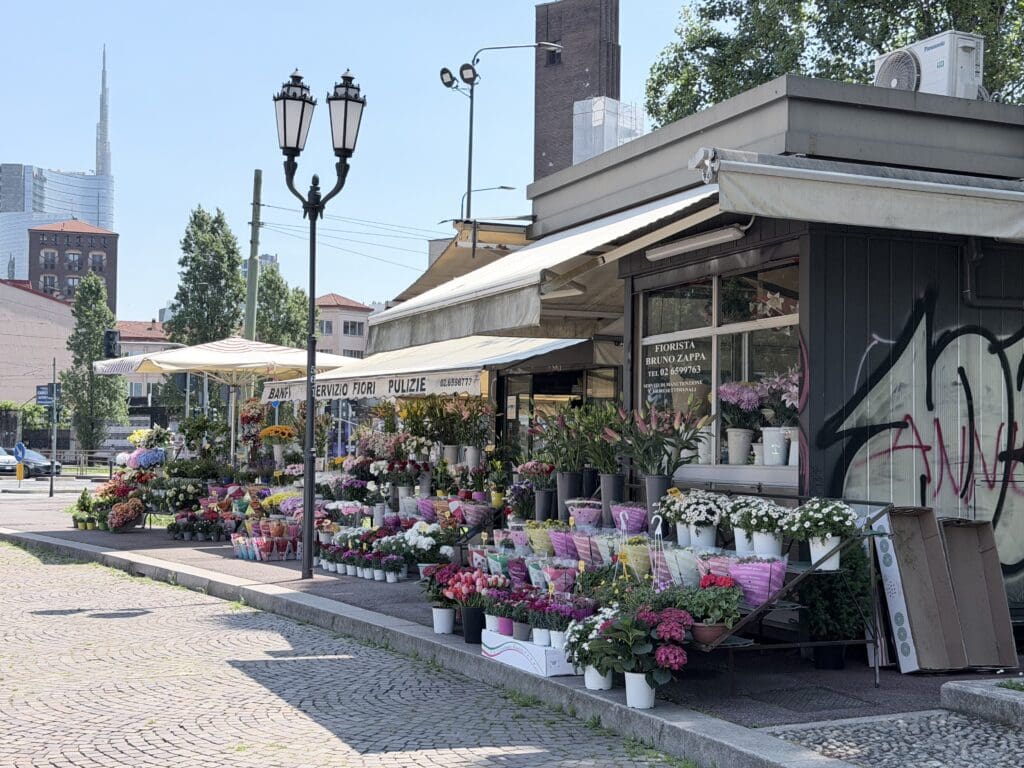
Nothing made sense in the best possible way. You’d see Mary holding a life-sized Jesus beside a mausoleum shaped like an Egyptian pyramid guarded by sphinxes. One family apparently mourned through interpretive architecture. Another seemed to say, “What if sadness… but make it opera?”
The whole place felt less like a cemetery and more like a very emotional outdoor sculpture park sponsored by old money.
After walking what felt like the entire cemetery, Chad found a restaurant a few blocks away that appeared to be attached to a gym and pool. Which honestly sounded suspicious. We walked in and the woman on the first floor asked if we had reservations. We said no, but she waved us forward and told us to go to the five floor.
Now the room was dark enough that we couldn’t find the elevator, but we did find the stairs. Five flights of stairs, which I determined was the gym part of the restaurant.
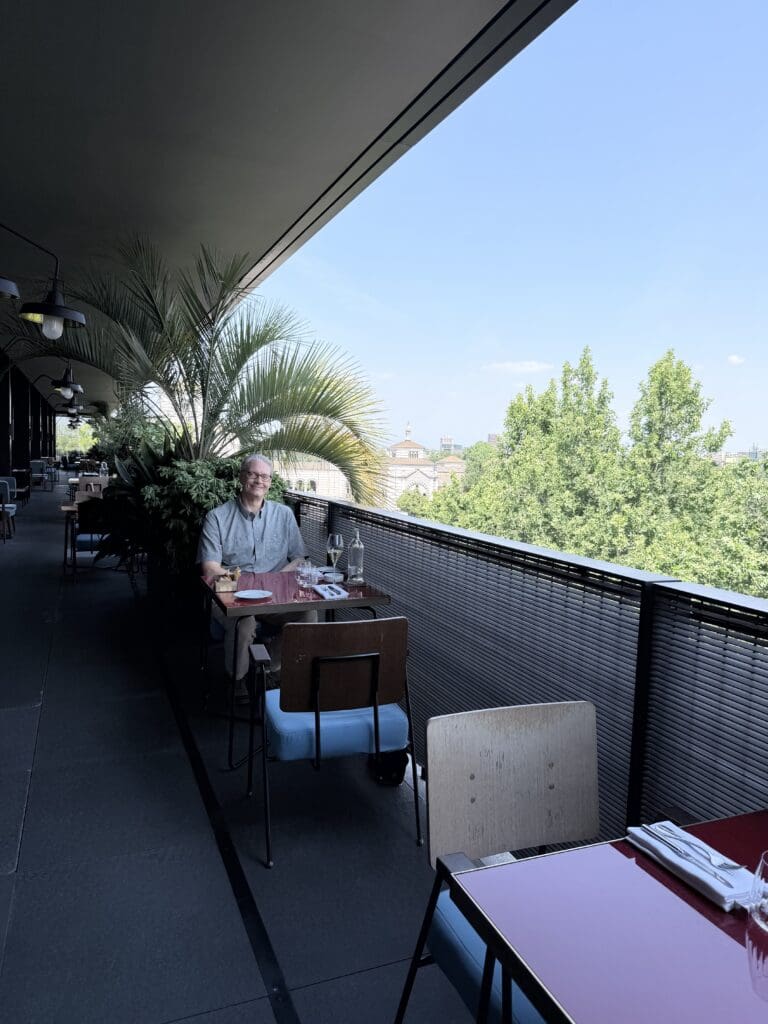
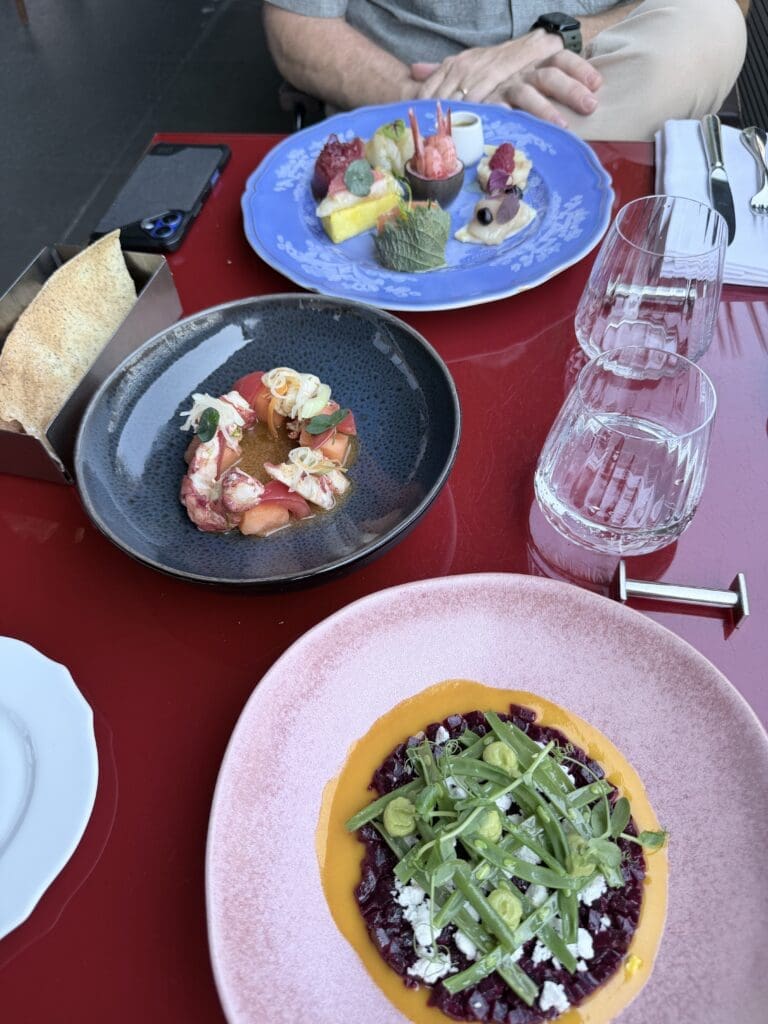
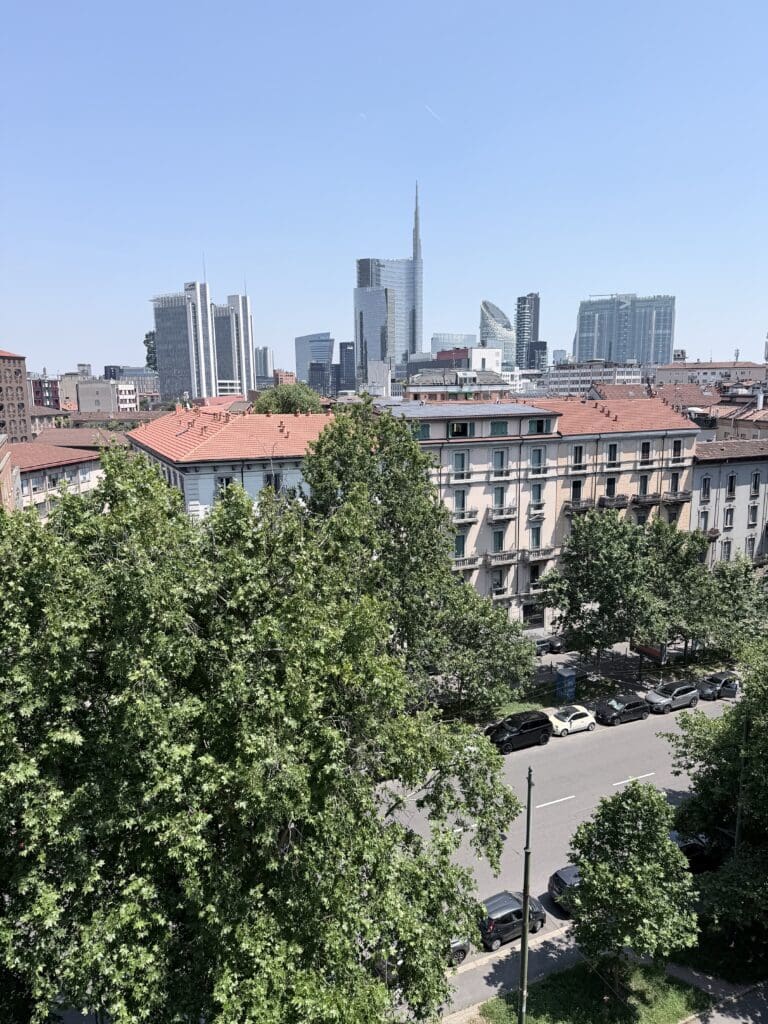
Turns out we had stumbled into Ceresio 7, a very chic rooftop restaurant with pools overlooking the city and people who looked significantly more moisturized than we did after an overnight flight. I had sparkling wine and lobster with melon while trying to pretend this sort of thing happens to us all the time.
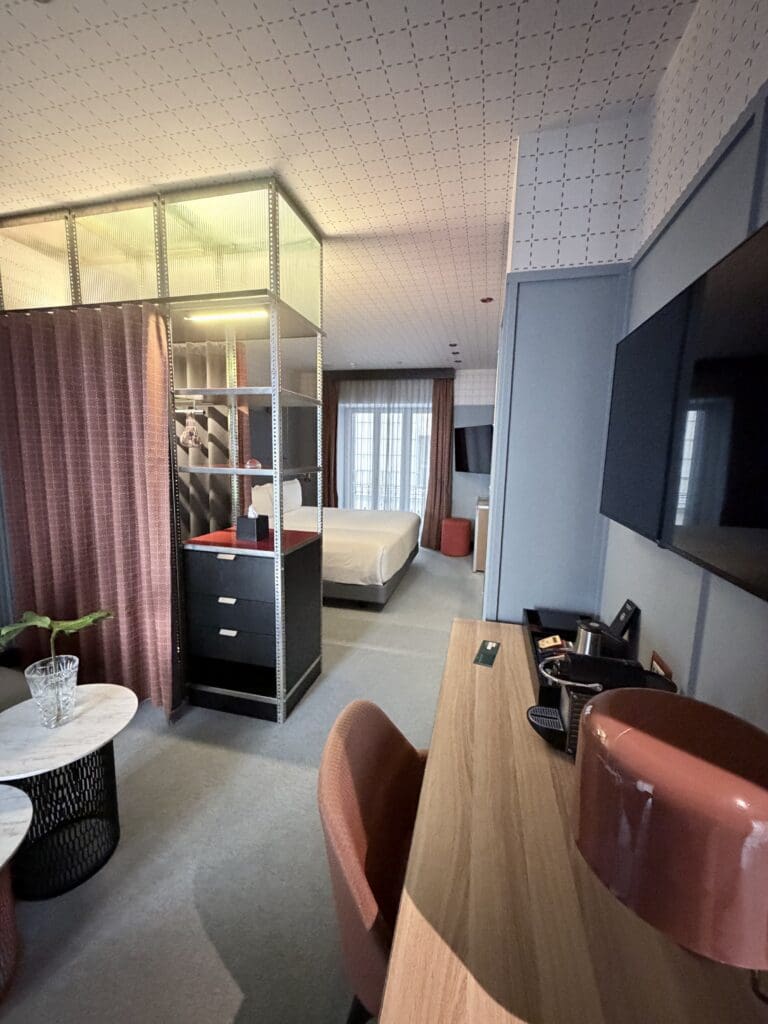
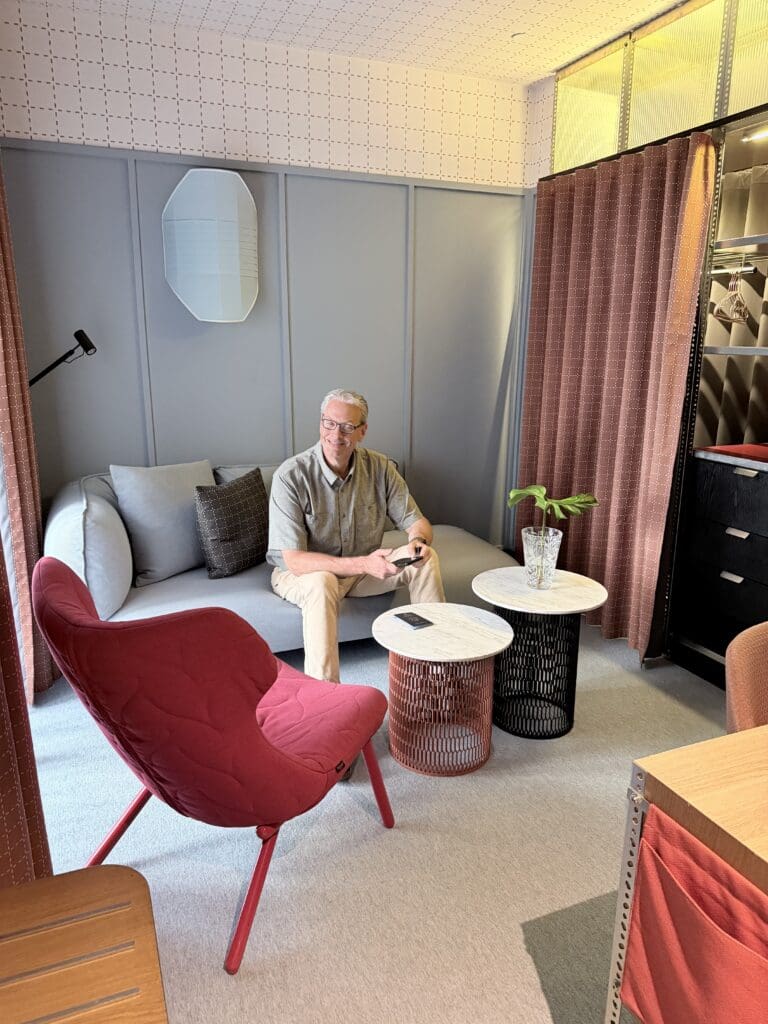
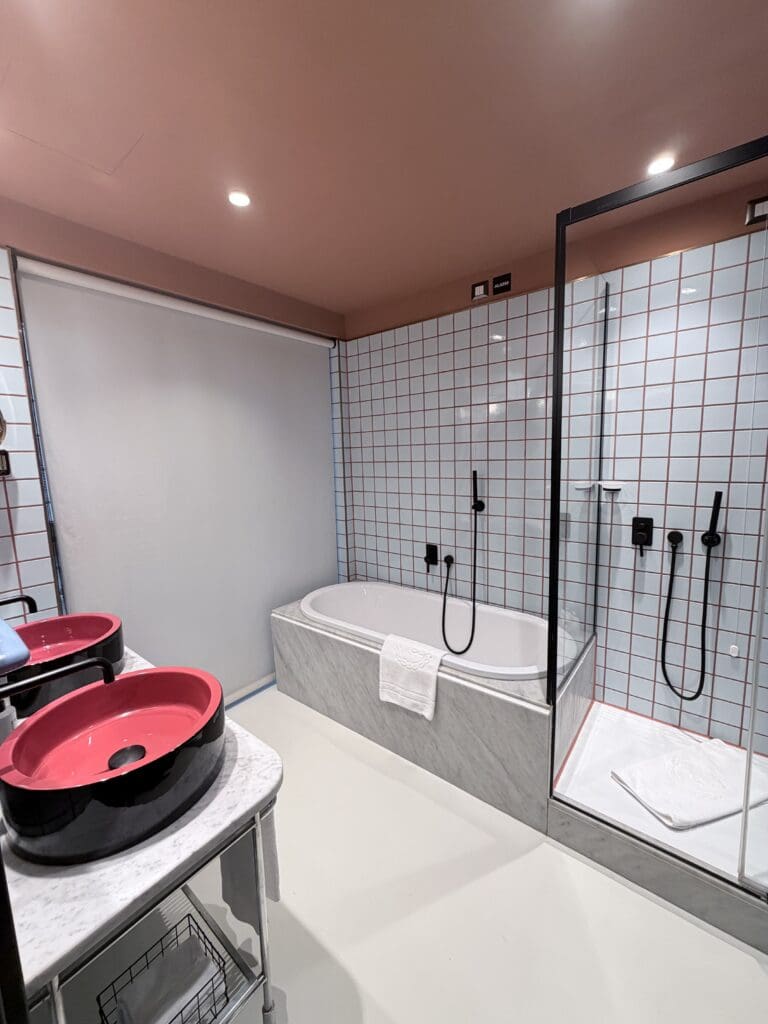
After an actual night of sleep at Giulia Room Mate (highly recommended), we met our guide and headed to the Duomo.
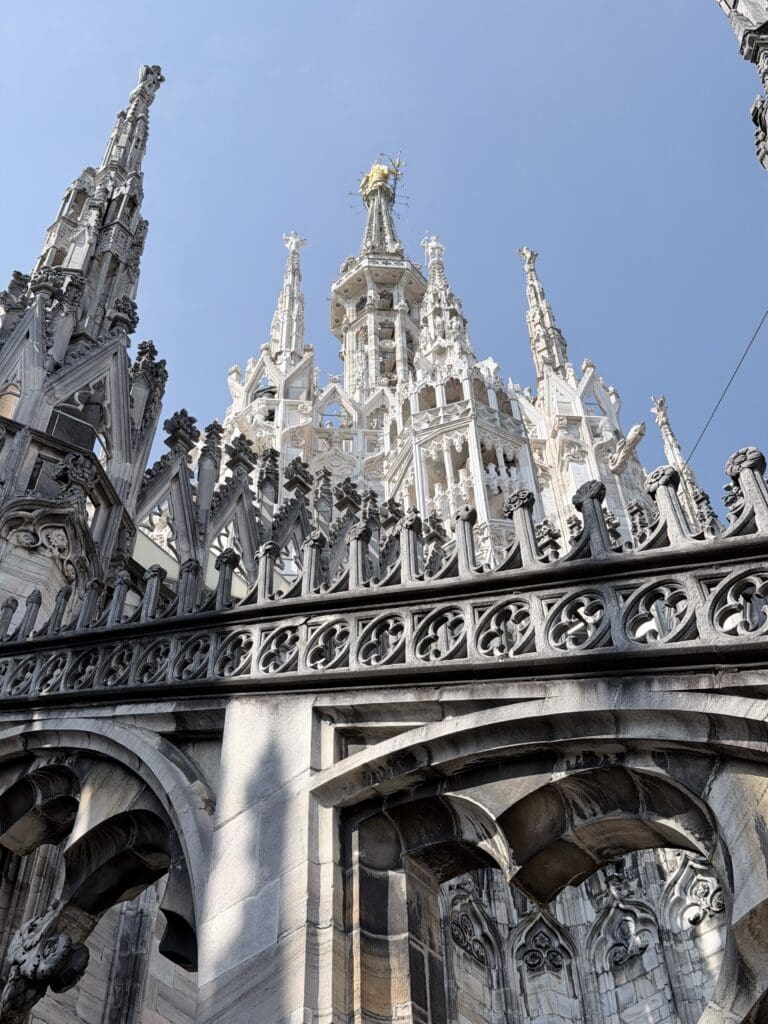
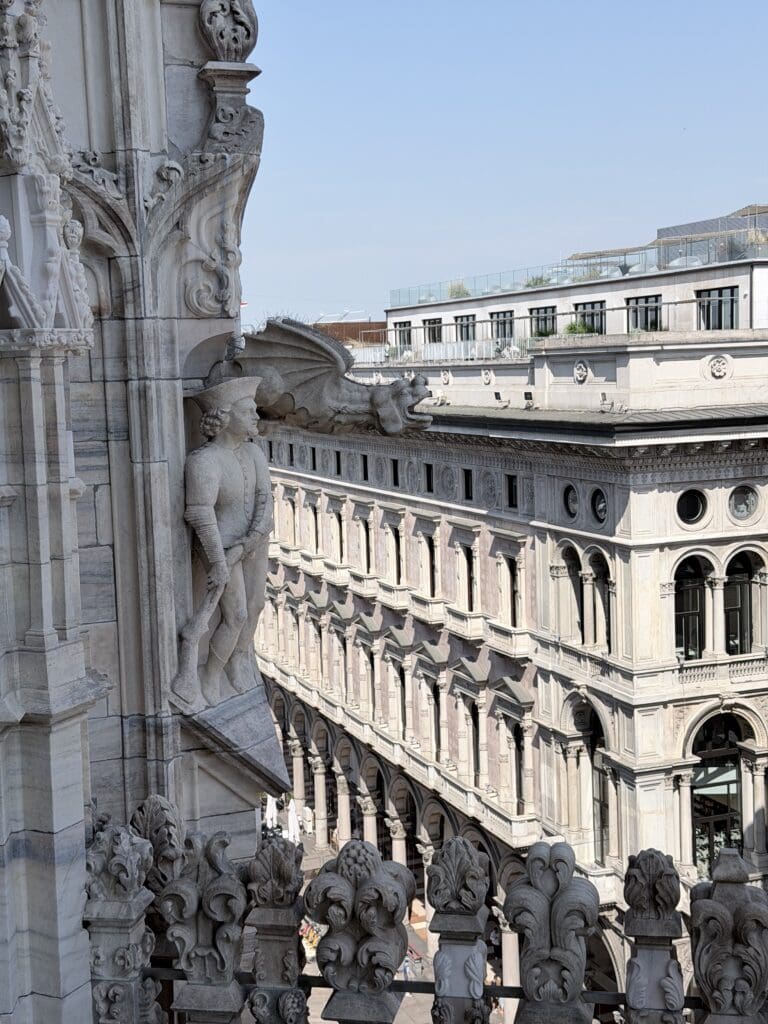
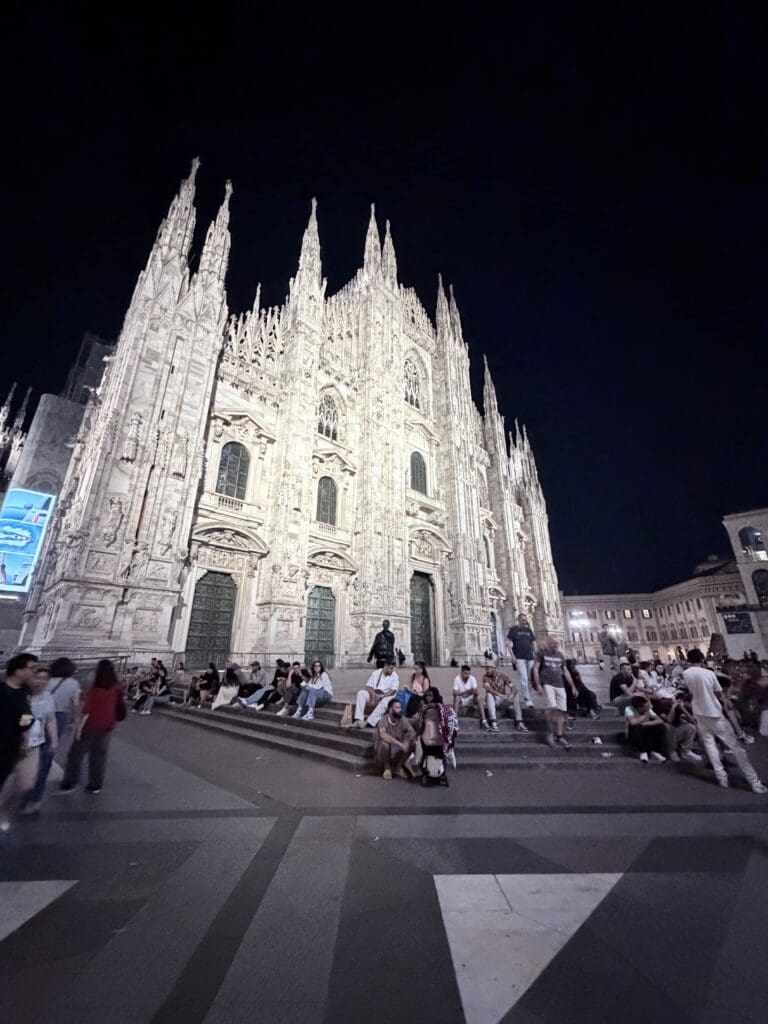
Now personally, I hear the word “Duomo” and expect something… rounder. More dome-ish. This cathedral instead looks like someone carved an entire mountain into lace and flat no domes. The outside is covered with spires, statues, carvings, saints, gargoyles, and decorative details to the point where your brain almost stops processing them individually.
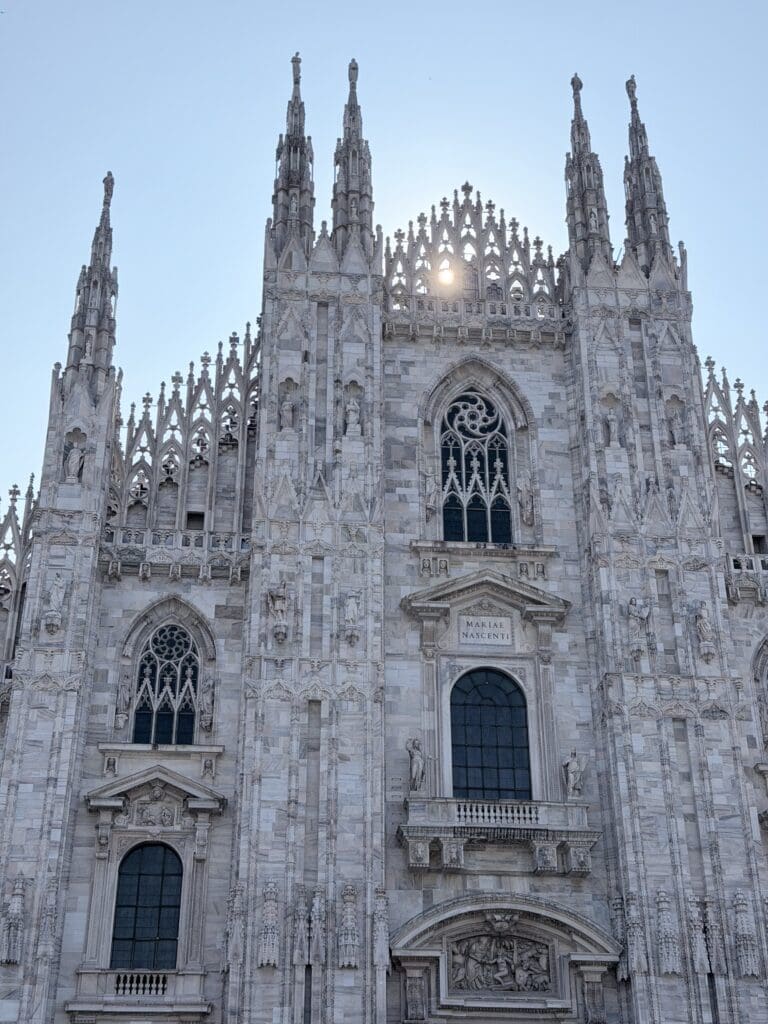
And it’s shockingly white because it has recently been cleaned. Which feels unfair honestly because most buildings from the 1300s are lucky if they still have a roof.
Construction started in 1386 and took over 600 years to complete. Six hundred years. Entire civilizations came and went while somebody in Milan was still saying, “We’re waiting on the stone guy.”
Today it costs around 32 million euros a year to maintain. Which seems expensive until you realize the building basically resembles a giant marble wedding cake left outside for several centuries.
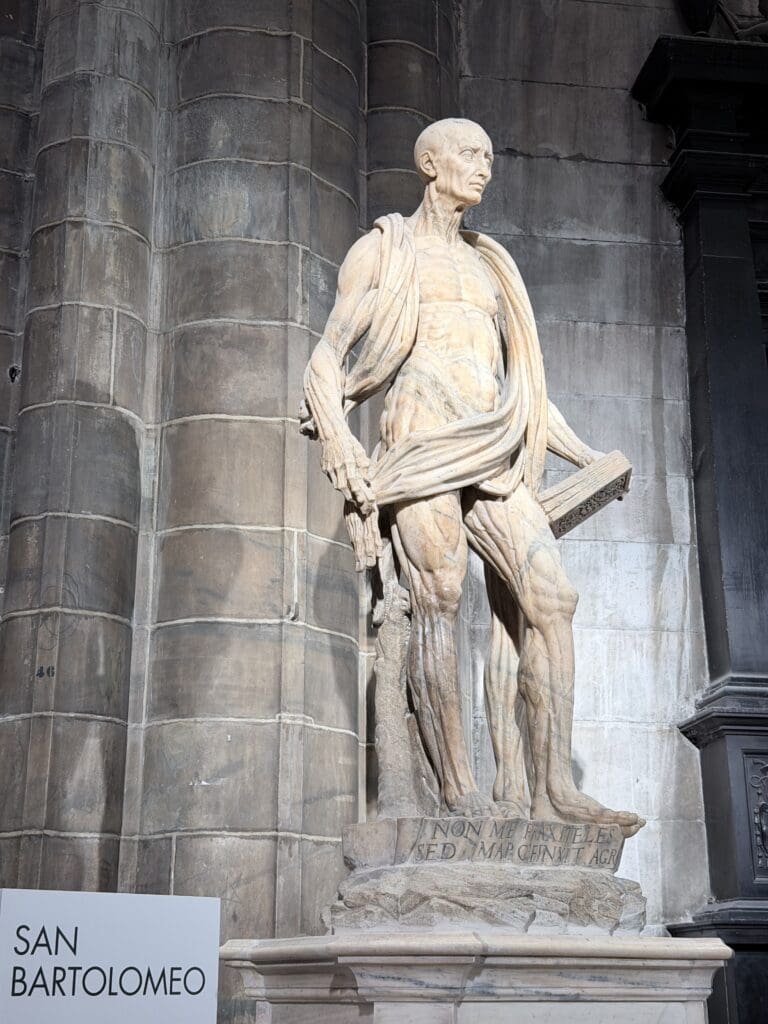
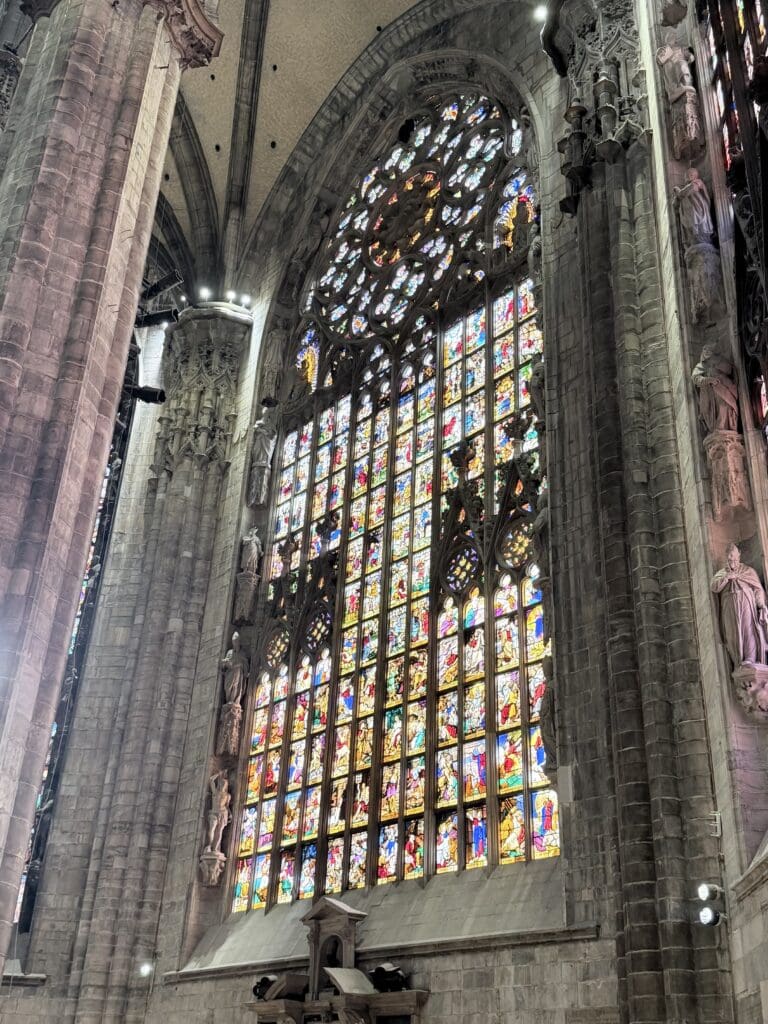
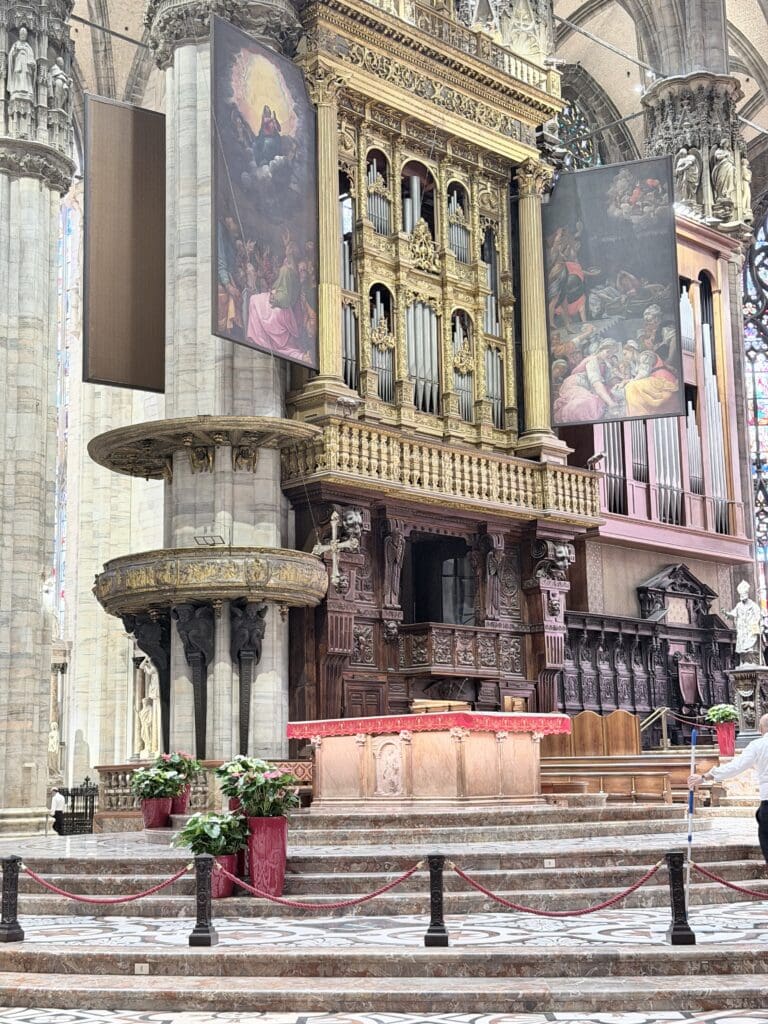
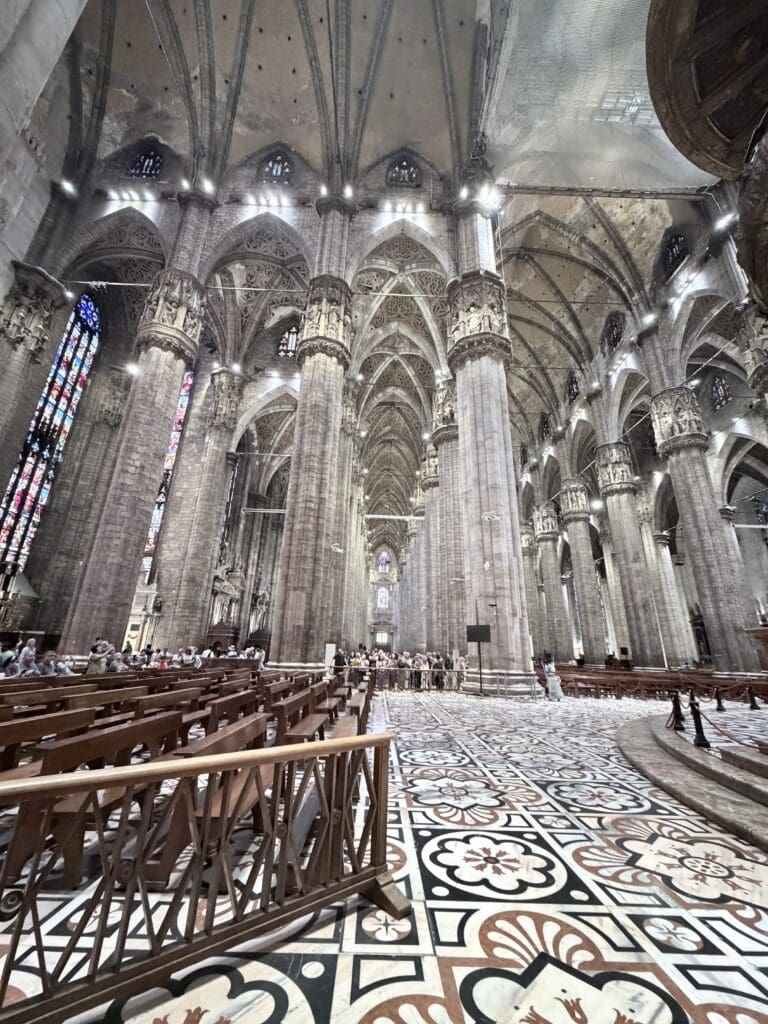
Inside, you find all the church things you expect: towering columns, stained glass, dramatic lighting designed to make you feel spiritually inadequate, but the coolest thing to me was the sundial near the entrance. A small hole in the ceiling lets sunlight hit a brass line across the floor and wall, marking the time and season. Medieval people apparently looked at sunlight and thought, “We should make this significantly more complicated.”
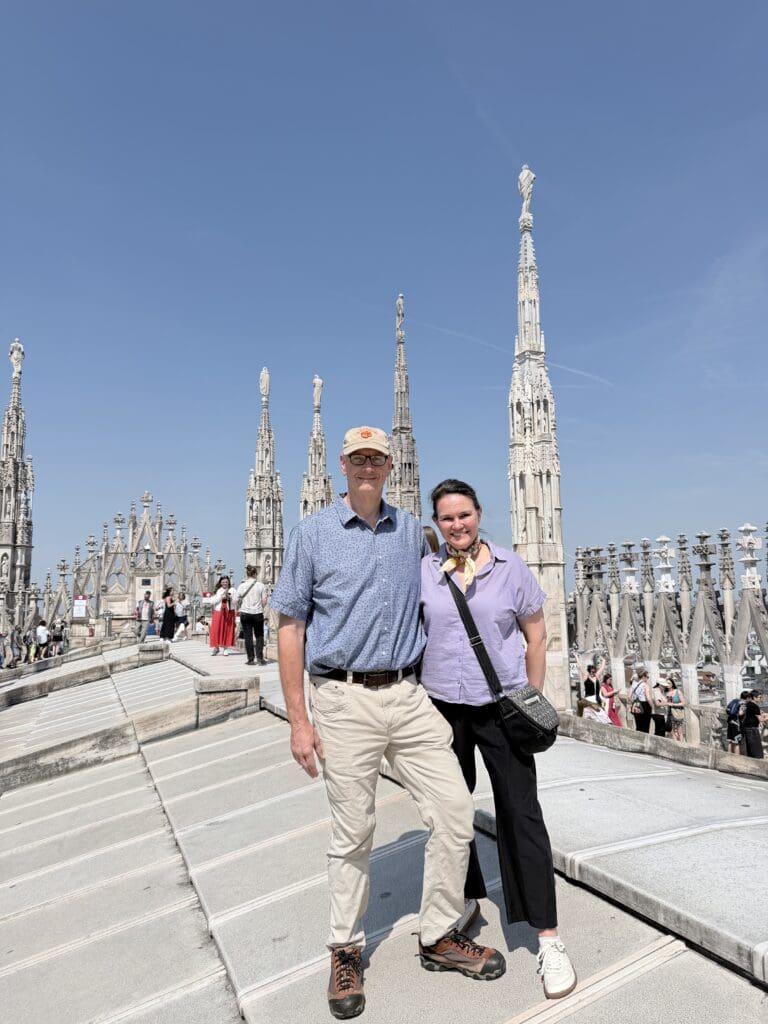
Then we went to the rooftop, which was honestly the craziest part. You actually walk among the spires and statues. And instead of a normal roof with shingles or wood or practical human roofing materials, it’s just… more giant carved stone. It feels like wandering through the set of a fantasy movie designed entirely by obsessive marble enthusiasts.
Next we walked through the Galleria Vittorio Emanuele II, which houses luxury stores where I suspect you may need a reservation just to look thoughtfully at a handbag. But the real attraction is the building itself — soaring glass ceilings, dramatic arches, mosaics on the floor, and impeccably dressed Italians gliding around like they were born knowing how to tie scarves pushing their way around the tour groups.
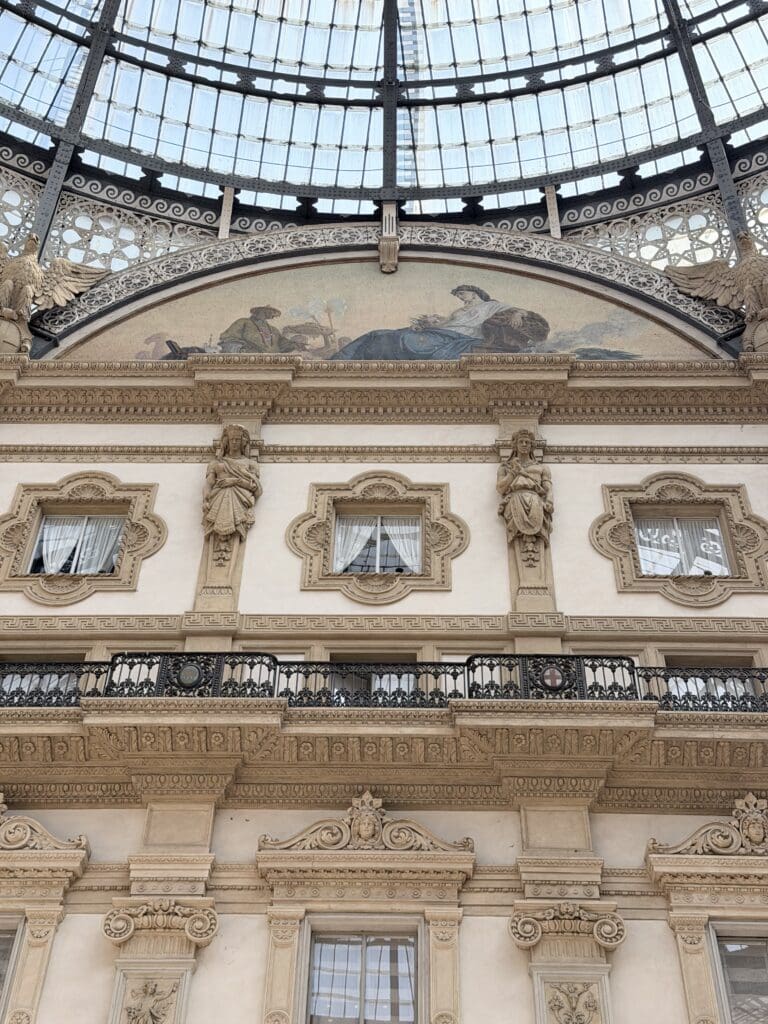
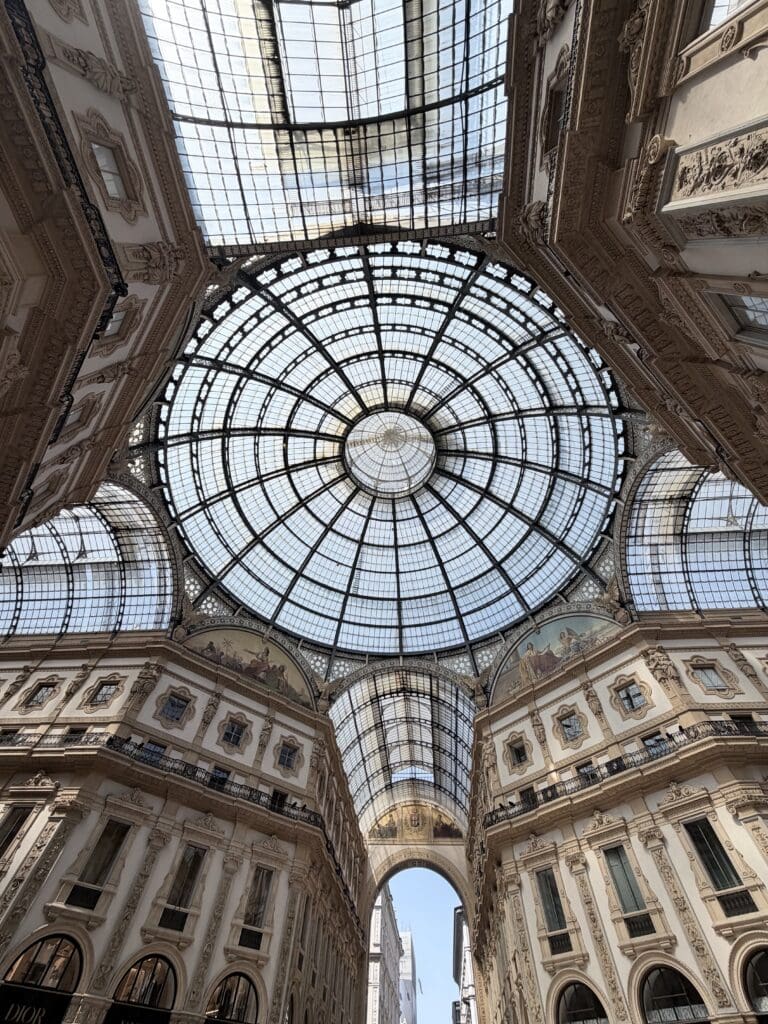
One mosaic includes the symbol of Turin: a bull. Legend says if you put your heel on the bull’s testicles and spin around three times, you’ll have good luck. And listen… if centuries of Italians are willing to publicly spin on bull anatomy for fortune, who am I to disrespect tradition?
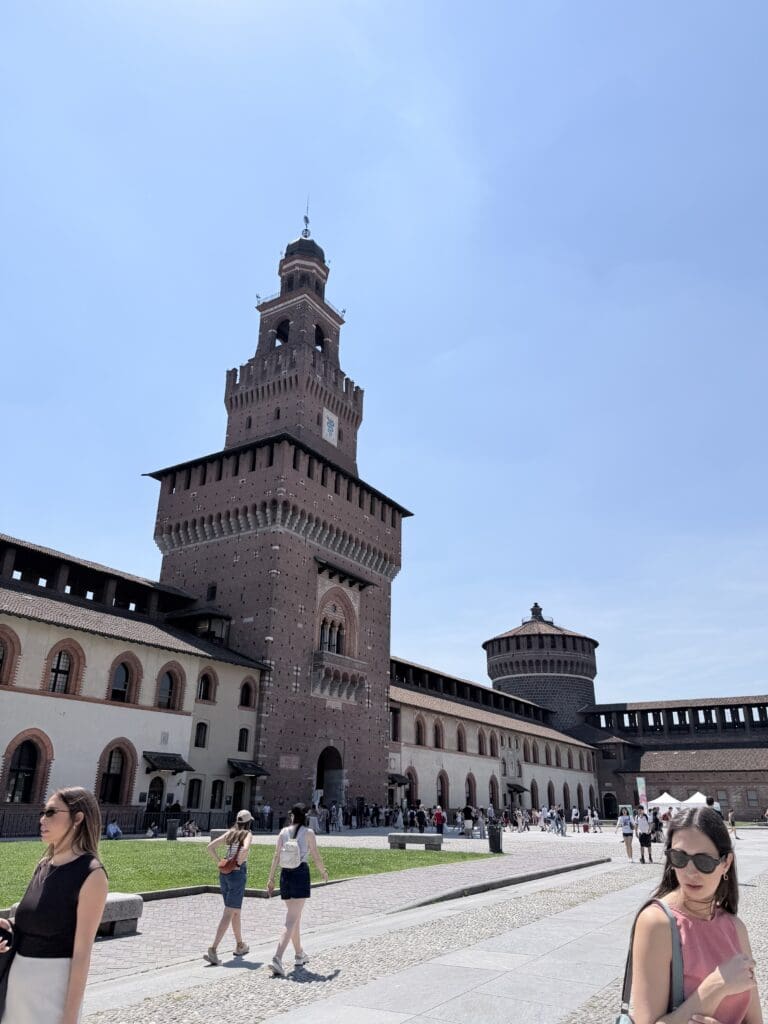
We continued down toward the art museum area where the shops became smaller and more local before heading over to the Sforza Castle courtyards. I had hoped to see Leonardo da Vinci’s mural there, but it’s currently under restoration. — I always need at least one reason to come back somewhere.
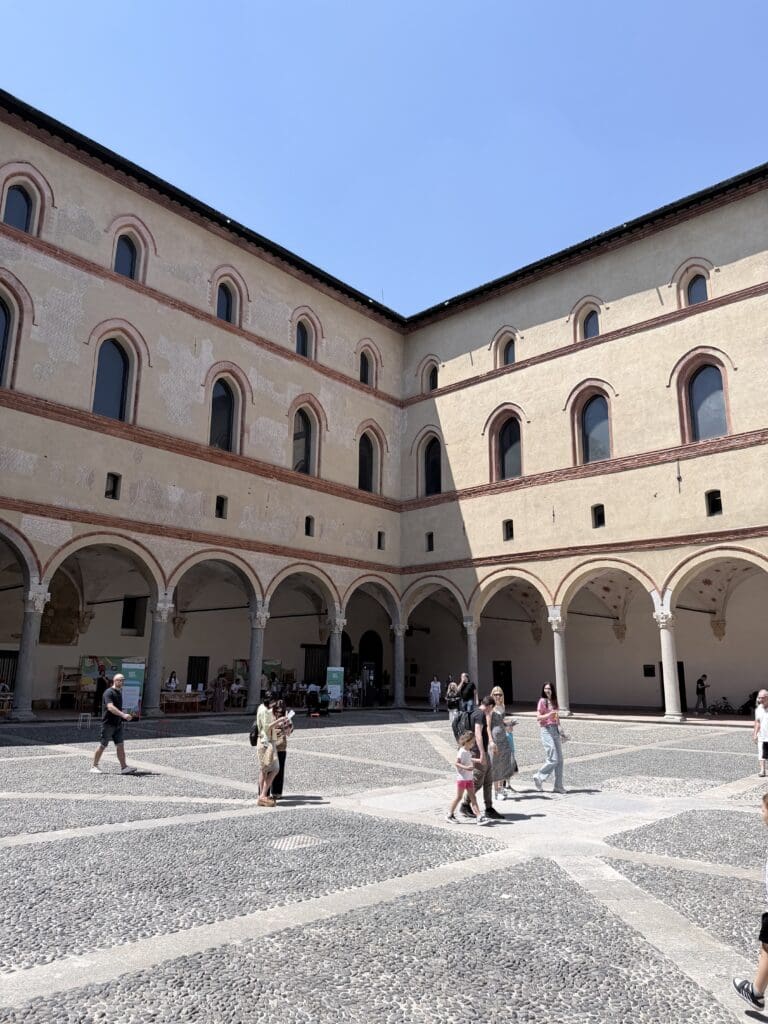
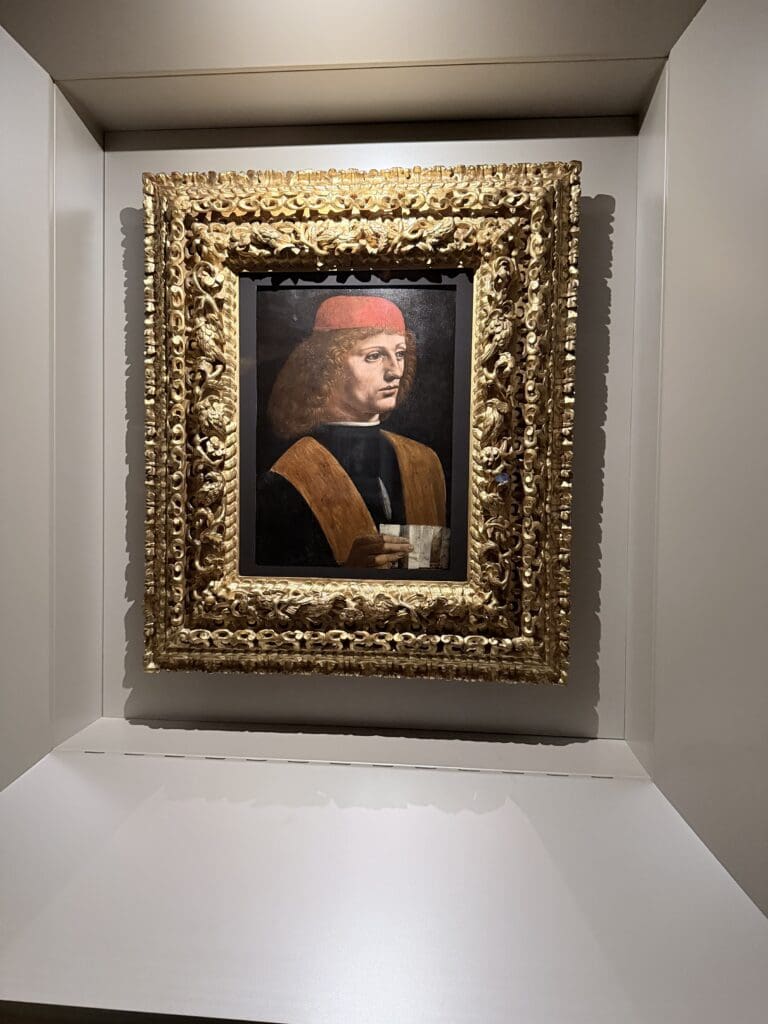
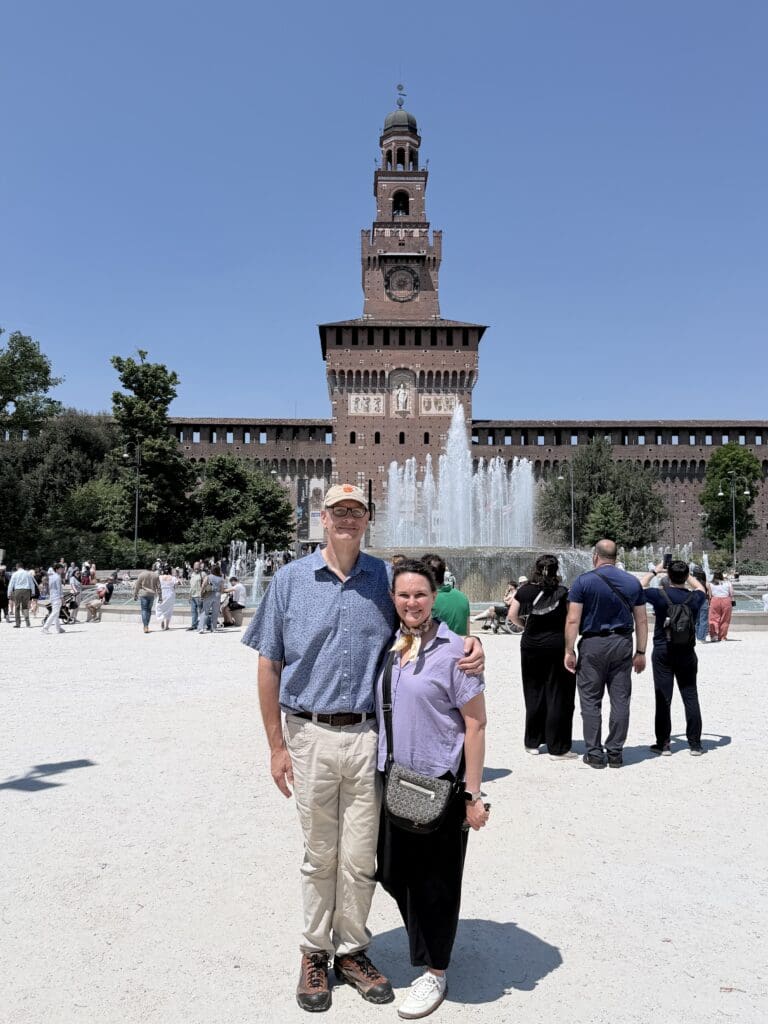
Still, the whole visit sent me down a Leonardo rabbit hole, so afterward I went to the Leonardo da Vinci museum where they have one painting definitively attributed to him and two more they believe may be his. They also displayed pages from one of his codices, which was fascinating because Leonardo’s notebooks basically reveal the mind of someone incapable of having a casual thought.
And finally, we need to discuss Italian dining schedules because I remain confused.
The first night we had dinner reservations at 7:00 p.m. We arrived slightly early and the restaurant was empty. Completely empty. Then they informed us they didn’t OPEN until 7:00.
Excuse me? Where I come from, 7:00 is second seating territory. But Italians eat late. Fine. I can adapt.
What I was not prepared for was the sheer duration of the meal. Dinner is apparently not one event but a series of escalating commitments. First appetizers. Then a pasta course. Then a main course. Then dessert. Possibly then espresso and existential reflection.
And these are not tiny portions.
The second night, after incredible appetizers, giant bowls of pasta arrived. At this point Randy, Alisa, and I were already completely full when I realized Chad had not ordered a main course. Meanwhile the rest of us were still waiting on what appeared to be two chickens and an entire cow to arrive at the table.
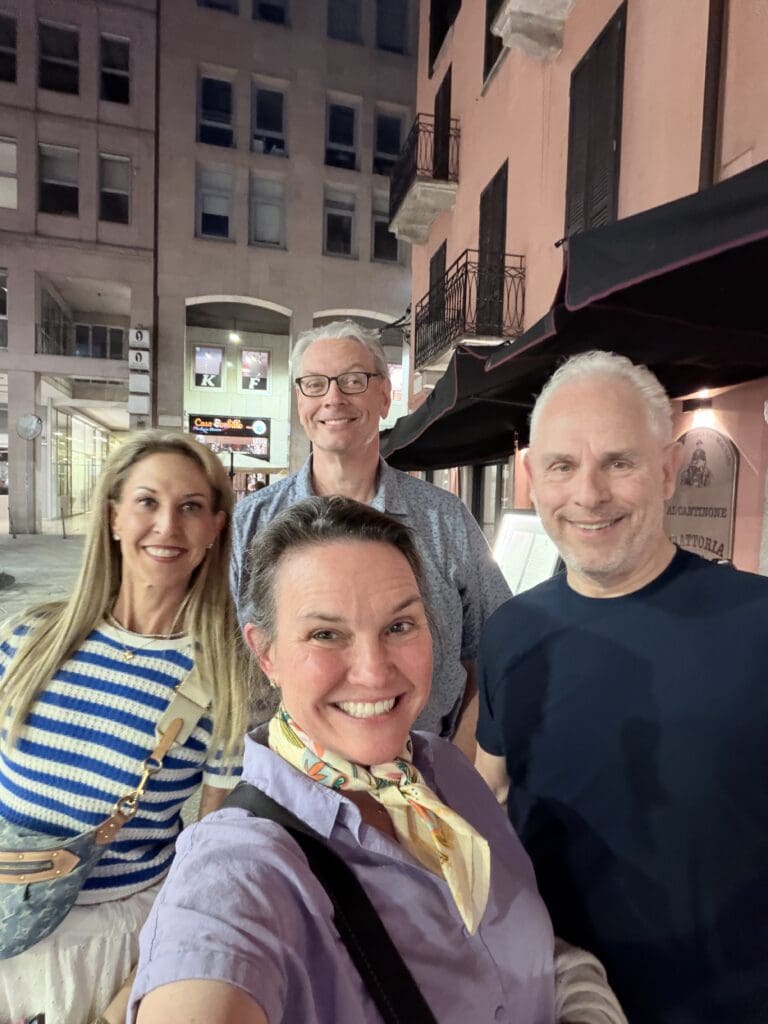
Let’s just say none of us will require nourishment again until sometime in June, and I genuinely do not understand how Italians survive this on a daily basis while remaining both thin and fashionable. It feels medically impossible.
Crosswind Note:
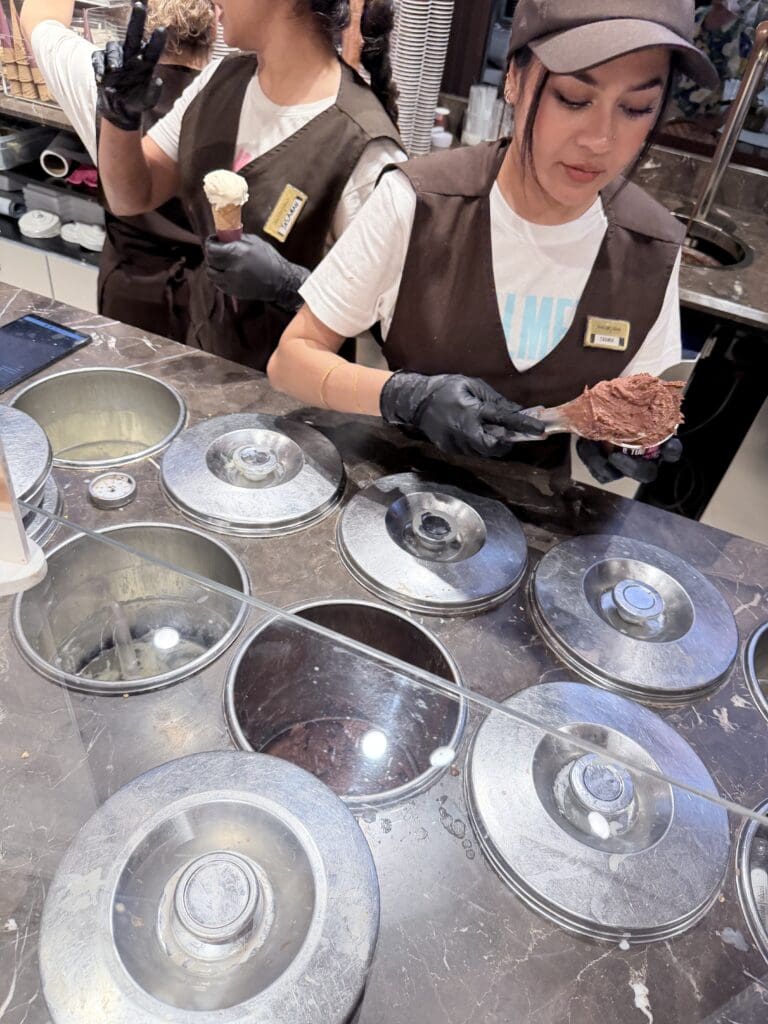
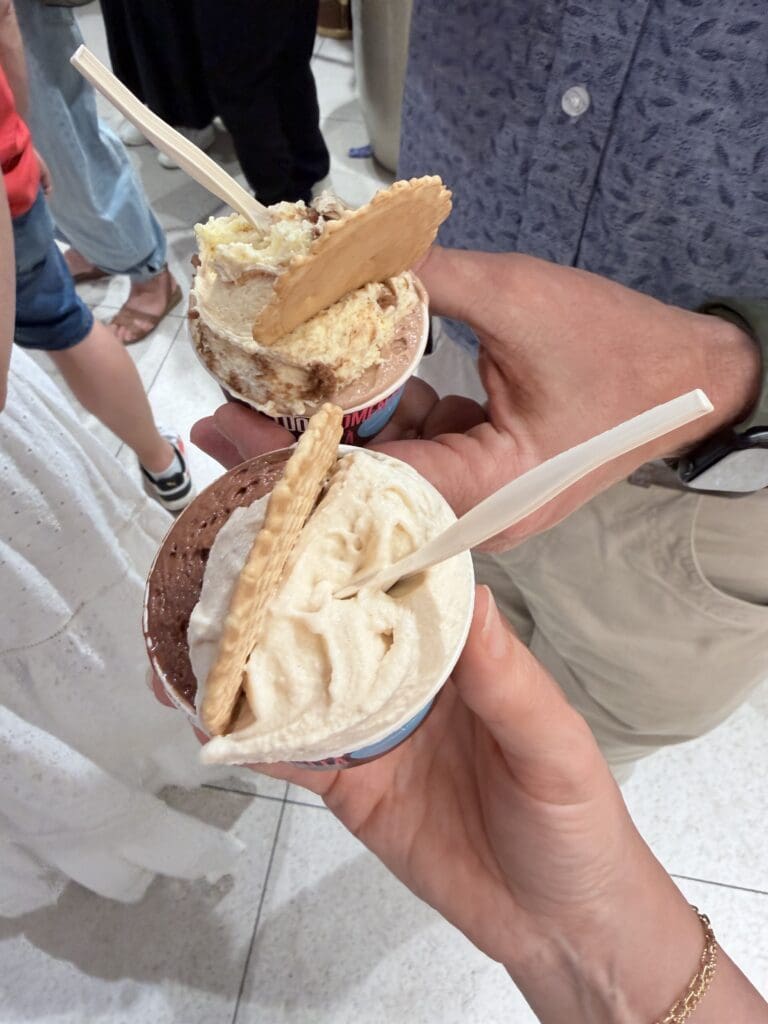
According to our tour guide, those gorgeous mountain ranges of gelato piled high in the market displays? Total tourist bait. No respectable Italian would touch them. Apparently, all that dramatic fluff means the gelato has been whipped full of air — so essentially, you’re paying premium prices for frozen oxygen. The real stuff, the good stuff, stays tucked away under metal lids like it’s in witness protection, only revealed when you step up and order your flavor.