

The Guillotine, the Gallery, and the Glare
This was the day all my obsessive pre-trip preparation had been building toward: The French Revolution—viva La France! We were meeting our guide, Romain, for a three-hour walking tour of guillotines, grievances, and gratuitous palace real estate.
We began at the Luxor Obelisk, a 75-foot spire Egypt gifted France in 1830—because what says “thanks for centuries of colonial meddling” like a 3,000-year-old needle from a destroyed temple? It now stands proudly in the Place de la Concorde, once known as Place de la Révolution—aka the spot where King Louis XVI and Marie Antoinette lost their heads, followed by a rather dramatic number of other Parisians.
I suppose swapping the guillotine for a tall, pointy relic was a step up, aesthetically speaking. These days, most of the square is blocked off to cars thanks to last year’s Olympics. It’s a little more peaceful, a little more photogenic, and significantly less blood-soaked.
Romain, our guide, was thrilled to be there. He radiated enthusiasm in the way only someone who has taught the same three-hour history walk hundreds of times can—somewhere between passion and performance art. Turns out he just loves doing this tour and not many people sign up. Well here we came and he whipped out his iPad every few minutes to show images of revolutionary pamphlets, paintings, and guillotine diagrams, narrating them at a pace that suggested the French Revolution might end again if we didn’t hurry.
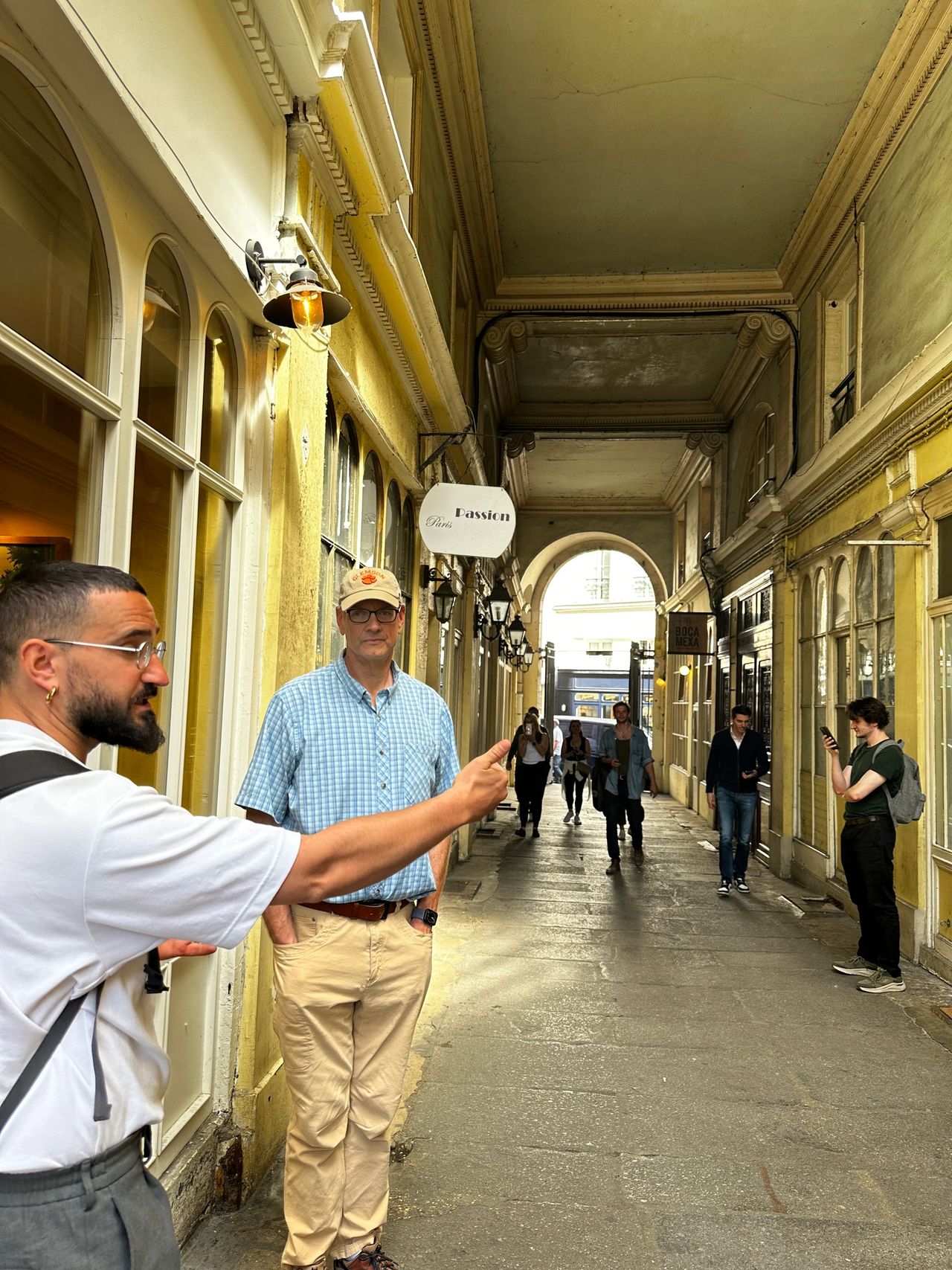
One helpful thing we learned: the Revolution technically ended, but French political chaos didn’t. Paris was in near-constant upheaval for decades. Turns out “liberty, equality, fraternity” are easier to chant than to implement.
Also, the Revolution was very much a Paris thing. Out in the countryside, people weren’t exactly clinking glasses to the downfall of the monarchy. In fact, many weren’t thrilled about the city’s liberal intellectuals stirring the pot—a dynamic that, if we’re being honest, hasn’t changed all that much.
To illustrate the sheer absurdity of the class divide, Romain pointed to two enormous buildings—each taking up an entire city block. I assumed they were embassies or ministries of something extremely French. Nope. Private homes. Aristocrats, it turns out, were like real estate influencers before Instagram. And if one of them wronged a commoner—assault, theft, public humiliation—there were no legal consequences. So when the commoners finally got the chance to literally cut ties with the aristocracy, they did so with gusto. And blades.
After our deep dive into revolution and resentment, we headed to the Musée d’Orsay, home to art from 1848 to 1914 (the art between the classical Louvre and the avant-garde Pompidou). It’s housed in a gorgeous old Beaux-Arts railway station, which sounds whimsical until you realize train stations were not designed with crowd flow in mind.
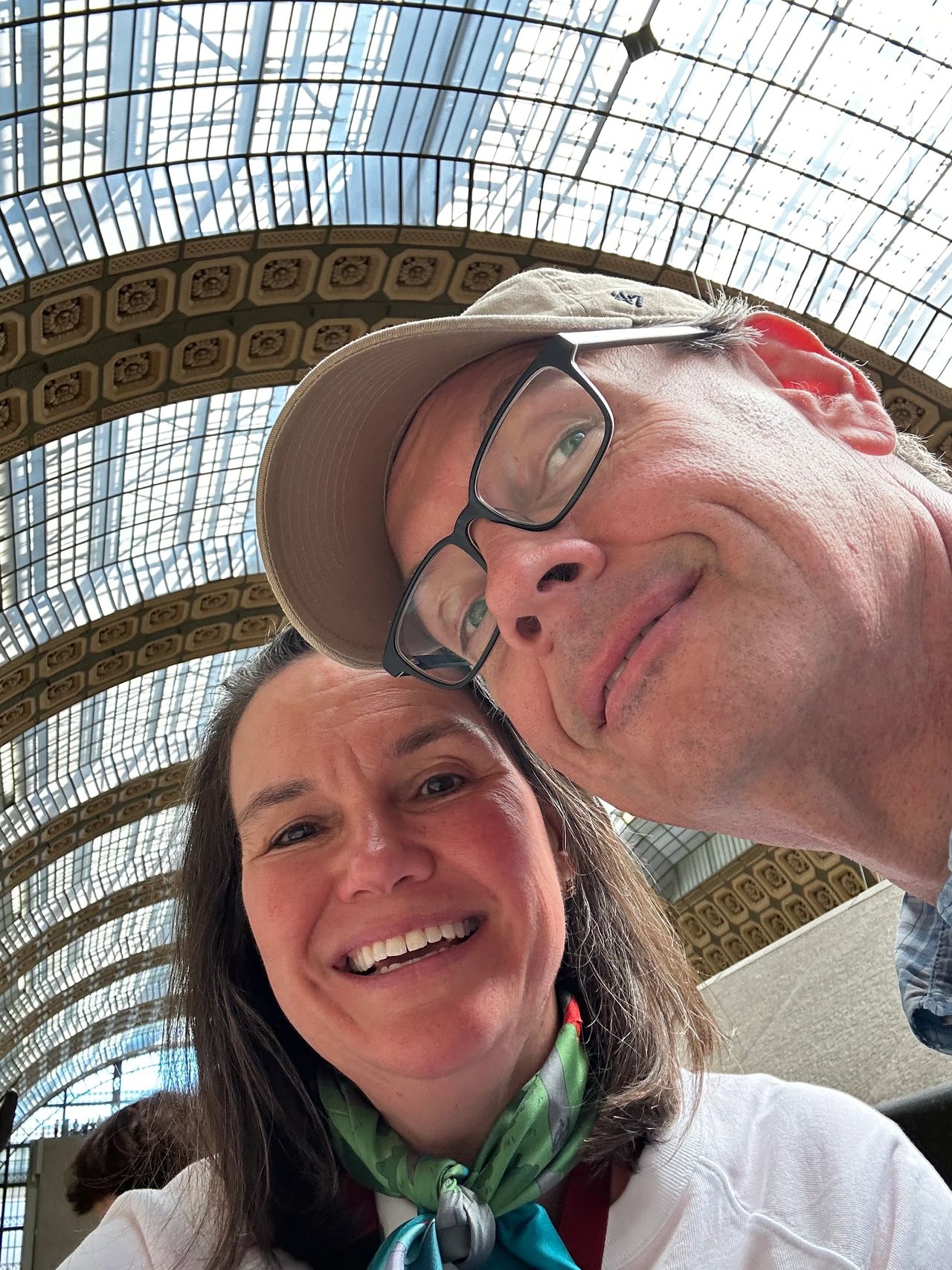
The last time I visited was with the girls, and we went early—very early—which I now recognize as the only correct choice. This time, the museum was packed. Not with art lovers, but with people staging elaborate selfies in front of Van Gogh’s brushstrokes, angling themselves just-so while giving death stares to anyone who dared walk through the frame.
It was, quite frankly, a terrible viewing experience—unless you’re into watching tourists emotionally unravel while failing to get the perfect picture of a picture. I was already pushing it with Chad by dragging him through another art museum, and this one didn’t even have the decency to be fun. We did a quick lap. The cheese from yesterday whispering to me from memory. I needed a nap.
Thankfully, there was dinner to look forward to. Earlier that day, Romain had mentioned his favorite restaurant in Paris: Frenchie Pigalle. Chad called and snagged a reservation. They were very clear: we had to be out by 9 p.m., which confused me at first—I was hoping to be asleep by 9 p.m. “Not a problem,” as if I weren’t fantasizing about putting on sweatpants at that very moment.
After my nap—reviving, divine—I asked Chad if we could go early. He said they didn’t open until 6:30. We had the first reservation. It turns out middle-aged Americans and Parisian dining hours are fundamentally incompatible.
Dinner was excellent. Truly. If you get a chance to go, take it and I recommend the seam bream ceviche, garden pea anglonotti, and the herbaceous tartare. All quite striking in a presumptuous Parisian sort of way.
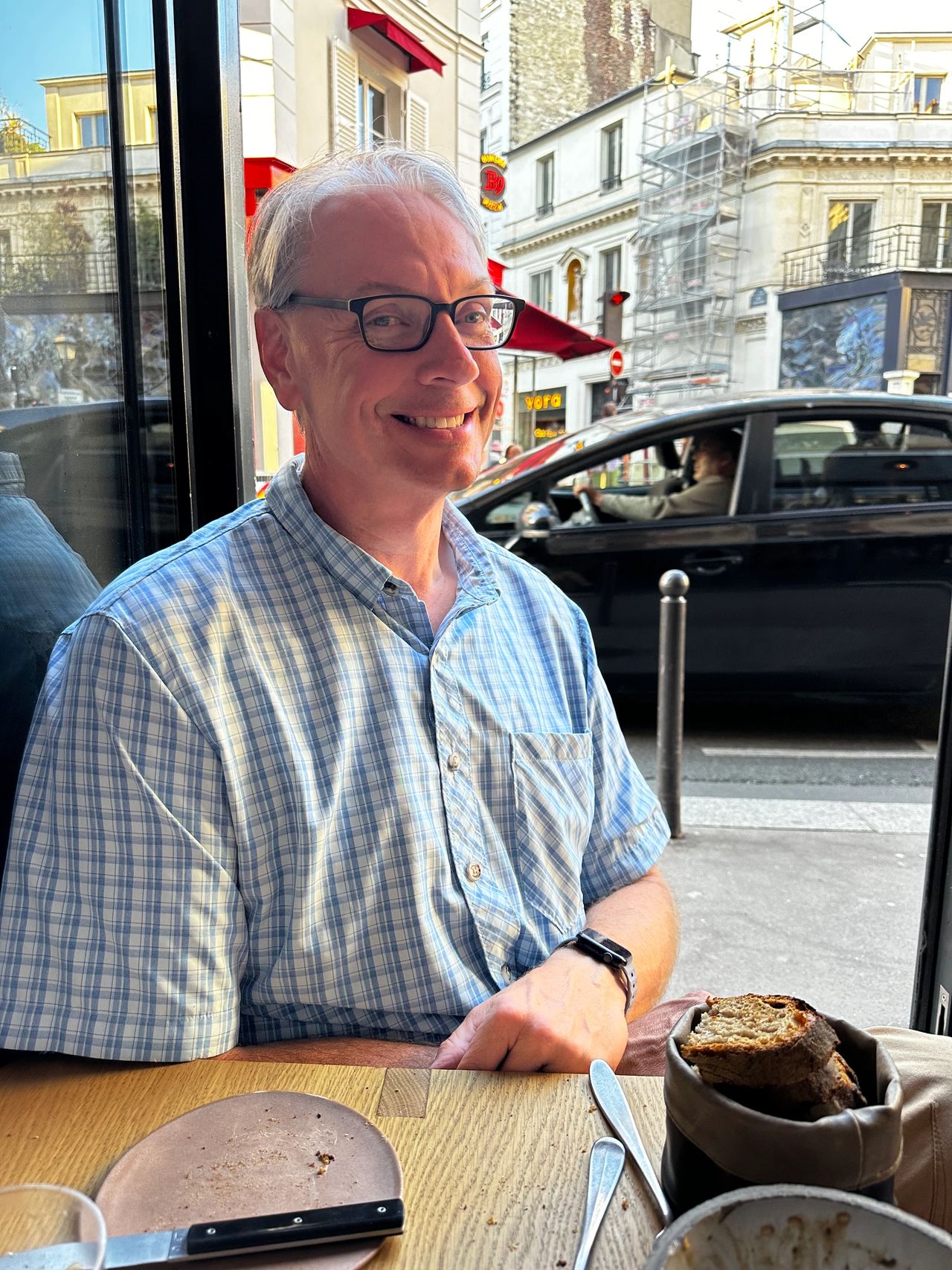
In Paris, every dinner comes with a show. The tables are set specifically to watch the goings on outside. We had a motorcycle cop blocking the street to anything motorized for some reason. Bike with a dad and kid, have at it. Scooter with a uber eats delivery— forget about it. Whatever emergency having passed, the motorcycle cop scooted away and the pulse of traffic resumed.
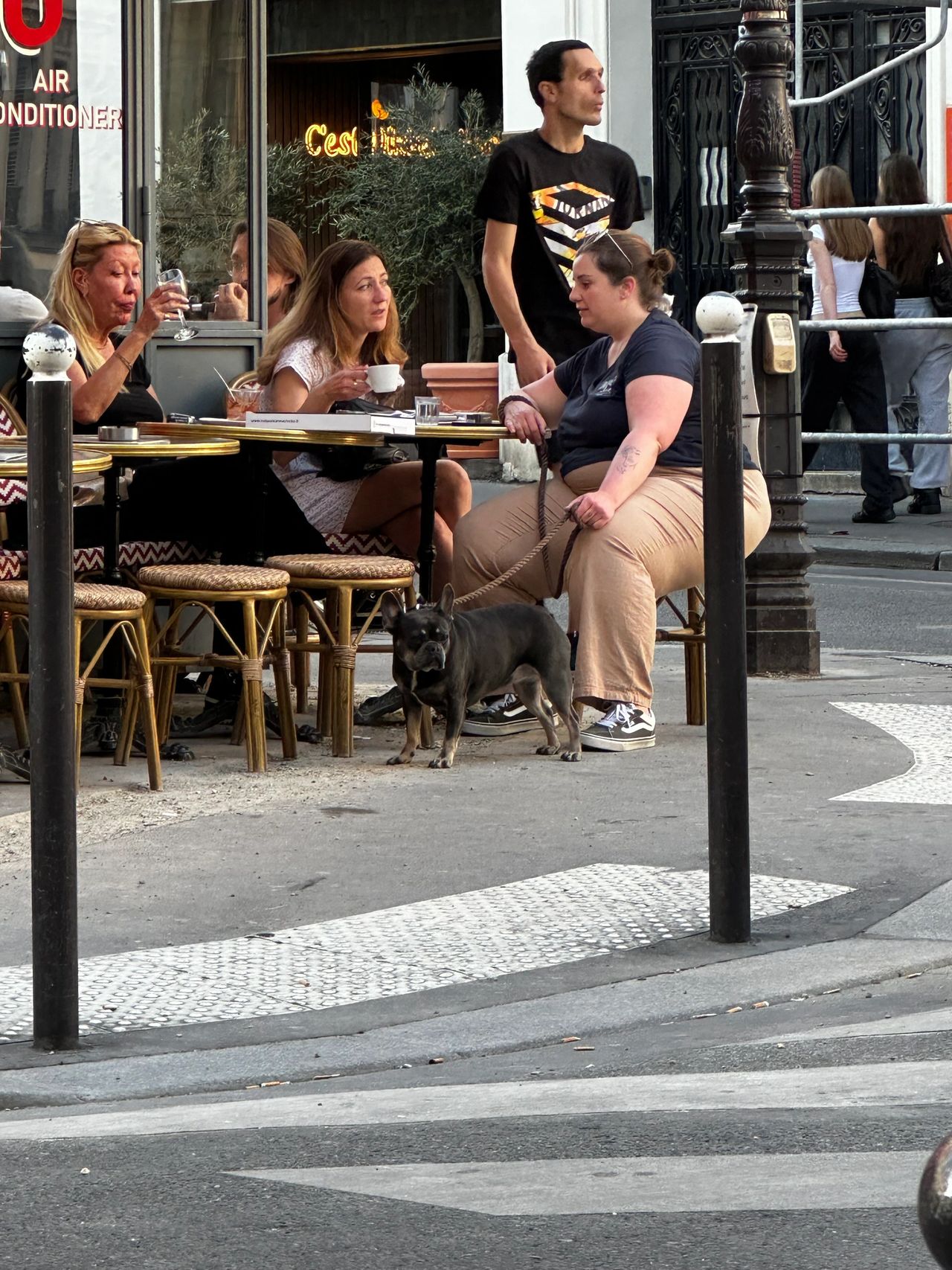
We did have our first French bulldog sighting today. Normal level of cuteness for the breed. I wonder if they just call them “bulldogs” in France, because honestly there are all French here— like Chinese food in China is just called food.
Afterward, we strolled to the Metro. The city had thinned out. Maybe it was the late hour, or the fact that we were slightly outside the tourist zone, but for once I had a feeling: this could be it.
Sure enough, two men were sitting across from us on the train. One looked up. We made eye contact. There was a flicker of recognition, a soft smile, a slight nod. Nothing dramatic—just a moment.
It felt like acceptance, if only for a second.
