

Cheese, Churches, and the Parisian Stare
Our first full day in Paris I can happily report was lovely—lots of walking, people-watching, and just soaking it all in. Naturally, I had a few missions in mind, so I put together some guided tours for Chad and me to learn a little something along the way.
First up: Notre-Dame.
We toured it back in the summer of 2012 with the kids, and I remember being awestruck by the stained glass windows. Like most of the world, I was stunned watching it burn in 2019. When the girls and I passed through in 2023, Abbie and I walked around the barrier walls surrounding the reconstruction site. To their credit, the French had plastered the fencing with all kinds of great information about what was happening behind the scenes. It only made me more excited to see it in person again someday. (Info from the barrier walls.)
So when I heard in December that it would finally reopen, I was determined to get inside.
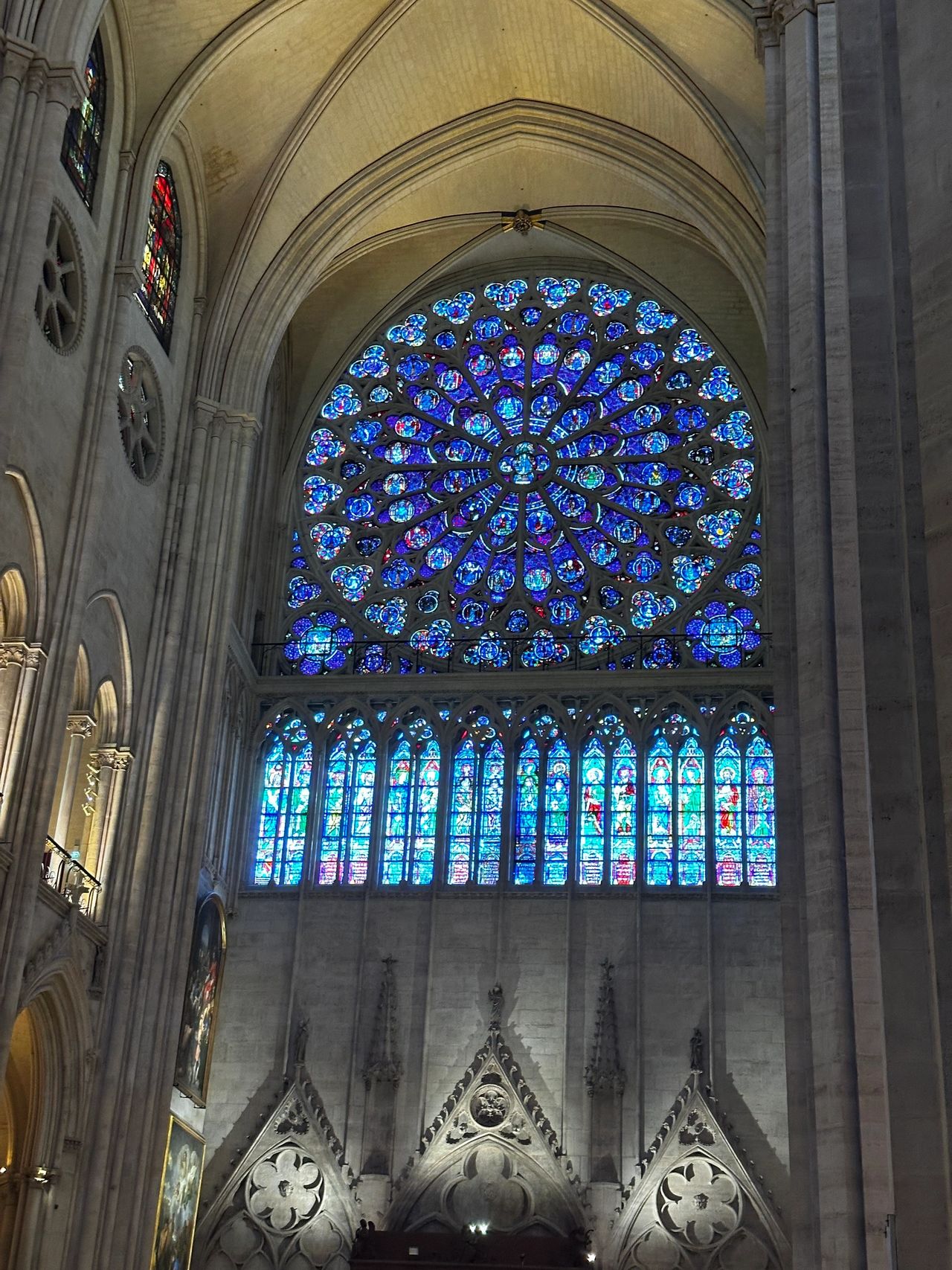
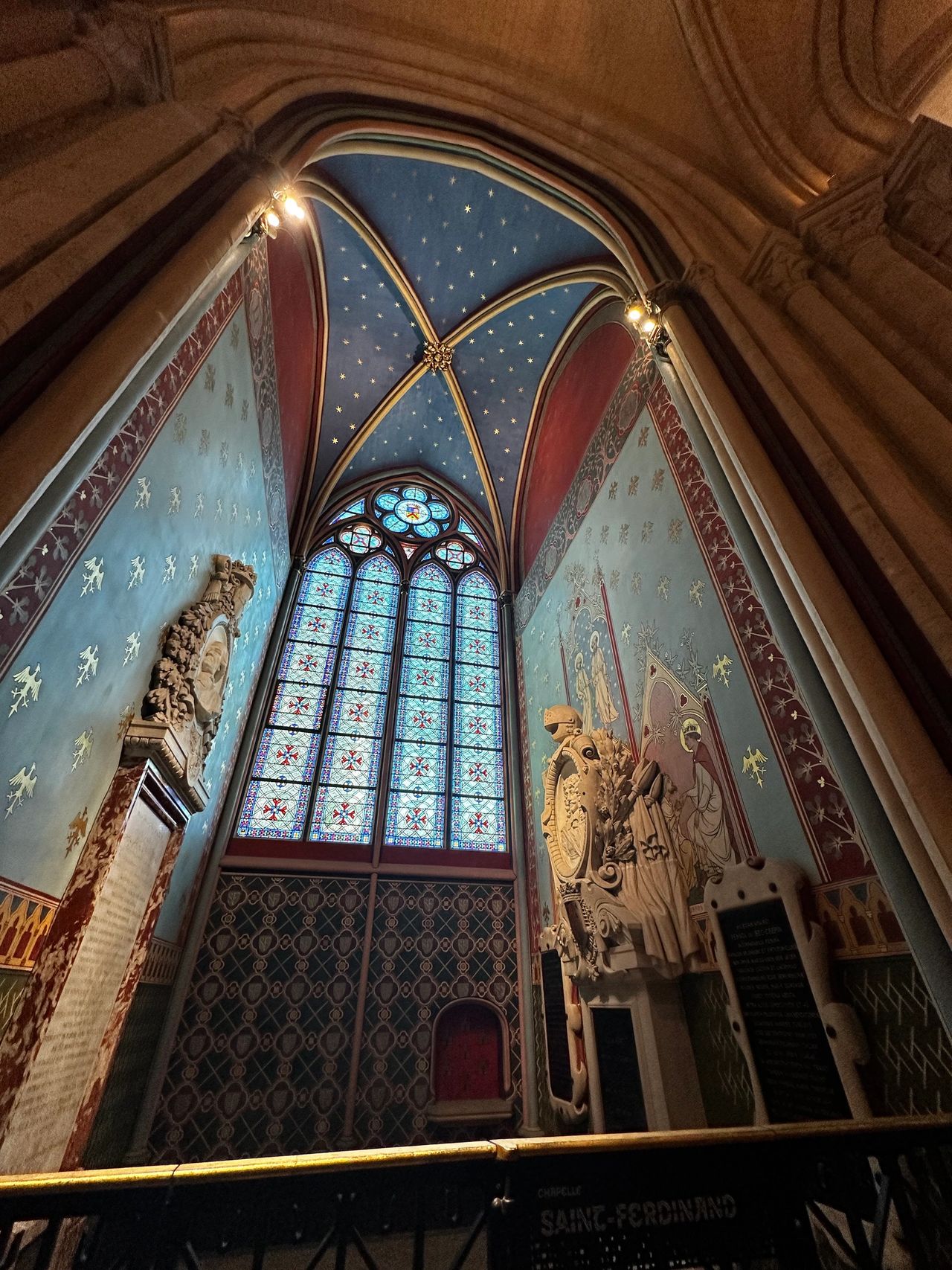
Tours inside the cathedral aren’t happening just yet, but our private guide had tickets—so we got to skip the line and go in. Technically, she wasn’t allowed to give a formal tour inside. But let’s just say… we had a nice chat.
Notre-Dame has had a rough go of it over the centuries. During the French Revolution, it was neglected, vandalized, and partially destroyed. Napoleon spruced it up for his coronation by hanging massive tapestries—though honestly, it needed more than window dressing. Then in 1831, Victor Hugo wrote The Hunchback of Notre-Dame, and suddenly everyone remembered they loved the place. A 20-year restoration kicked off in 1844 to bring it back to life.
Then came the fire, and the donations. Over $800 million poured in. I asked our guide if she thought it was a blessing in disguise. She smiled and said, “We can’t say that out loud.” Which is French for “yes.”
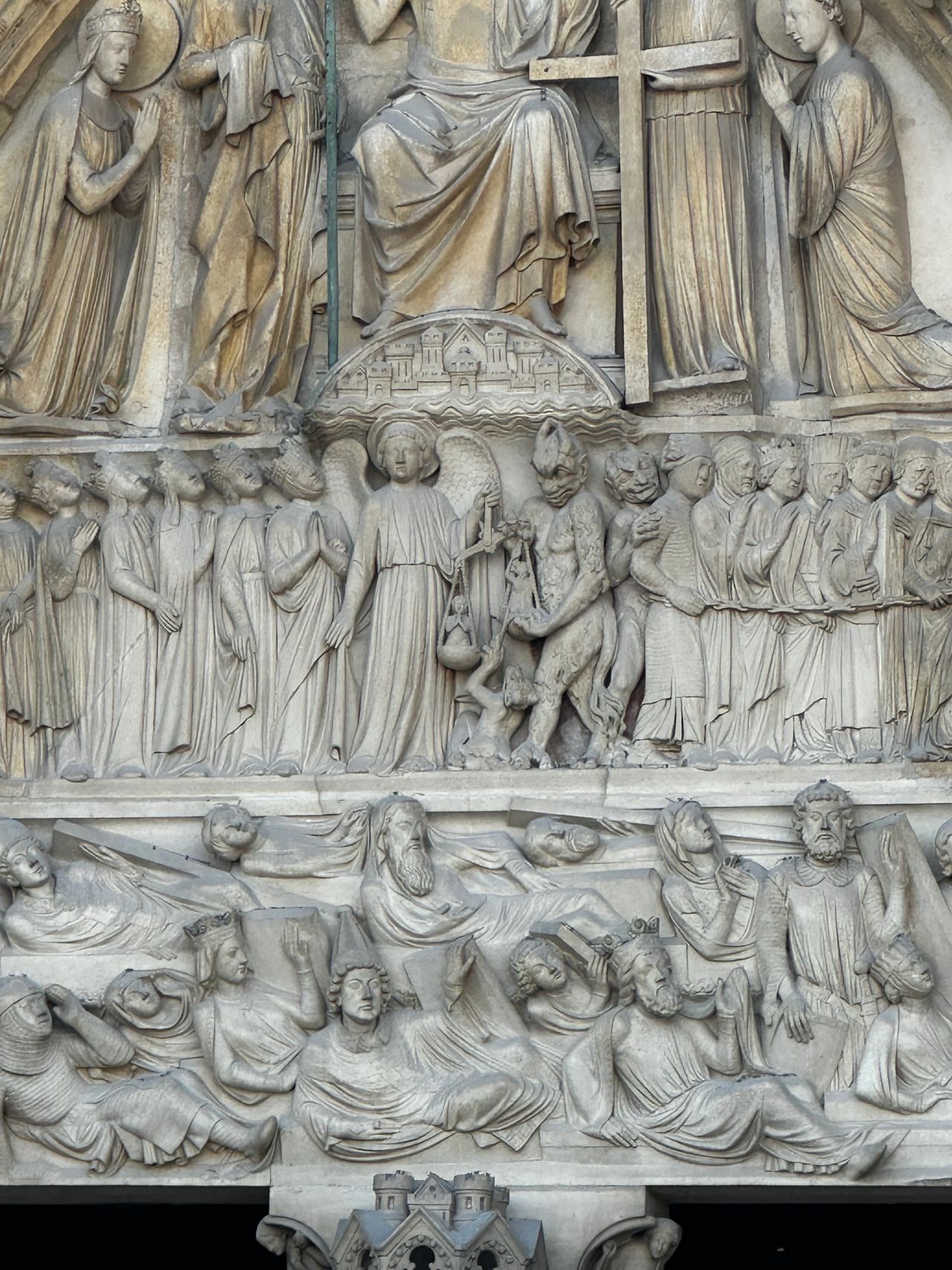
One thing I’d never noticed: on the front façade, above the central portal, is the weighing of souls. Sin weighs you down, apparently. The heavier you are, the more likely you are to go to hell. And even if you’re borderline, the demon might cheat and pull your side down anyway. It’s like spiritual jury duty—rigged and terrifying. If I were illiterate in the Middle Ages, I would’ve sprinted into confession with a full confession and a small bribe.
We were staying on the Île de la Cité (island in the middle of the city), and walked over to Sainte-Chapelle, tucked inside what’s now the Palais de Justice (formerly the royal palace). Our guide, who went back to school during COVID to finish her law degree, showed us photos from her graduation—robes, cravat, the whole nine yards. The shop where you get your outfit is right across the street from the Palais, in case you’re ever in need of legal cosplay.
But back to the chapel. If you’re into stained glass, this is your cathedral. The light alone is enough to convert you.
Also on the island is the prison where political prisoners were held during the French Revolution—including Marie Antoinette, who spent her final days there before her infamous haircut.
Chad was a good sport about three hours of church-related tourism. Our next stop was more his (and my) speed: food.
We headed to the 3rd arrondissement—Le Marais—for a food tour, and I’m not going to lie: I was very excited.
We met our guide Audrey, a Paris native, named after Audrey Hepburn—her mother’s favorite actress. She took us first to Marché des Enfants Rouges, the oldest covered food market in Paris. The name means “Market of the Red Children,” a nod to a nearby orphanage where the children wore red uniforms—red being the color of charity.
There was every kind of food imaginable, but Audrey said most Parisians’ favorite cuisine is Moroccan. She took us straight to a Moroccan stand where we had two incredible dishes. She explained that many Parisians vacation in Morocco because the language is shared (thanks to colonial history), the scenery is beautiful, crime is low, and—bonus fact—it’s a dry country (maybe don’t lead with that on the brochures).
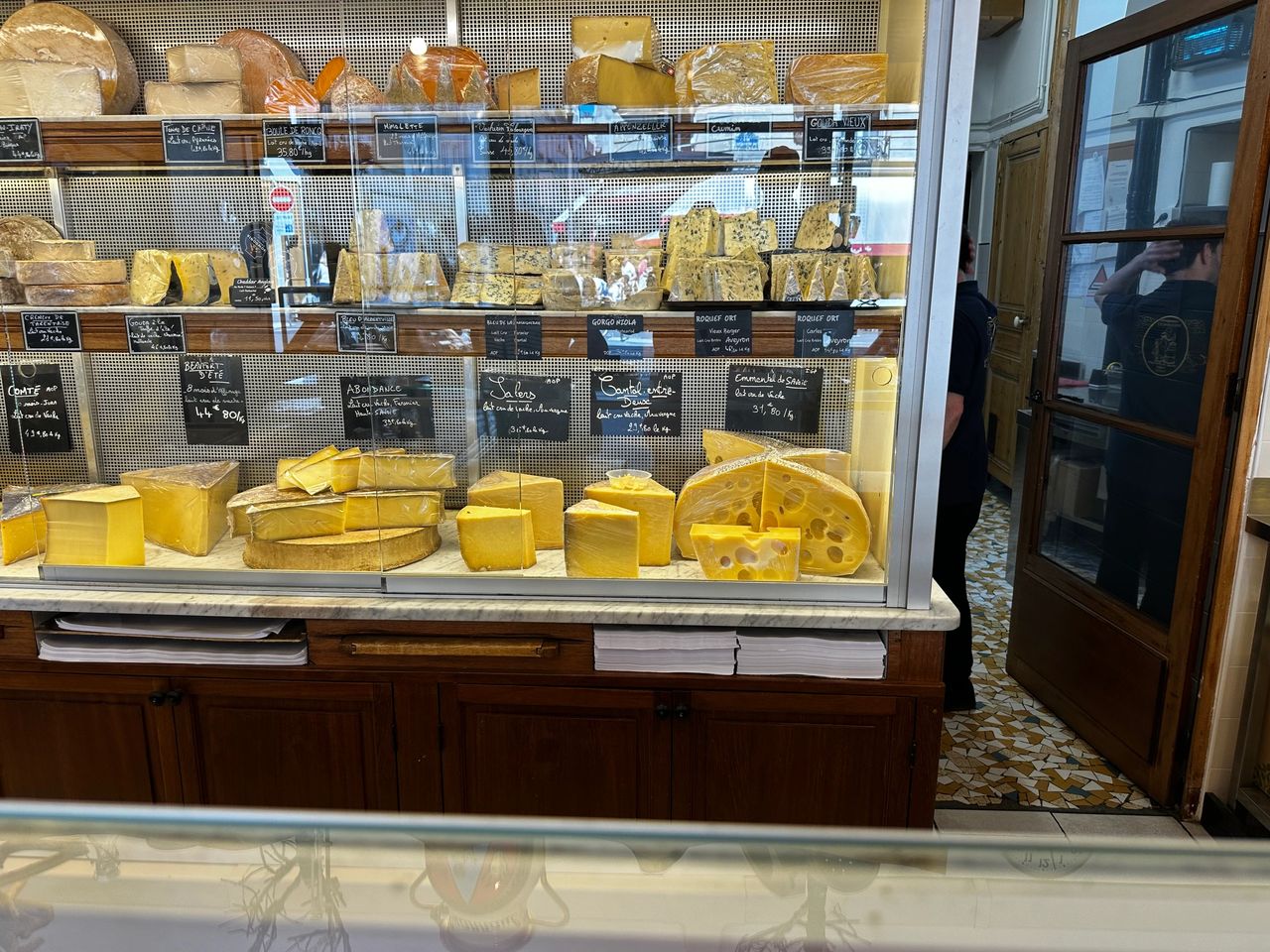
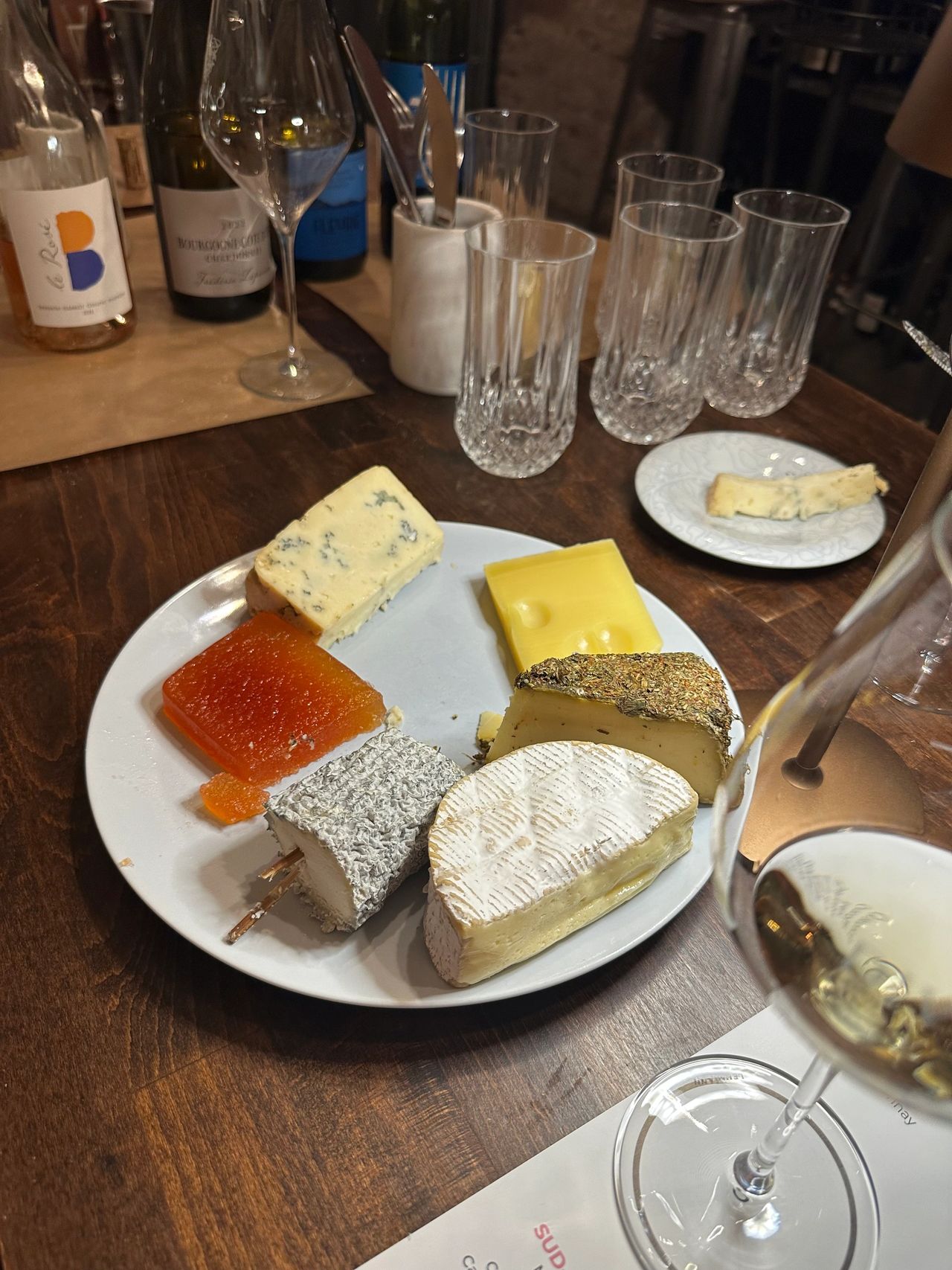
Next stop: cheese shop, Fromagerie Jouannault. Oh my. France has more cheeses than days in the year. The original plan was to pick three types to pair with our wine tasting. But Audrey asked if I wanted more, and obviously, I said yes. I’m never turning down cheese. The shop had cow, goat, and sheep cheeses—and a little humor, too. I loved the tiny fans in the display case, there to shoo the flies away since the counter was open to the air.
Then came a waffle—not the breakfast kind. This was a flat, crisp waffle with cream sandwiched inside, like an Oreo for grownups. I saved it for a late-night snack. Good call.
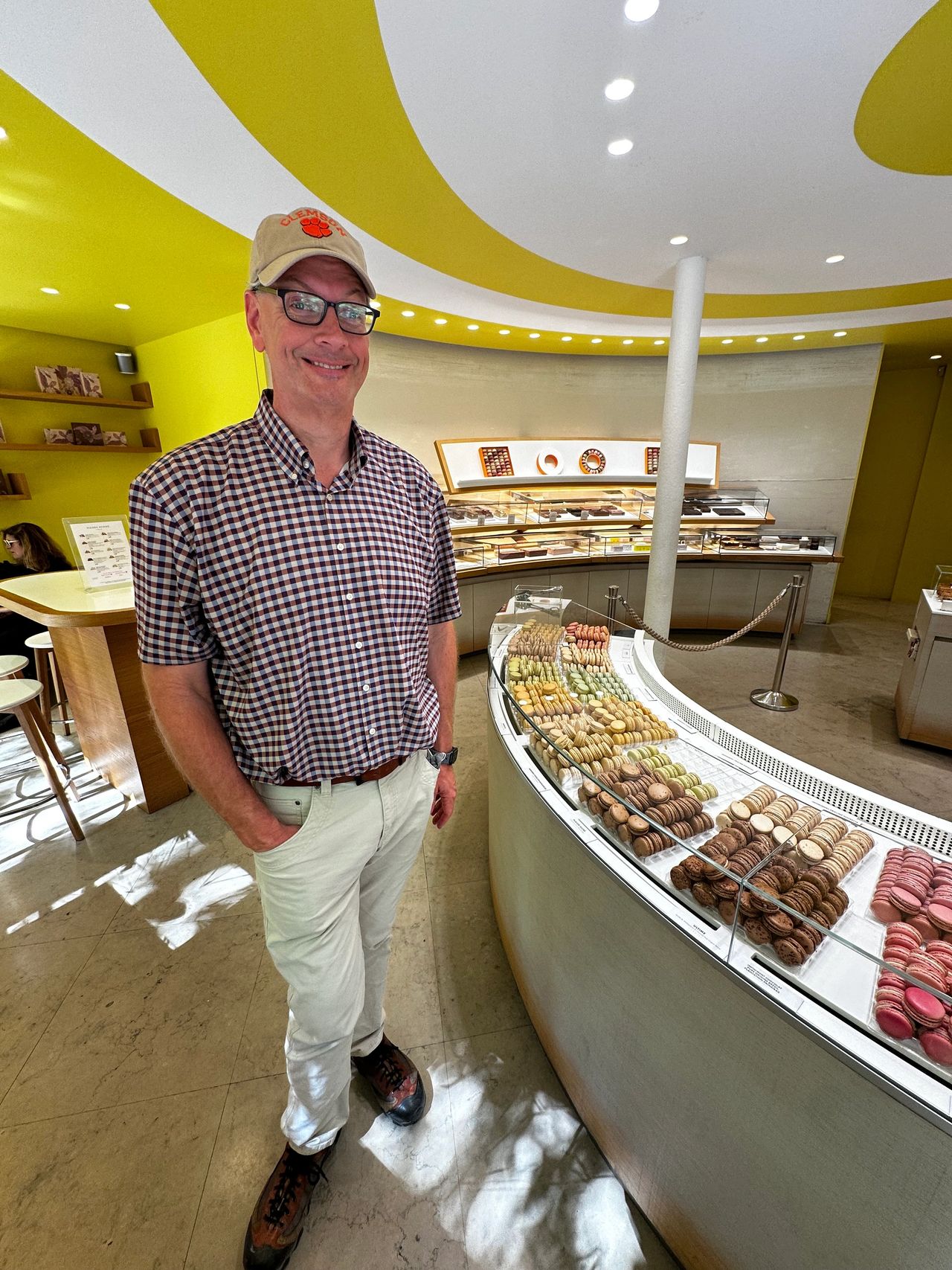
We hit Poilane a bread shop for their legendary sourdough, then Pierre Herme a macaron shop with the most elegant display imaginable, where a very proper man delicately packed each pastel treat with silver tongs.
We made a quick detour to Audrey’s favorite crêpe stand and took ours to go. We sat on a bench near the Picasso Museum and watched kids play soccer while she told us about the street artist Invader, who places pixelated mosaic tiles on corners all over Paris. Audrey has a friend who works for him—his identity is a secret—and it’s become a whole game: find the Invader.
Finally, we ended up at Divvino, a wine shop for a tasting from different regions of France. I’m sure the wine was excellent, but honestly, I was still so excited about the cheese I barely noticed.
As we wrapped up the day and waddled back to the Metro station—bellies full, feet slightly sore—I felt oddly triumphant. We had cracked the Paris subway system. There’s a quiet pride in figuring out public transit in a foreign country, like you’ve been granted honorary local status, or at least temporary parole. Still, I remained stubbornly hopeful—borderline obsessed—that someone, anyone, on that train would make eye contact with me. They didn’t, of course. This is Paris, not a therapy circle. But I kept trying. Because deep down, I believe in the impossible. And because I had just eaten my weight in cheese.
