
Apparently, This Is Why They Call Them the Badlands
We flew the Vision Jet to Rapid City, South Dakota, with a quick stop in St. Louis to refuel, stretch our legs, and find something to eat. We borrowed a crew car from the airport and found Annie Gunn’s nearby, where we had a proper lunch before climbing back into the plane for the final two-hour flight to Rapid City.
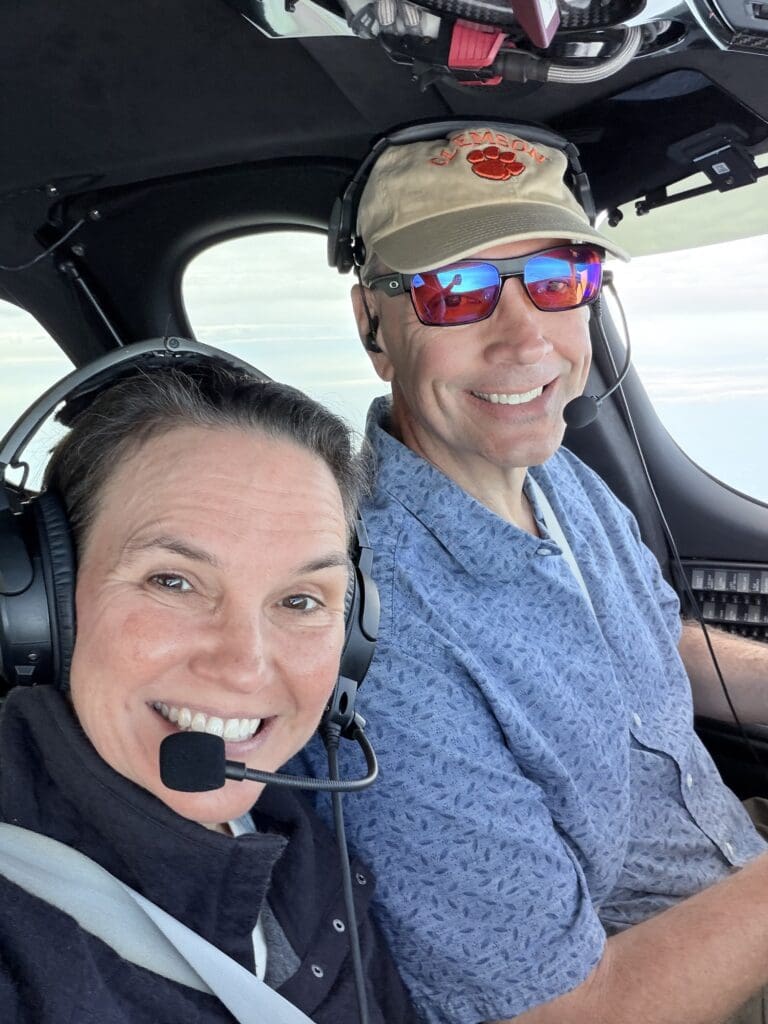
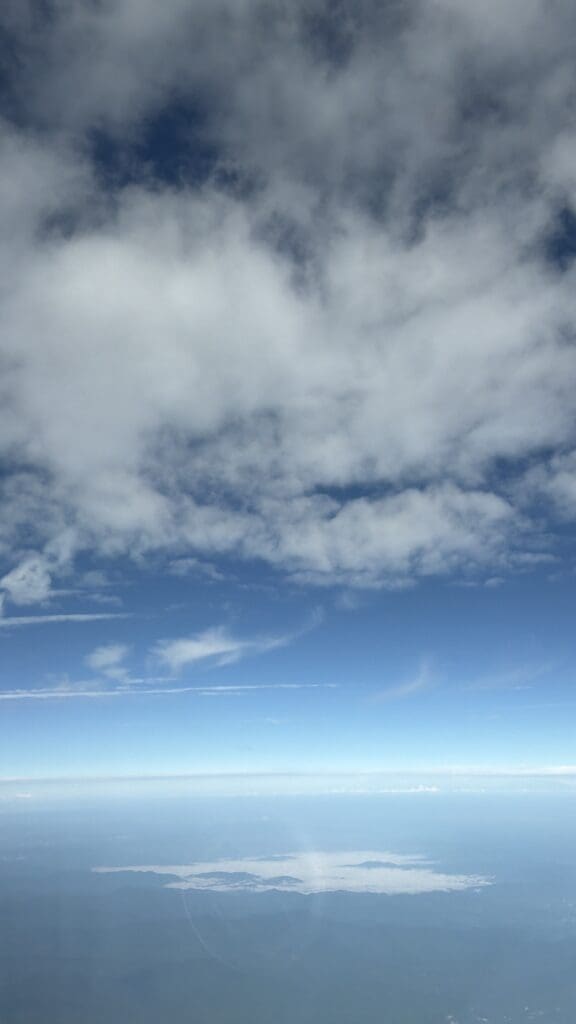
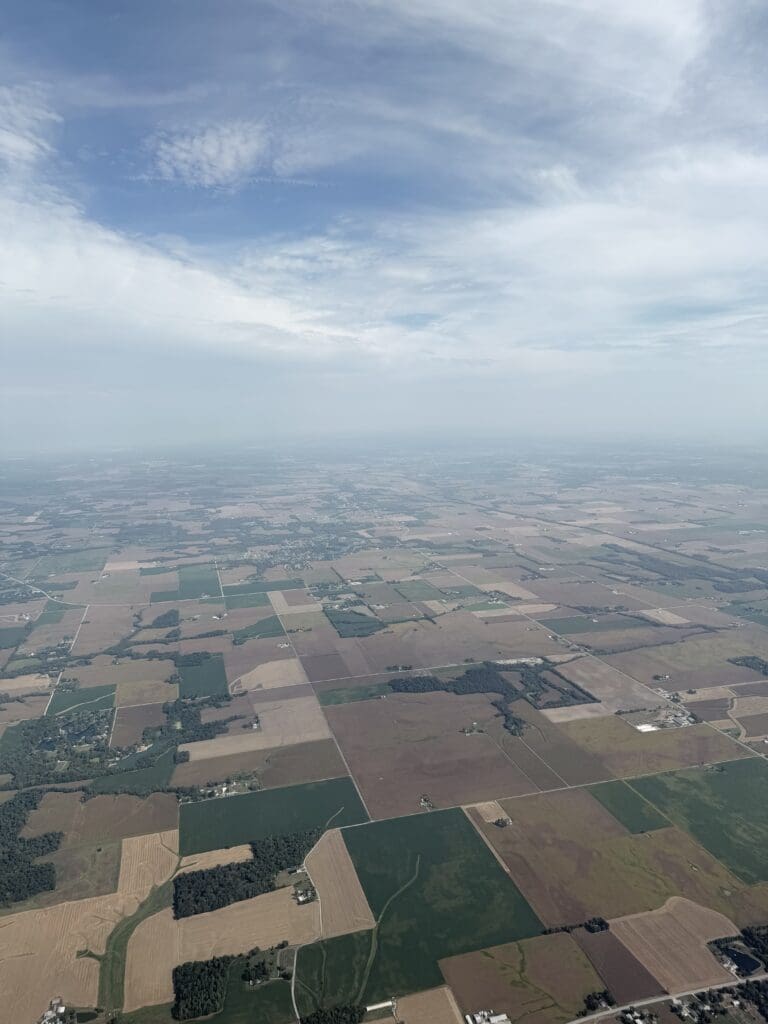
I am still a little nervous when we fly through lots of clouds, especially when the radar starts showing those darker colors that indicate storms. We had some weather to work around on the way into Rapid City, and I kept a pretty close eye on the radar, as though my staring at it might somehow help.
The funny thing about learning to fly is that I now know just enough to make myself considerably more nervous than I used to be. There was something very comforting about being a completely uninformed passenger. You sat in the back, drank your Diet Coke, and assumed the people up front had everything under control. Now I know what some of the buttons do, which has really taken the magic out of it.
Chad and I also used the flight to work on radio communications. He went over the different calls, and I practiced talking to air traffic control, giving our call sign and position. I am getting better, but between my high-pitched voice and the slight tentativeness in my delivery, I am fairly certain the controllers were thinking, “Sweetheart, is your dad up there with you?”
We landed in Rapid City on a drizzly Sunday afternoon. Rapid City is the second-largest city in South Dakota, with roughly 84,000 people, which tells you something about South Dakota. It is not exactly a bustling metropolis, but it does have a charming little downtown and one particularly fun feature: bronze statues of American presidents scattered throughout the streets.
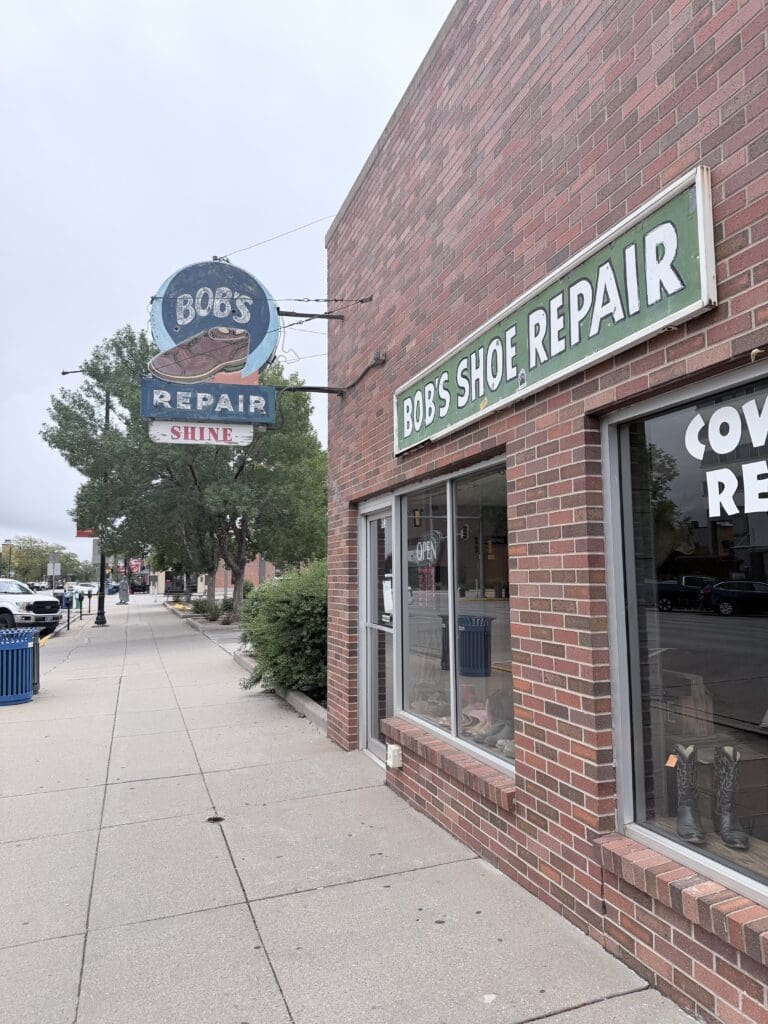
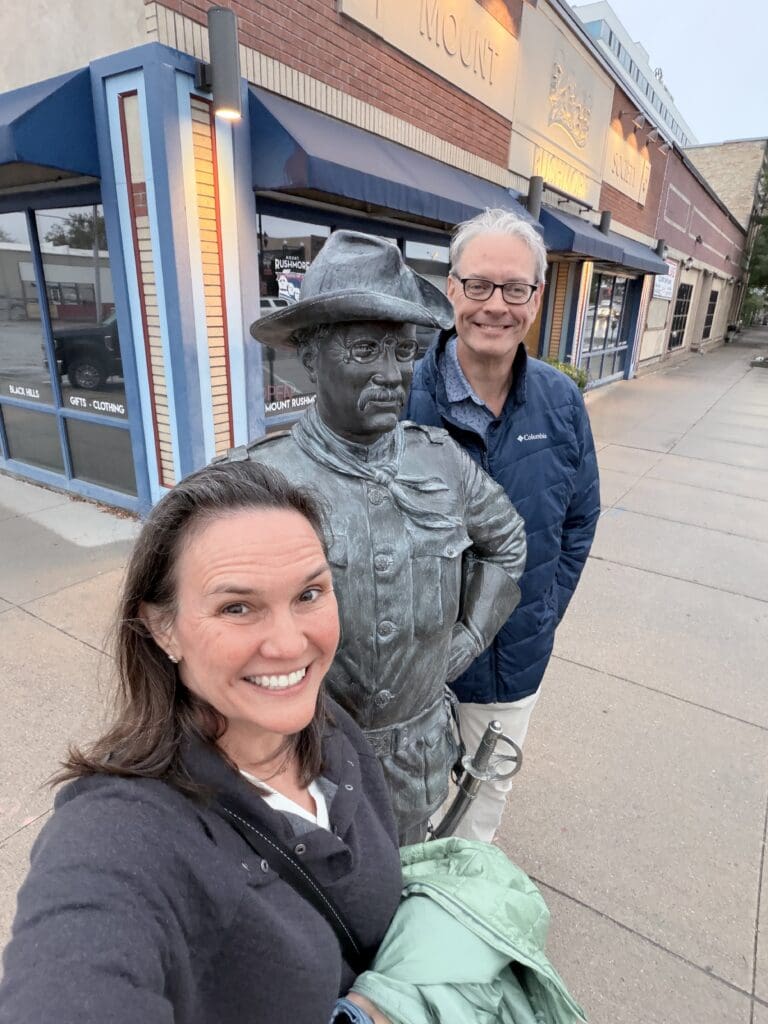
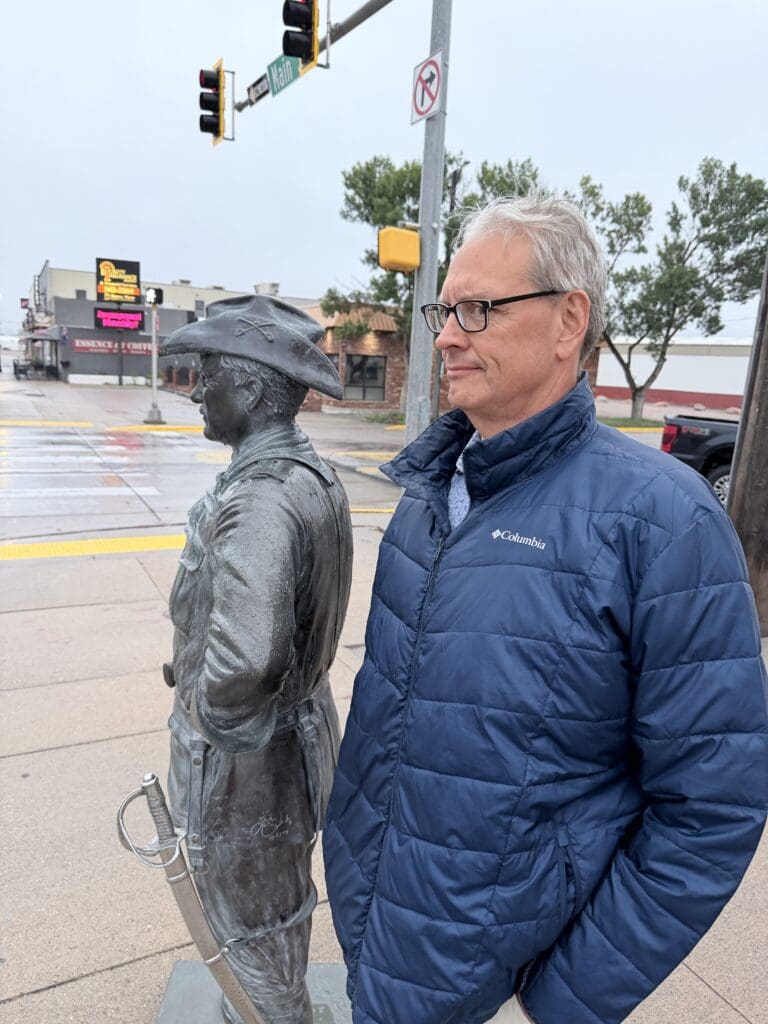
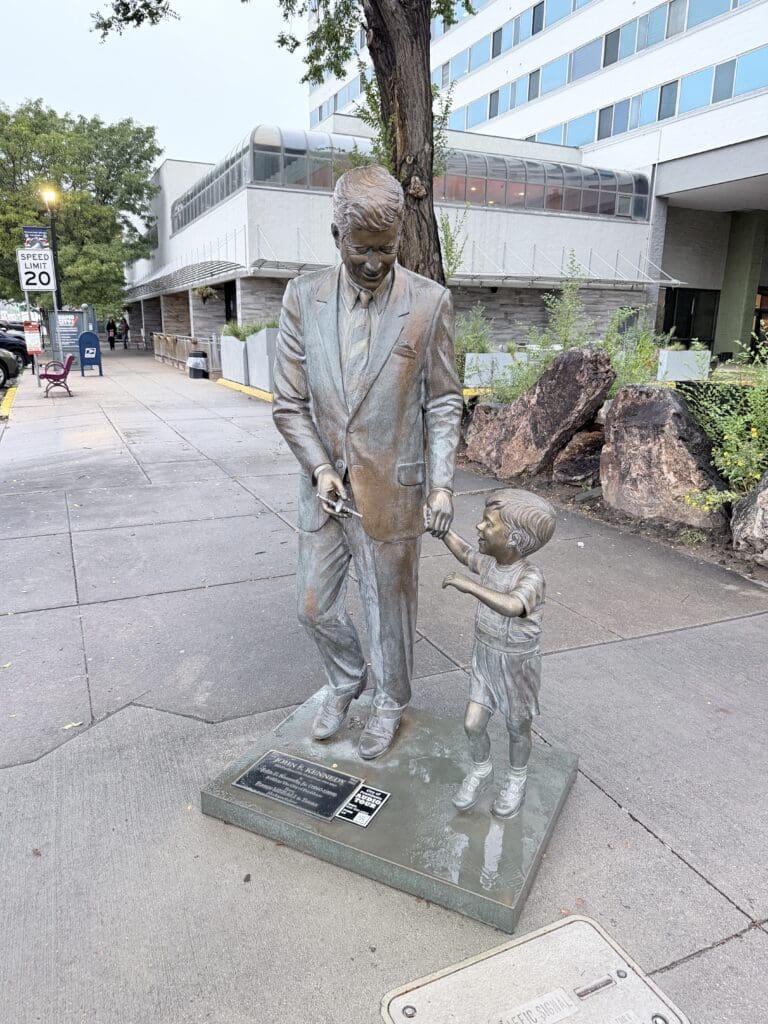
Rapid City calls itself the City of Presidents, and you can wander around downtown doing a presidential scavenger hunt. The statues are supposedly life-size, although I read that William Howard Taft was an exception because making him to scale would have been too expensive. This seems both practical and a little mean. I thought several of the presidents looked suspiciously small, so either the “life-size” claim is loose or I have spent my life imagining our presidents as much larger men.
Monday morning, we met our Backroads group in the lobby of the Best Western Rushmore, where we had spent the night. The hotel was clean, perfectly adequate, and had a certain 1990s charm—not the kind that makes you want to redecorate your house, but the kind that makes you wonder whether the furniture has been there since the Clinton administration. Would I rush back? Probably not. But it did exactly what we needed it to do, which was give us somewhere to sleep.
We gathered for the usual Backroads introductions, safety talk, and logistical rundown. There were 23 people in our group from various parts of the country, plus a familiar face among our guides. Abby, who had been one of our support guides on our Alaska trip this summer, was back with us in South Dakota. It was fun to see her again and hear about the rest of her summer. Michael and Jackson rounded out our guide team, and after introductions—and our first of what would become many safety talks—we loaded up and headed east toward the Badlands.
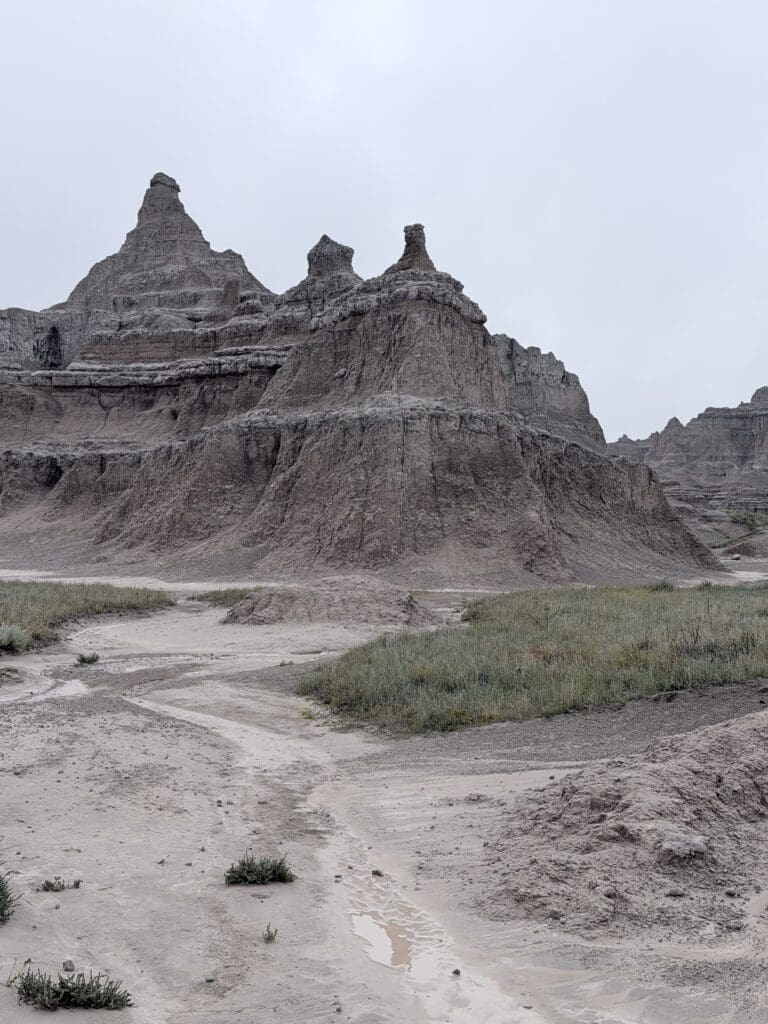
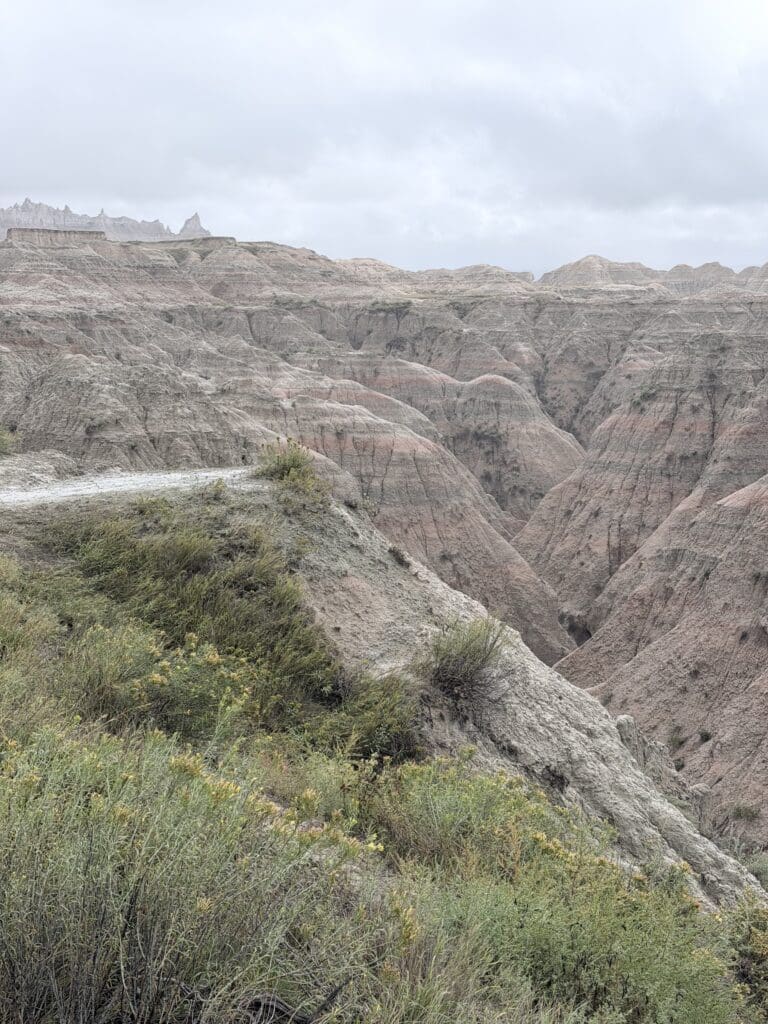
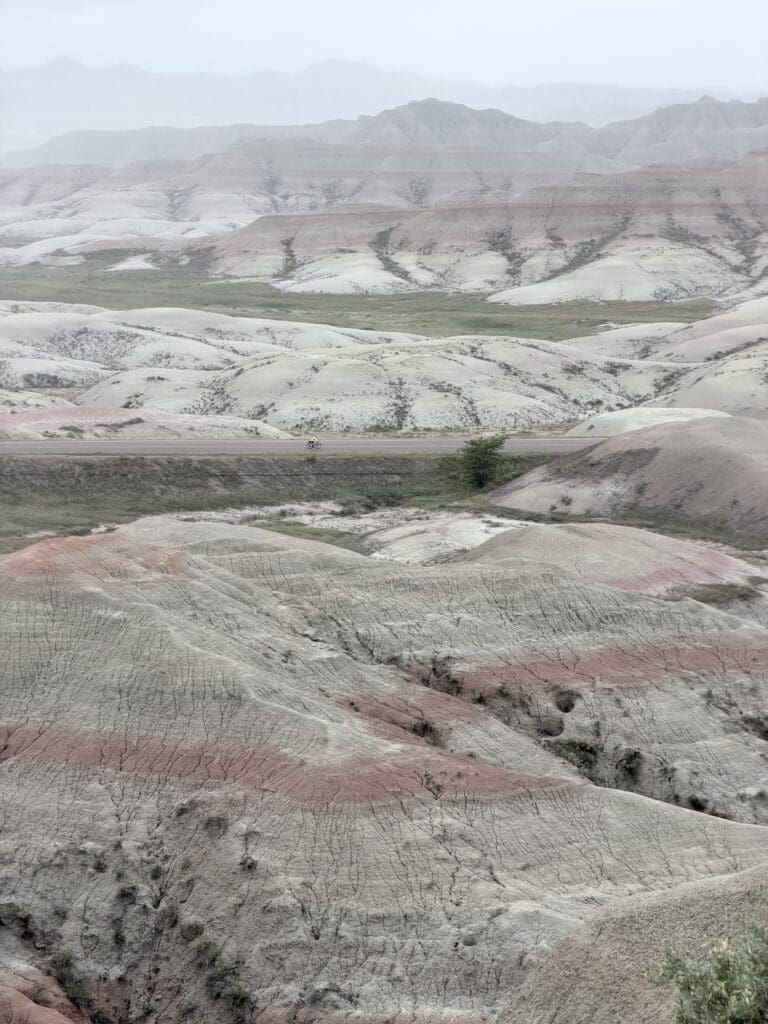
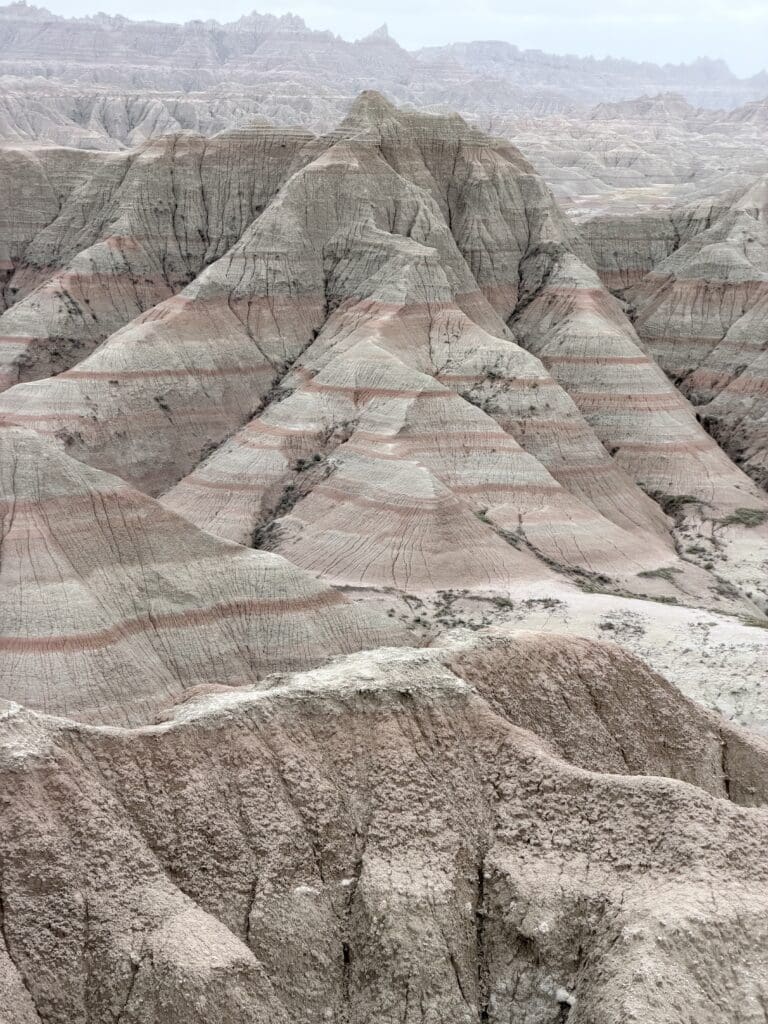
The drive started out with rolling hills and wide-open prairie. Pretty, but nothing that suggested we were about to enter one of the strangest landscapes I have ever seen. Then the terrain began to change, and these bizarre rock formations appeared on the horizon. They looked like giant sandcastles someone had poured water over, leaving the sides dripping into deep crevices and sharp ridges.
It was still drizzling when we entered Badlands National Park, and the mist gave everything an eerie quality. Between the muted colors, strange formations, and enormous open spaces, it felt as though we had landed on another planet—or somewhere Dr. Seuss might have designed after a particularly interesting evening.
The name “Badlands” comes from how difficult this terrain was to cross. The steep formations, deep gullies, and lack of reliable water made travel extremely challenging. I imagine early travelers arriving in a wagon, looking out over all of this and saying, “Well, this is bad.” And apparently no one came up with anything better.
Fortunately, we had bicycles, paved roads, and a Backroads support van filled with snacks. Our pioneer experience was going to be considerably more comfortable.
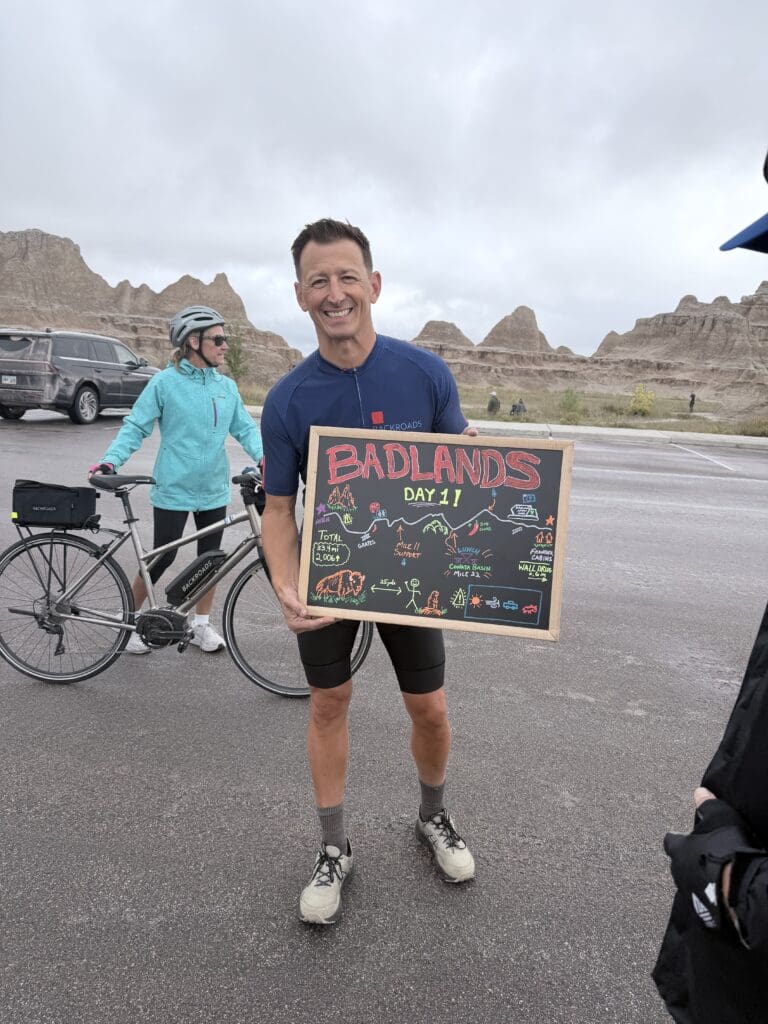
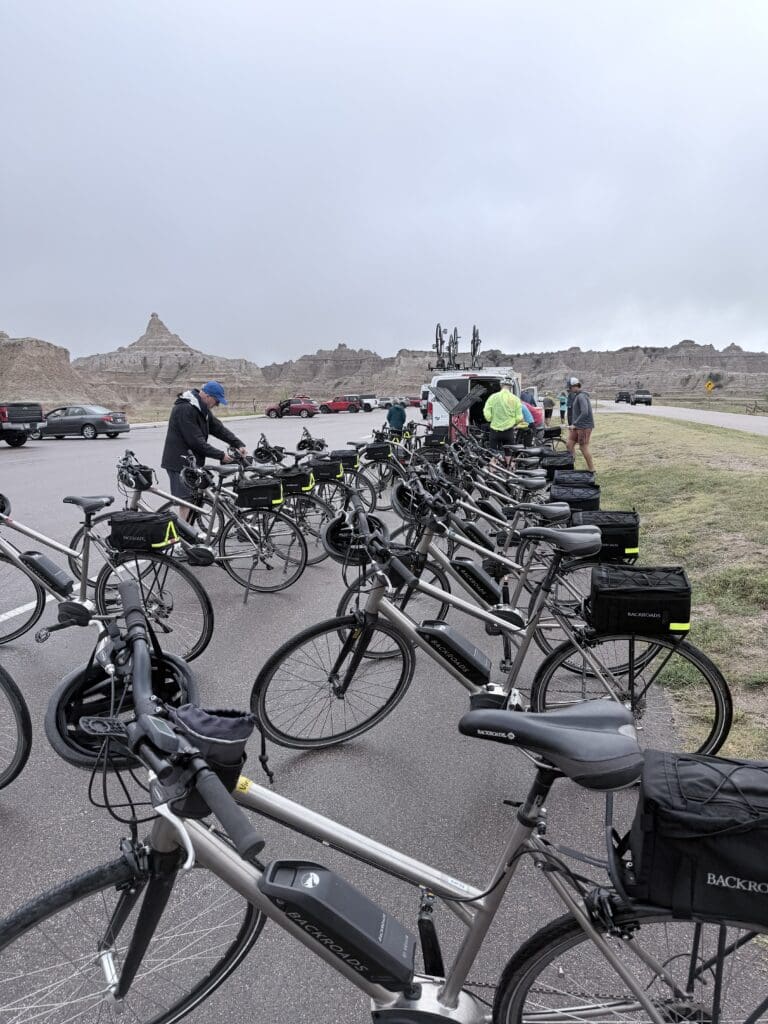
The guides unloaded our bikes and set up the traditional Backroads snack table, making absolutely certain there was no possibility any of us would experience actual hunger. After yet another safety talk—there are a lot of talks—we got our Wahoo navigation devices attached and headed out.
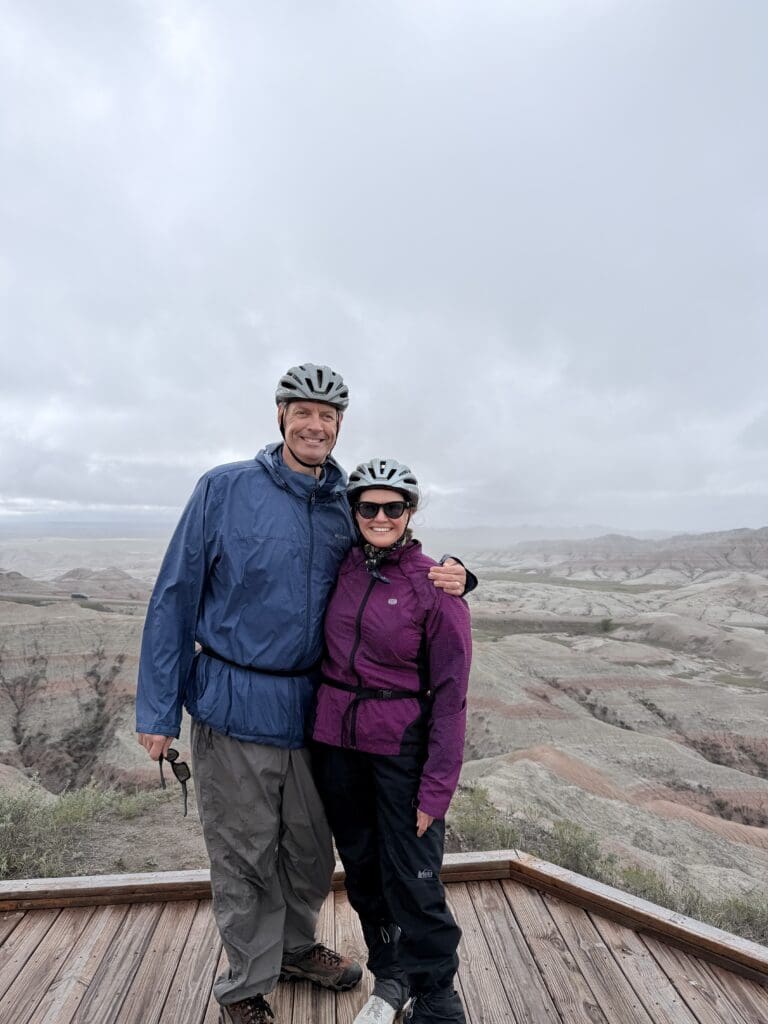
I have biked in enough rain to know that being cold and wet is not my idea of an adventure. It is just being cold and wet somewhere other than home. So I had come prepared: rain pants, new waterproof hiking shoes, and even gaiters to keep water from sneaking into the tops of my shoes. I was basically prepared to cross the English Channel on a bicycle.
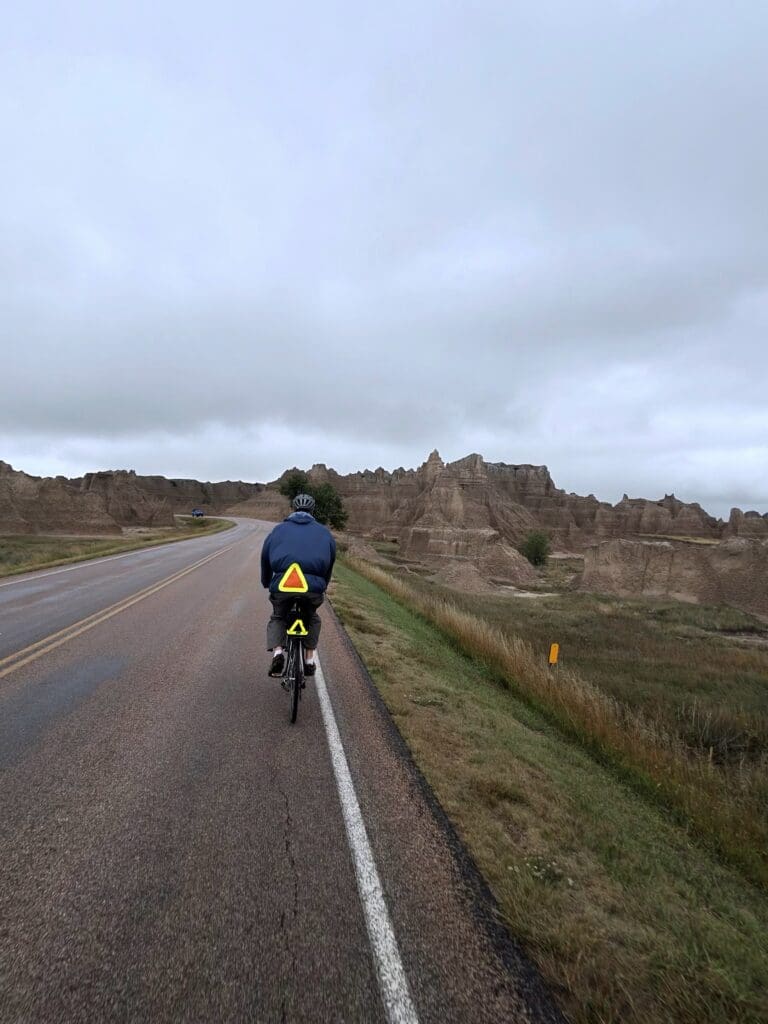
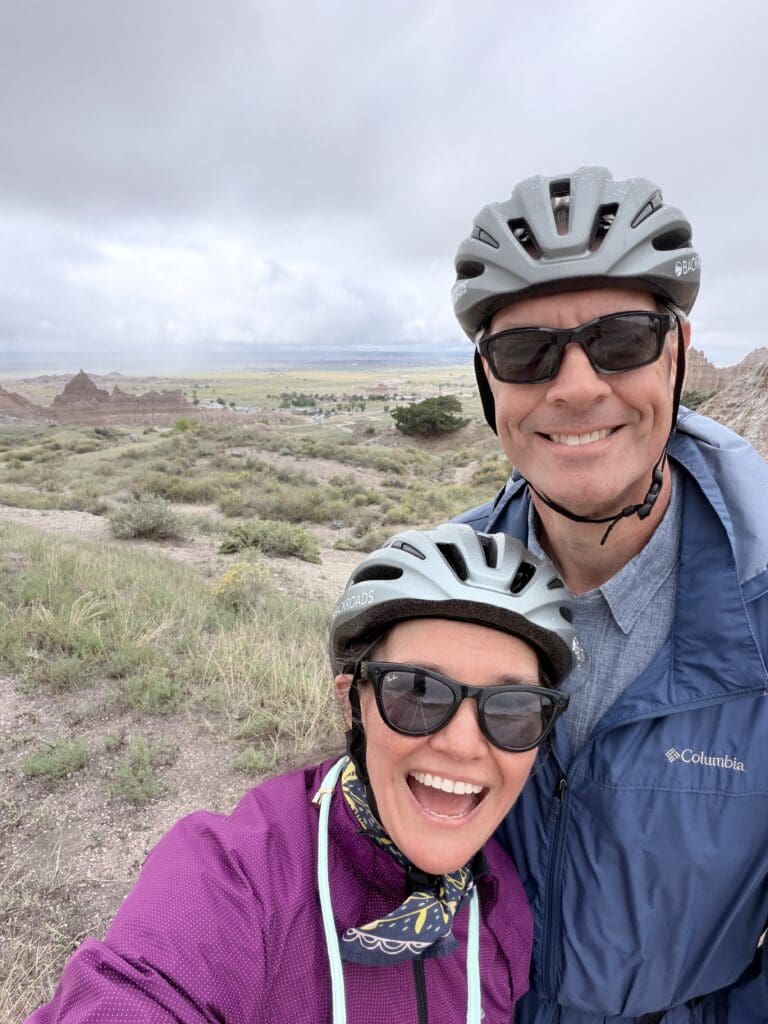
Fortunately, it never really poured. It stayed misty on and off, the temperature was comfortable, and the weather actually made the scenery more dramatic.
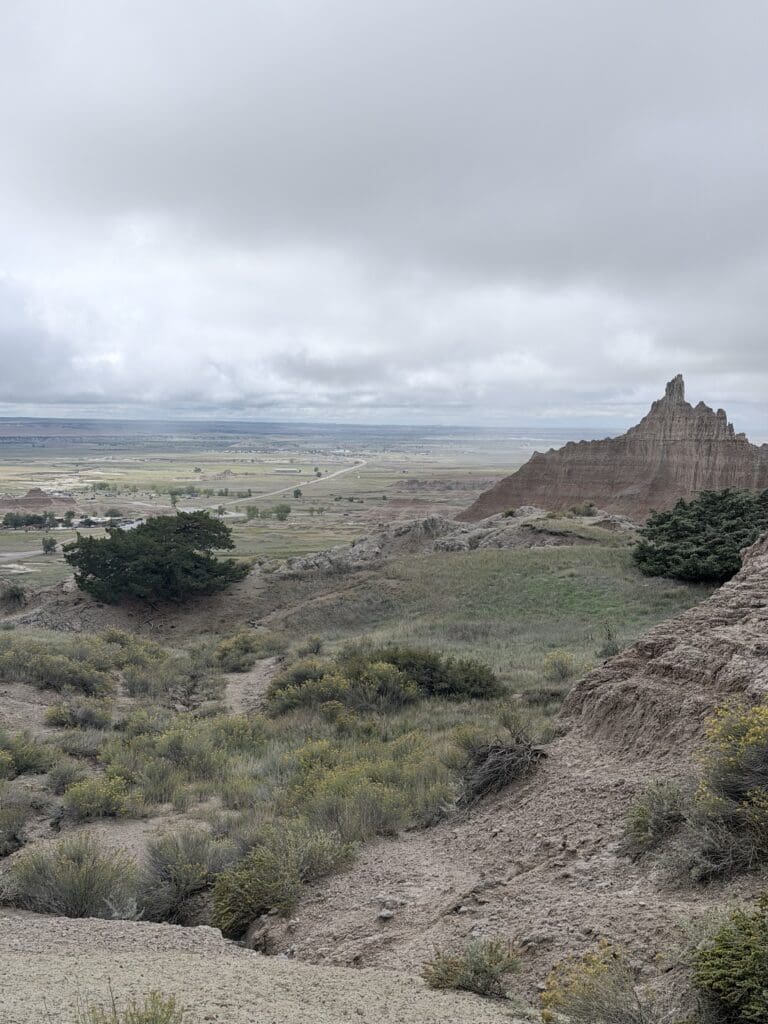
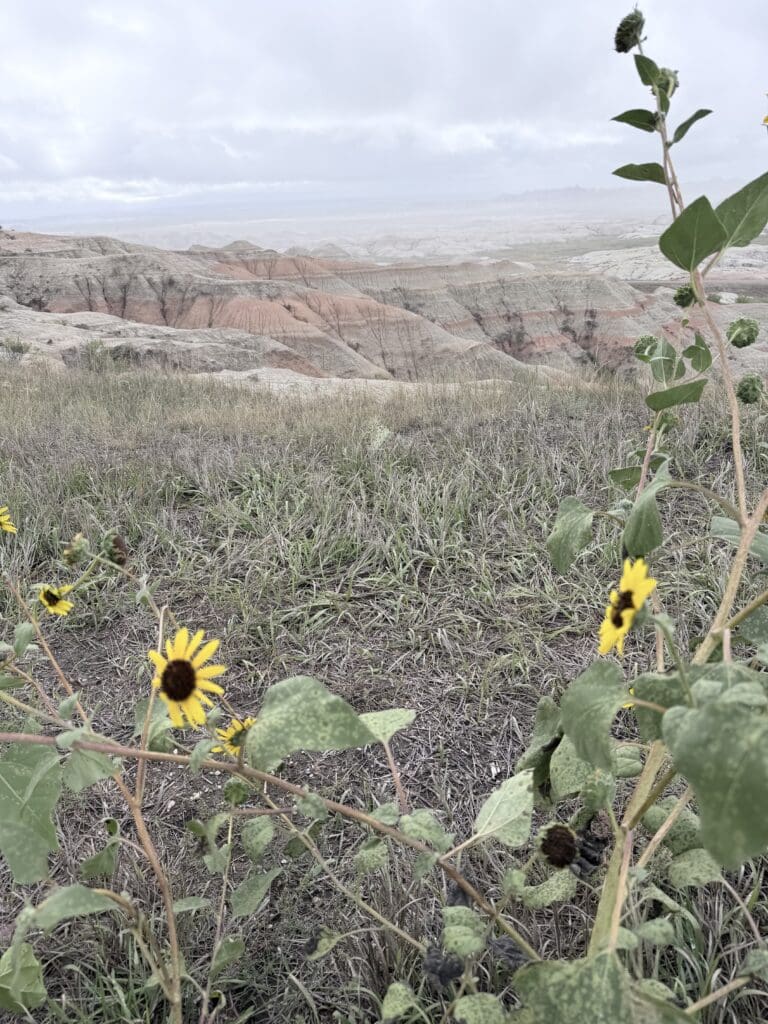
Riding through the Badlands was spectacular. Every turn revealed something different—towering formations, enormous basins, colorful layers of rock, and cracks and crevices that Mother Nature has been working on for millions of years. It is one thing to drive through a national park and pull over at the overlooks. It is another to experience it from a bicycle, where you move slowly enough to notice the details and appreciate just how enormous everything is.
Our first ride was about 22 miles to Conata Basin, with roughly 1,175 feet of elevation gain. The guides had lunch waiting for us, because apparently the Backroads philosophy is that no cyclist should ever go more than 45 minutes without being offered a snack.
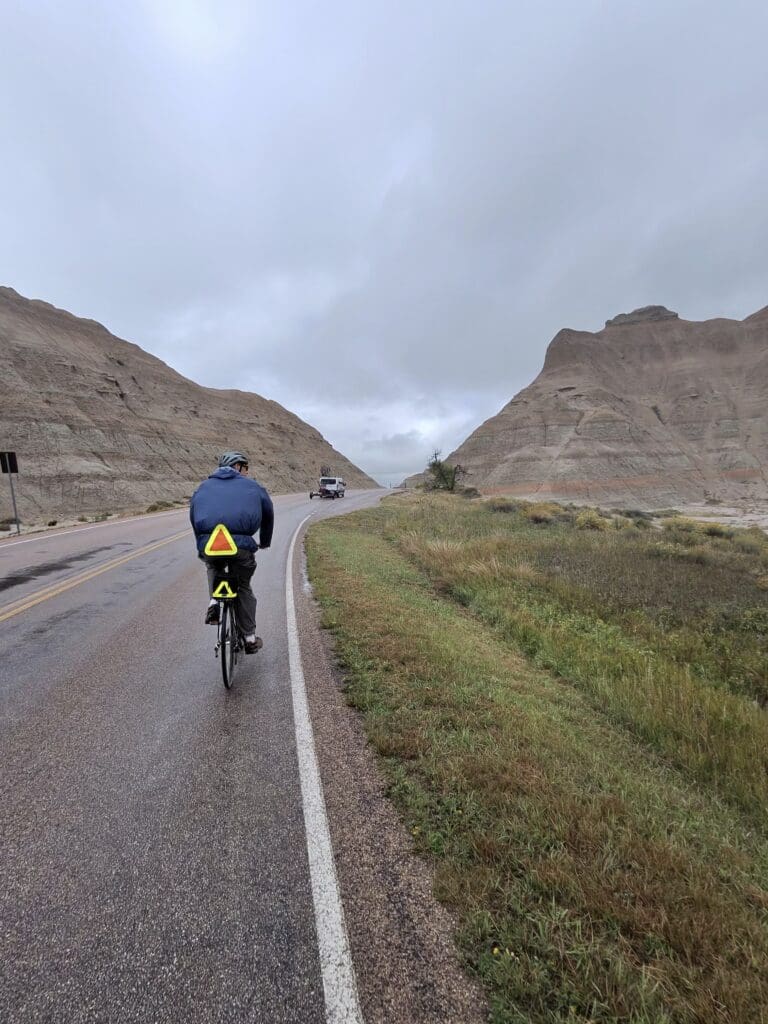
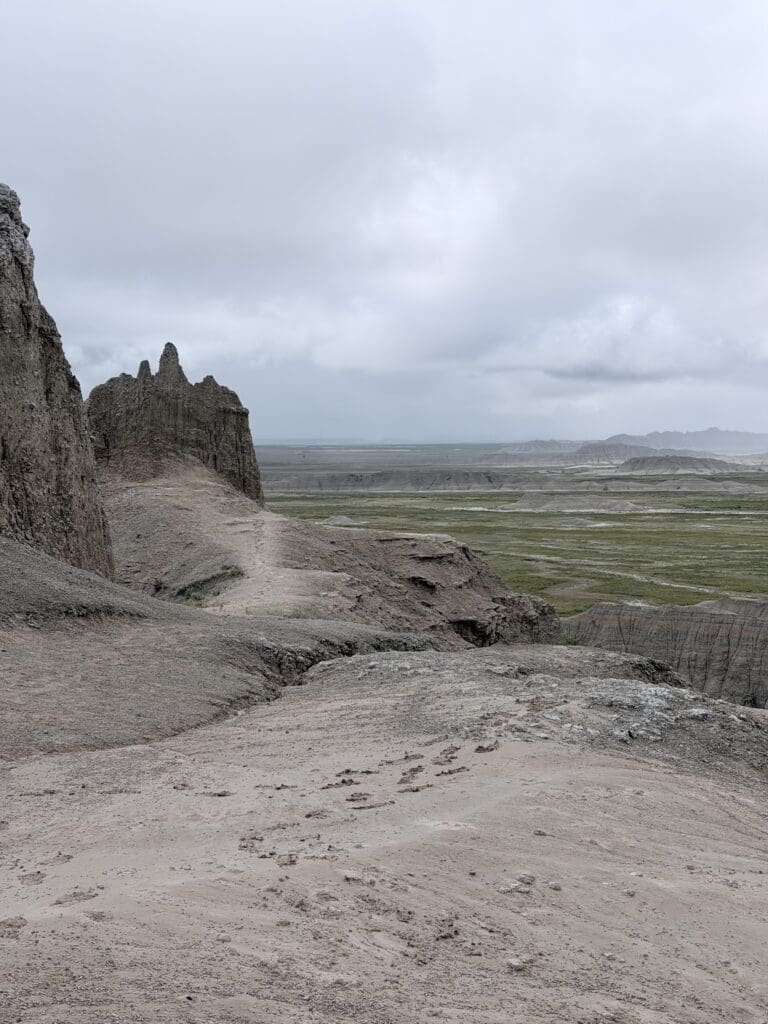
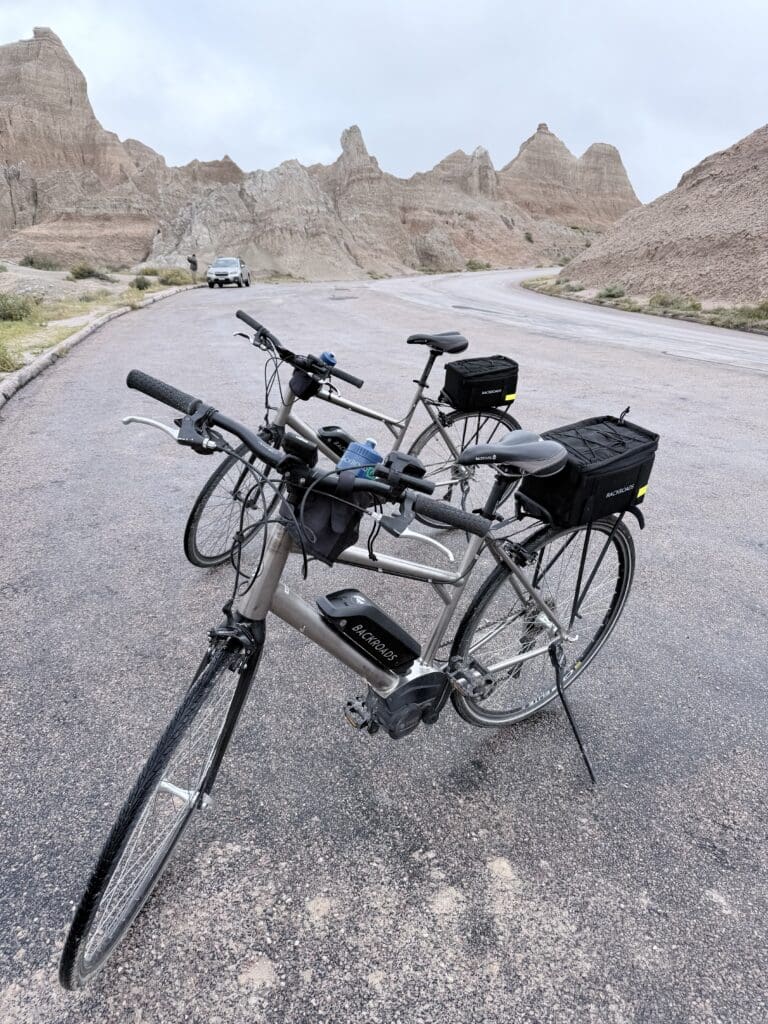
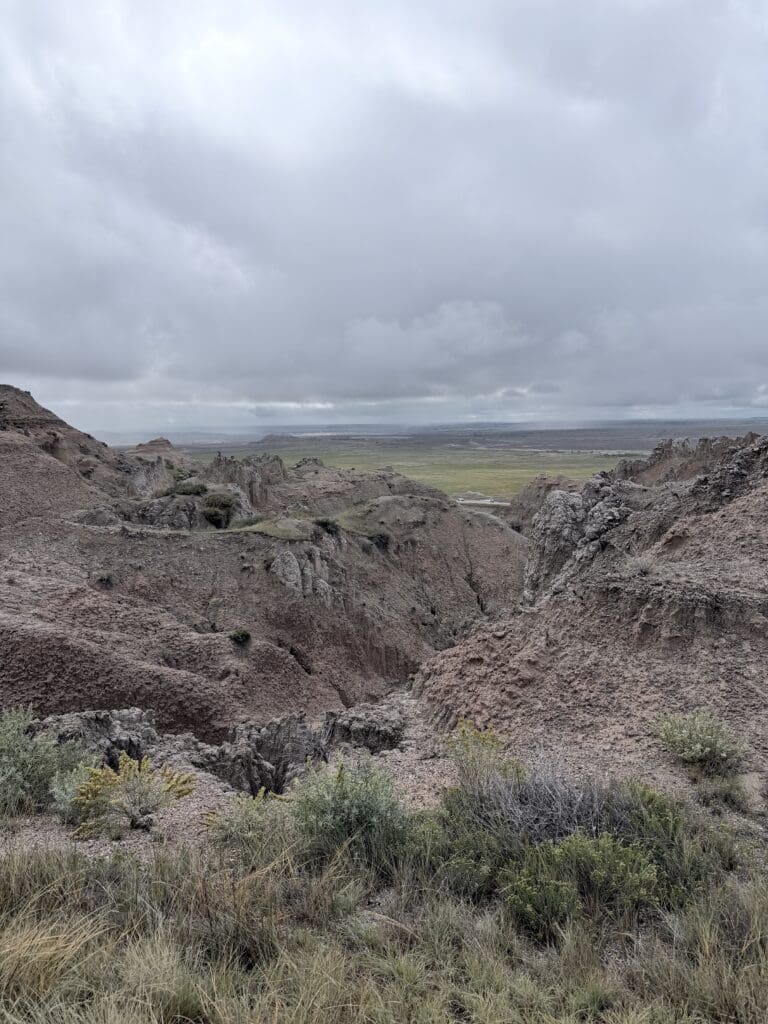
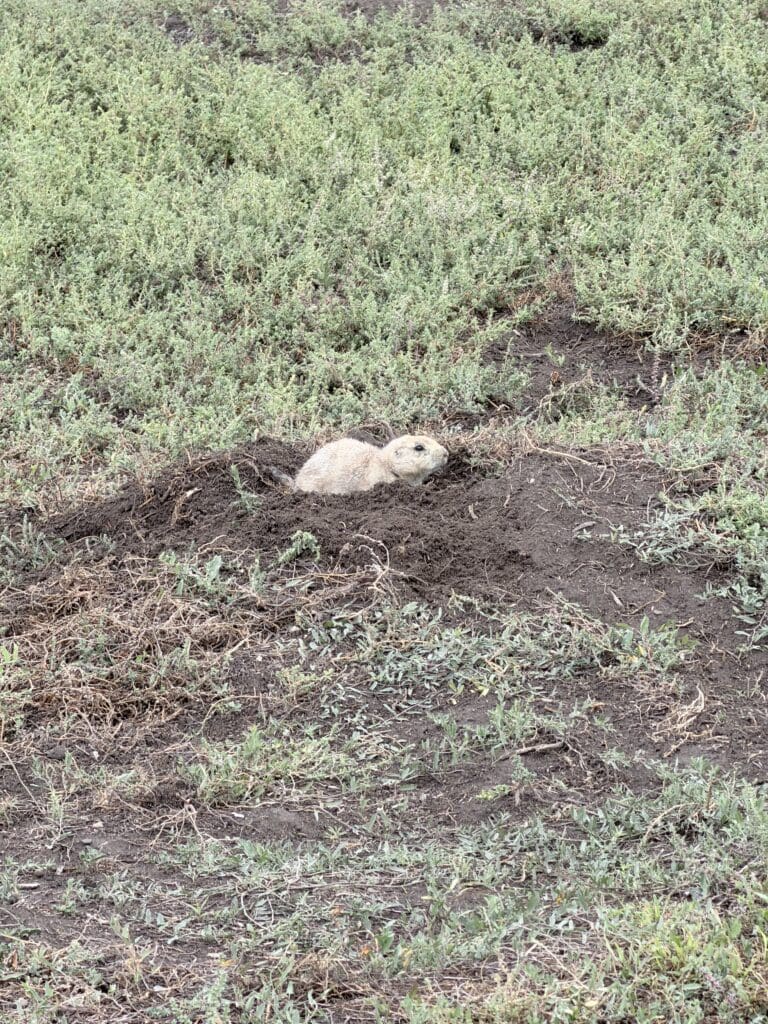
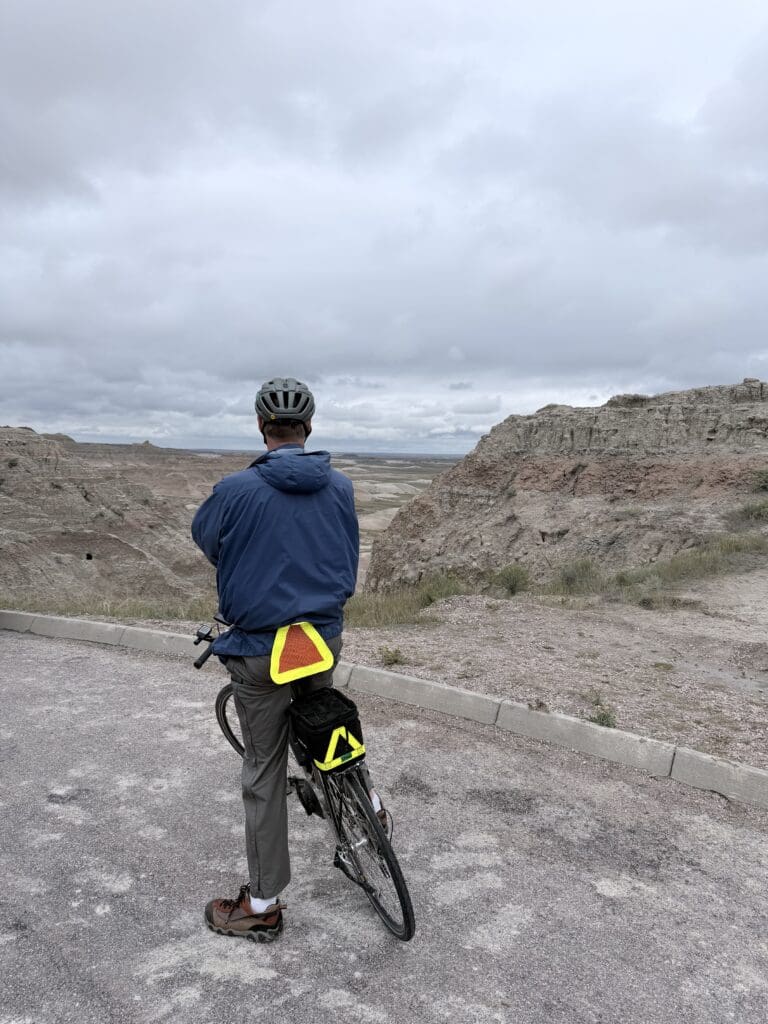
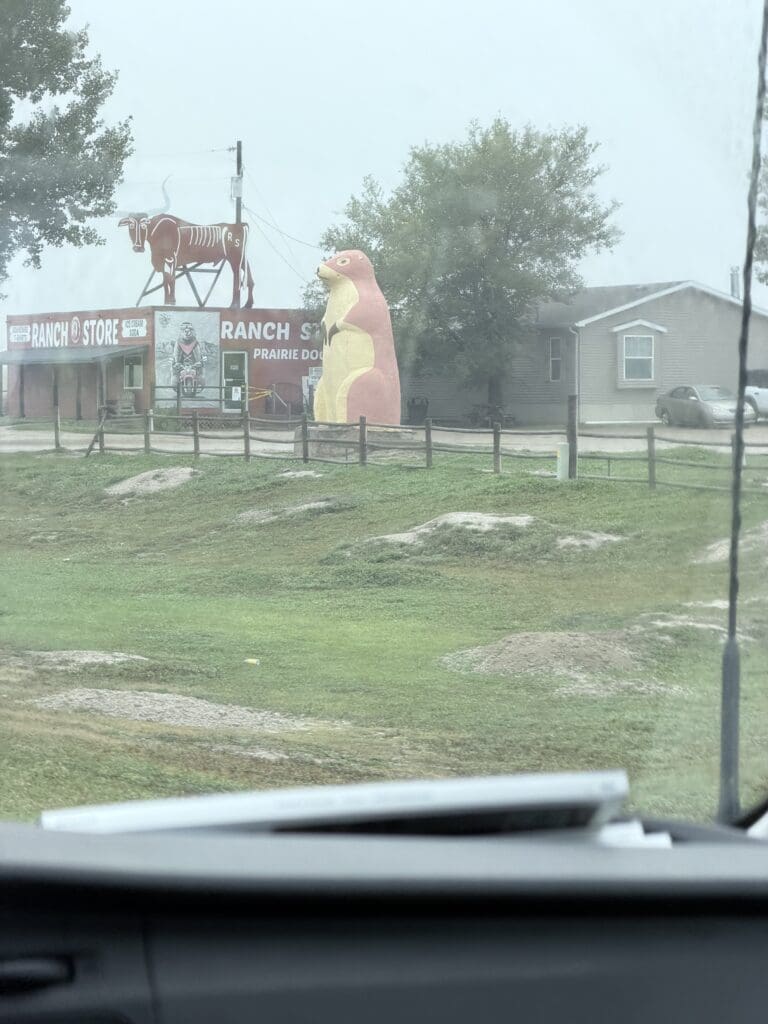
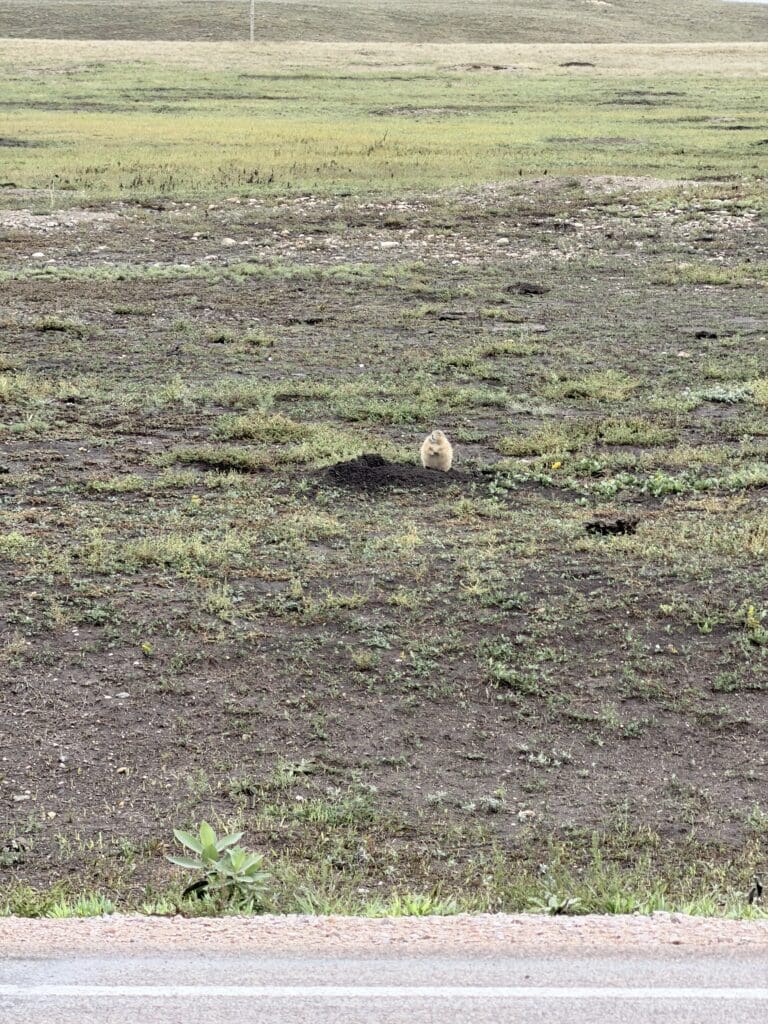
The one animal I really wanted to see was a prairie dog, and the Badlands delivered. At first, I spotted them far away and was desperately zooming in with my camera trying to get a picture. By the end of the ride, they were sitting right beside the road. I had gone from “LOOK! A PRAIRIE DOG!” to feeling like I should introduce myself and shake hands.
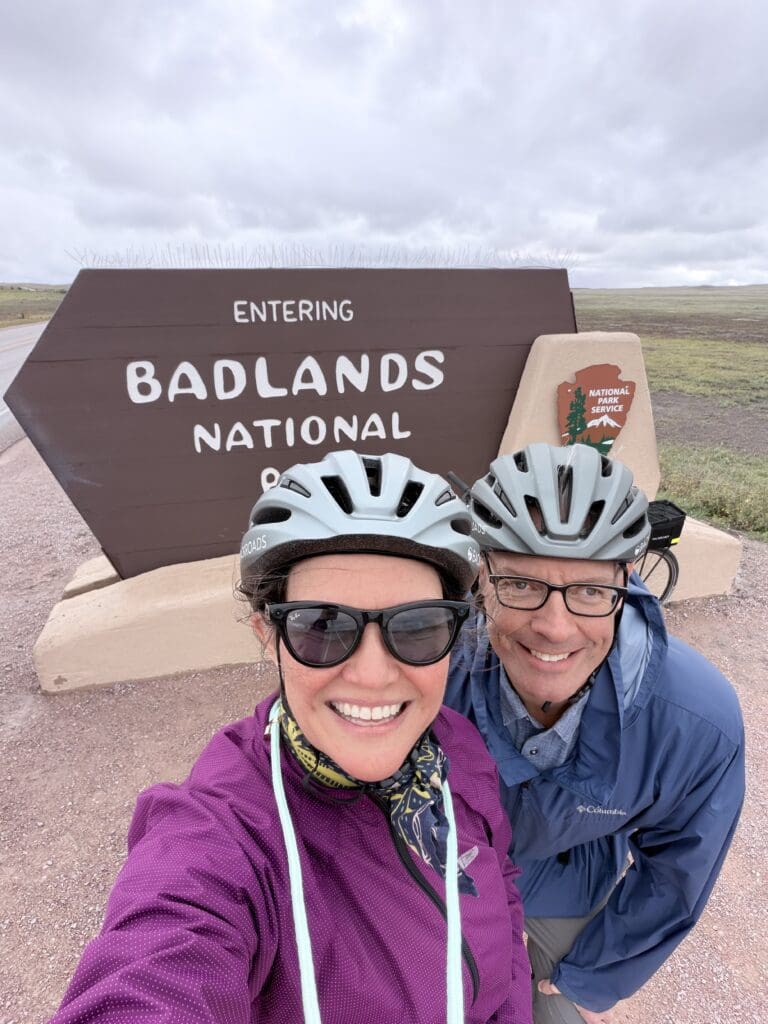
After lunch, we had the option of riding another 12 miles into Wall, where we would spend the night at the Badlands Frontier Cabins. Of course we kept going.
The scenery between the park and Wall was considerably less dramatic, and we also picked up a persistent headwind. There is nothing quite like finishing a beautiful bike ride by pedaling directly into a giant invisible hand pushing you backward. I was very happy when we finally rolled into town.
Before heading to our cabins, we stopped at Wall Drug, the famous roadside attraction that has been luring people off the highway for decades. If you have ever driven through South Dakota, you have seen the signs. So many signs. By the time you actually reach Wall, stopping no longer feels like a choice. It feels like fulfilling a contractual obligation.
I was expecting something along the lines of Buc-ee’s, where Americans have somehow turned gasoline, bathrooms, and beef jerky into a destination. Wall Drug is different. Imagine taking every Western-themed gift shop, souvenir stand, restaurant, historical display, stuffed animal, cowboy painting, and roadside oddity you can think of and putting them together. Then add some extra buildings, connect everything through a maze of doorways, throw in a giant jackalope, and keep going until someone finally says, “Do you think this is enough?” — That is Wall Drug.
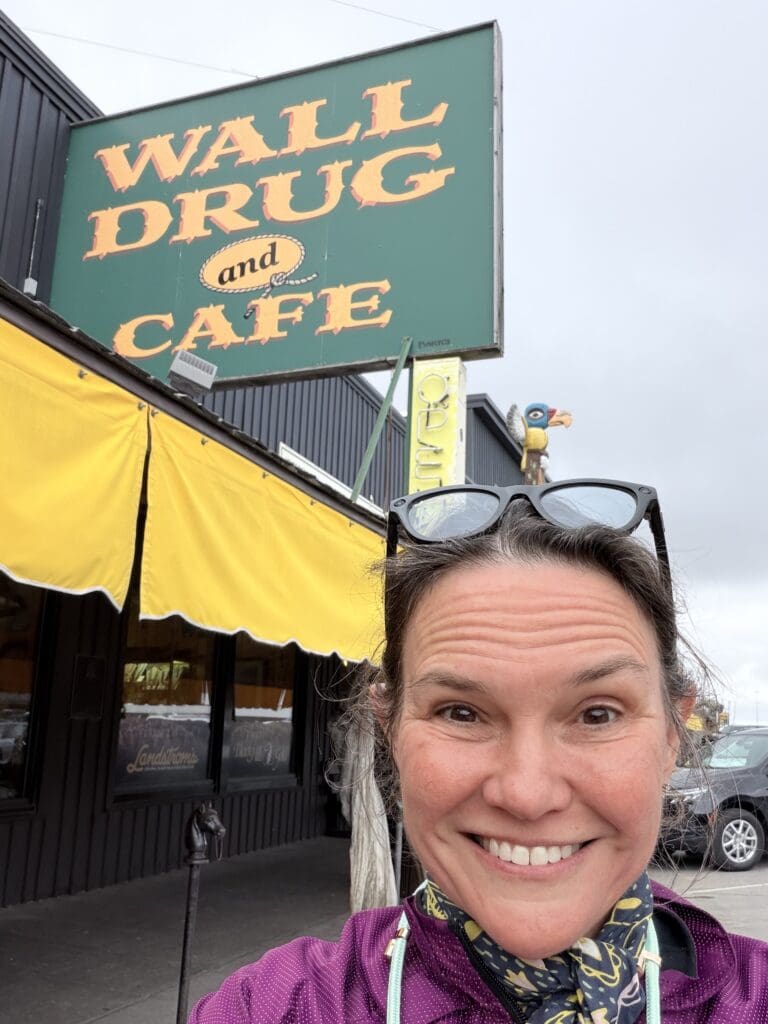
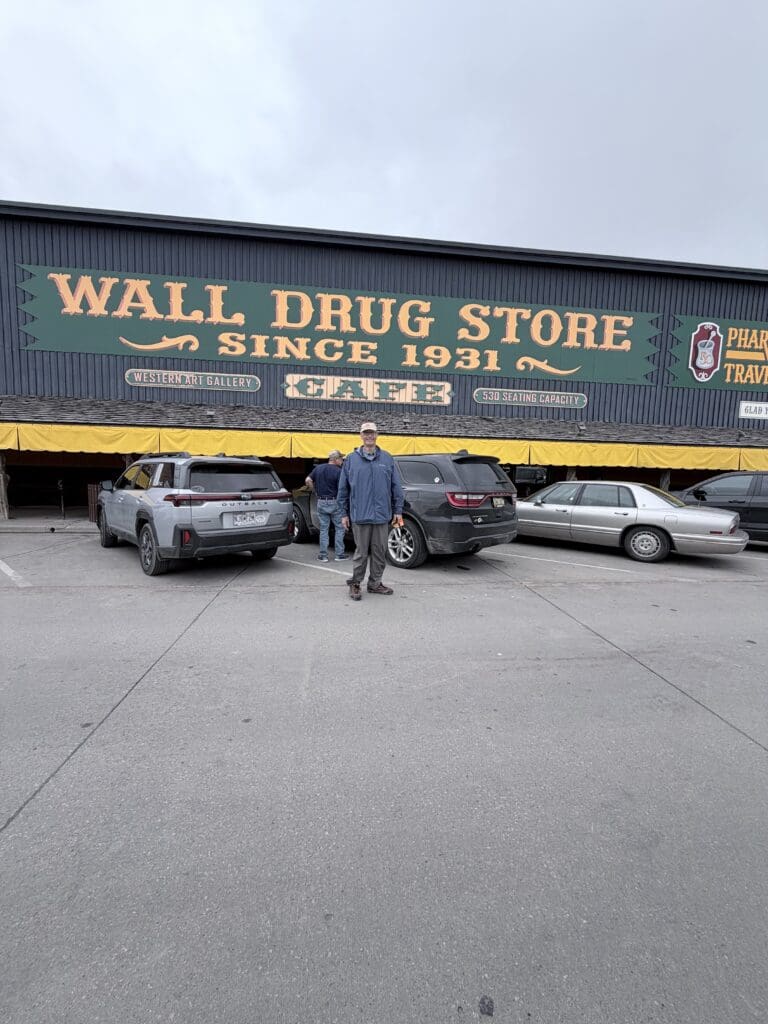
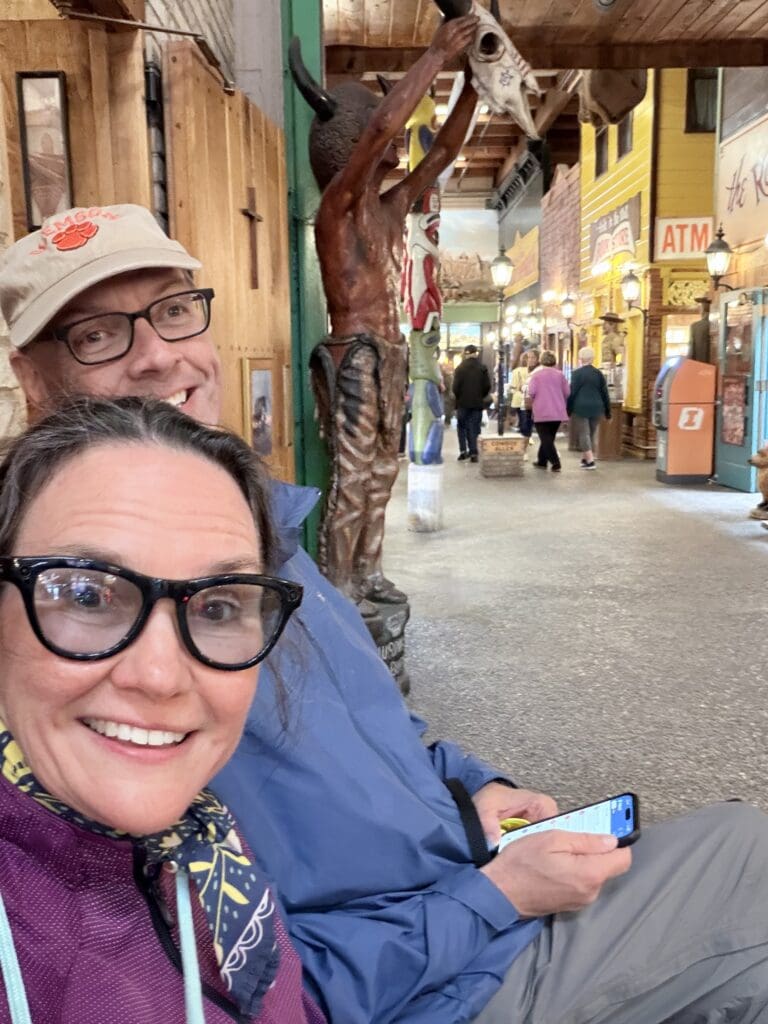
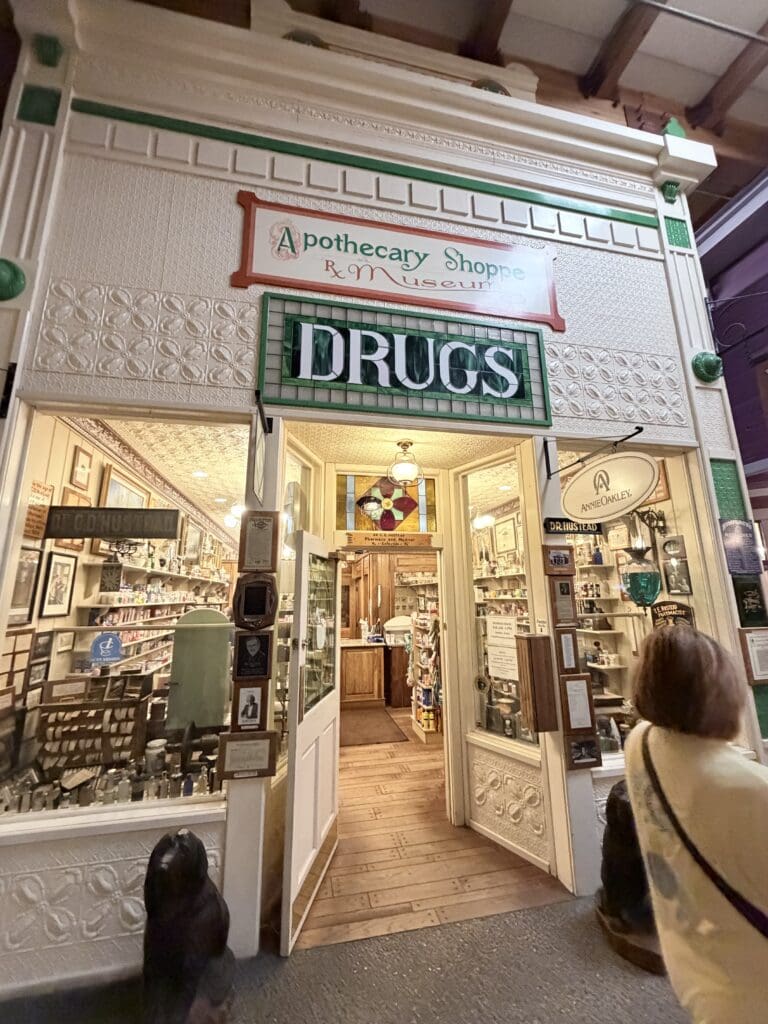
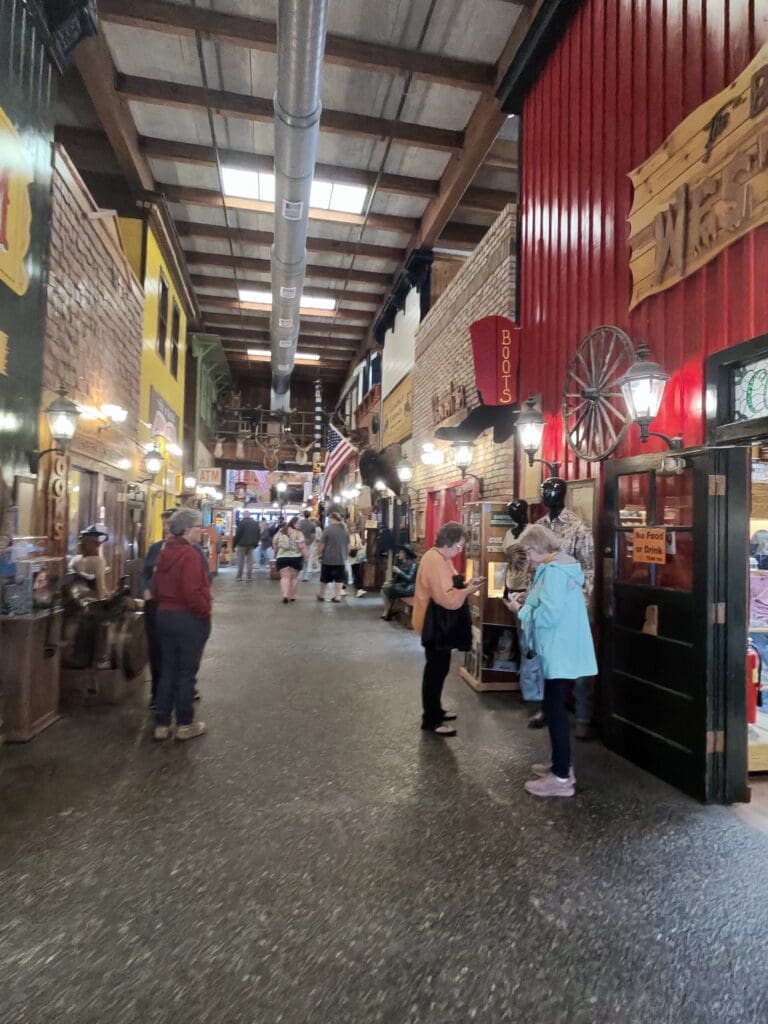
It is impossible to describe properly, but it is a wonderfully American roadside spectacle. One thing I did not expect was the impressive collection of Western art displayed throughout the restaurant, which is worth seeing. We wandered around for a while, took in as much Western kitsch as we could handle, and then headed to the Frontier Cabins to clean up before dinner.
Dinner taught me one final thing about South Dakota: apparently nobody here believes in small portions. The plates coming out of the kitchen were enormous, as though every diner had just returned from six months on the Oregon Trail. I ordered the bison, which was delicious, and we spent the evening getting to know more of our group.
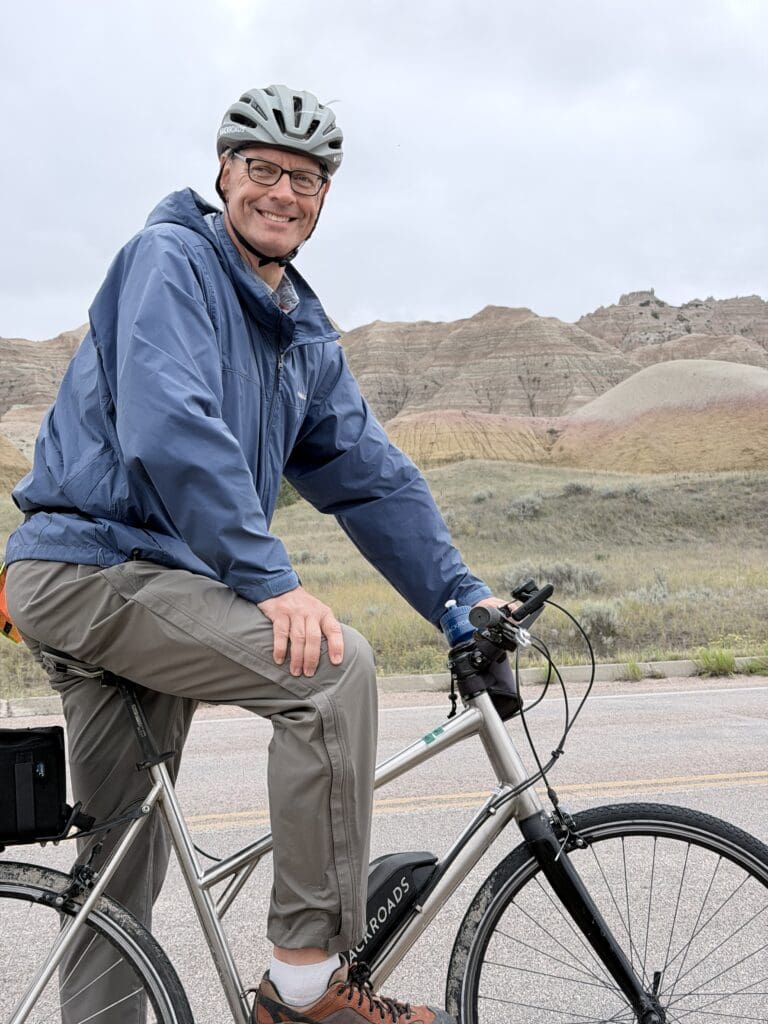
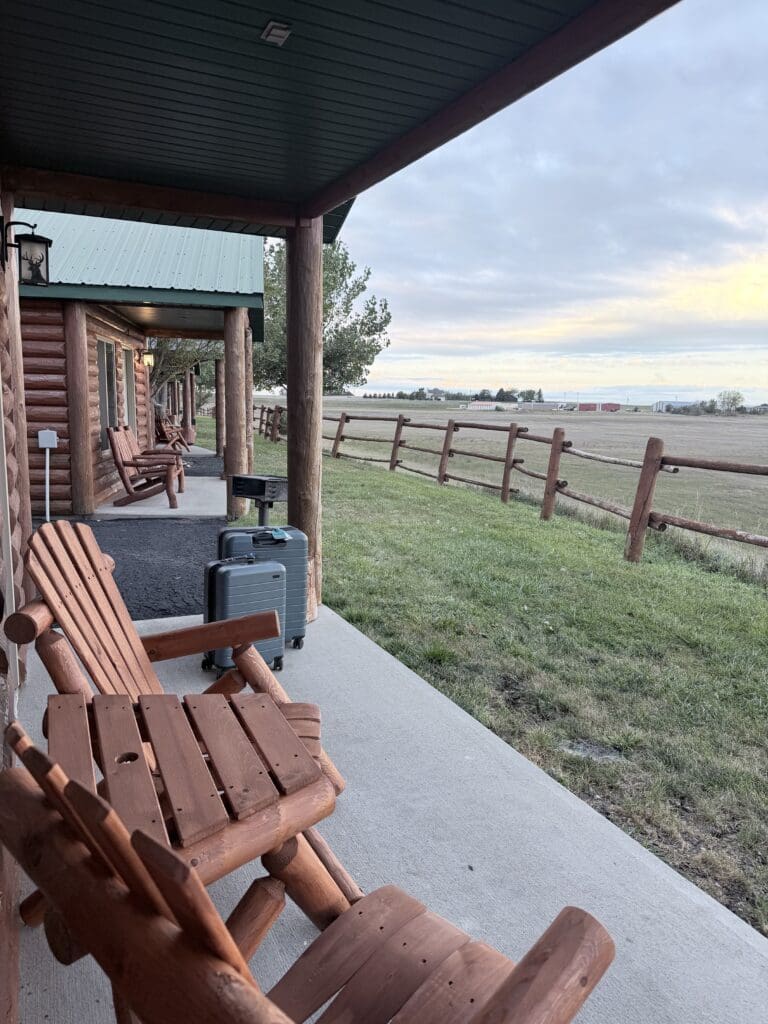
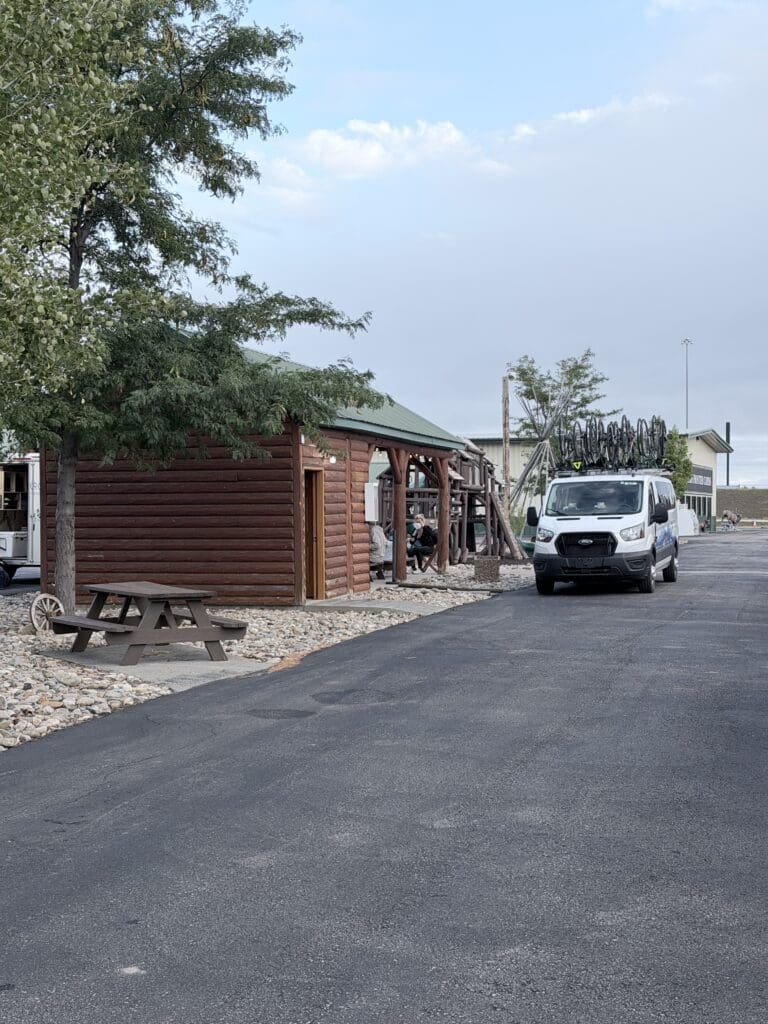
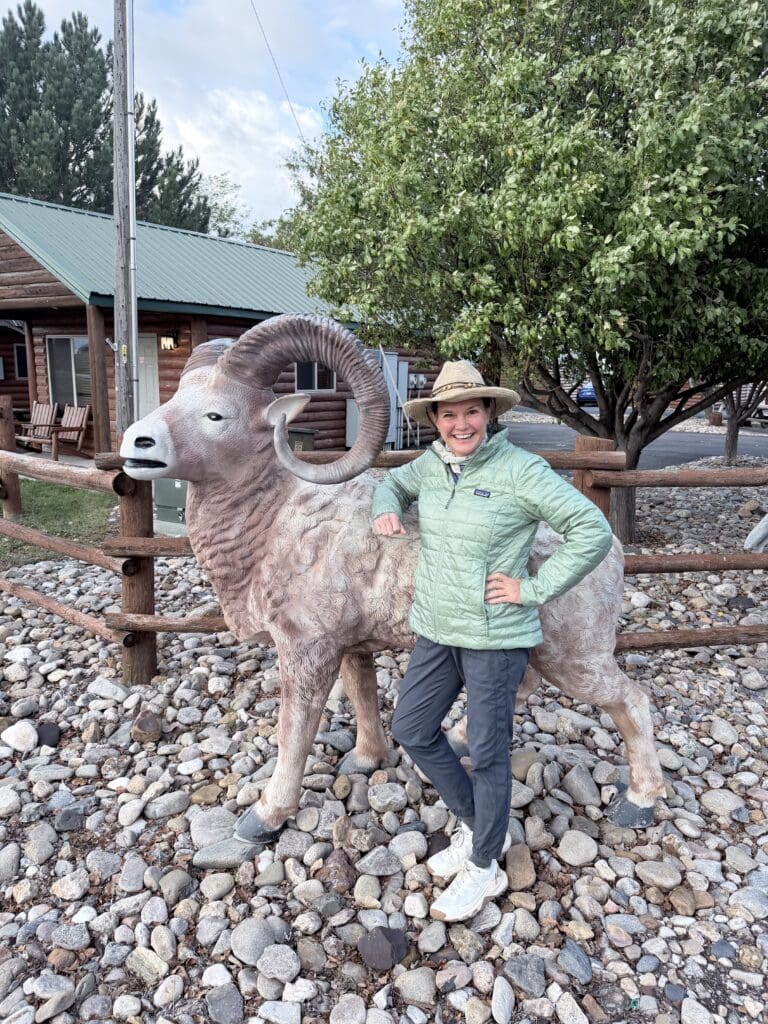
By the end of our first full day, we had biked through one of the strangest landscapes I had ever seen, nearly made friends with prairie dogs, visited a giant jackalope, and eaten enough food to survive several South Dakota winters.
Not bad for Day One.