

Biking the Black Hills: Deadwood, Crazy Horse, and a Sore Tush
We left the Badlands and headed back past Rapid City into the Black Hills, where our first stop was Deadwood. Famous for Wild Bill Hickok, Calamity Jane, and an impressive commitment to gambling and saloons, Deadwood looks a little like Walt Disney was asked to build a town for adults with questionable spending habits. There are cowboys wandering around, horses and carriages, and enough opportunities to lose money that the original prospectors would probably feel right at home.
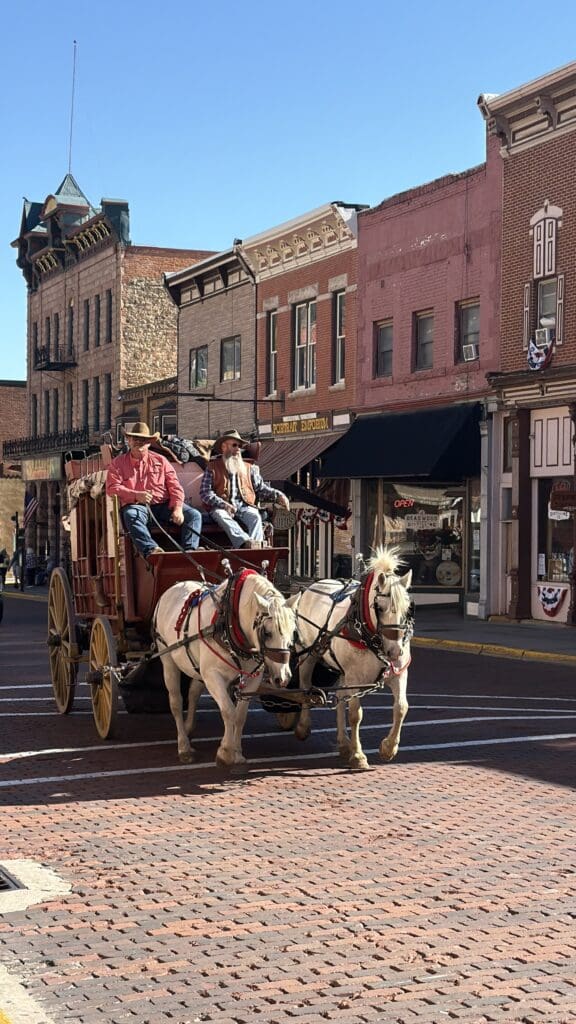
The name came from the dead trees found in the gulch when the town sprang up in 1876. I appreciate this approach to naming places. Someone looked around, said, “Well, there’s a lot of dead wood,” and everyone apparently agreed they had more pressing things to do.
Of course, the town’s beginnings were considerably less charming. The gold rush brought settlers onto Indigenous lands protected by the 1868 Fort Laramie Treaty, violating the agreement and contributing to war over the Black Hills. That part of the story requires a little more attention than the cowboy strolling past you on Main Street.
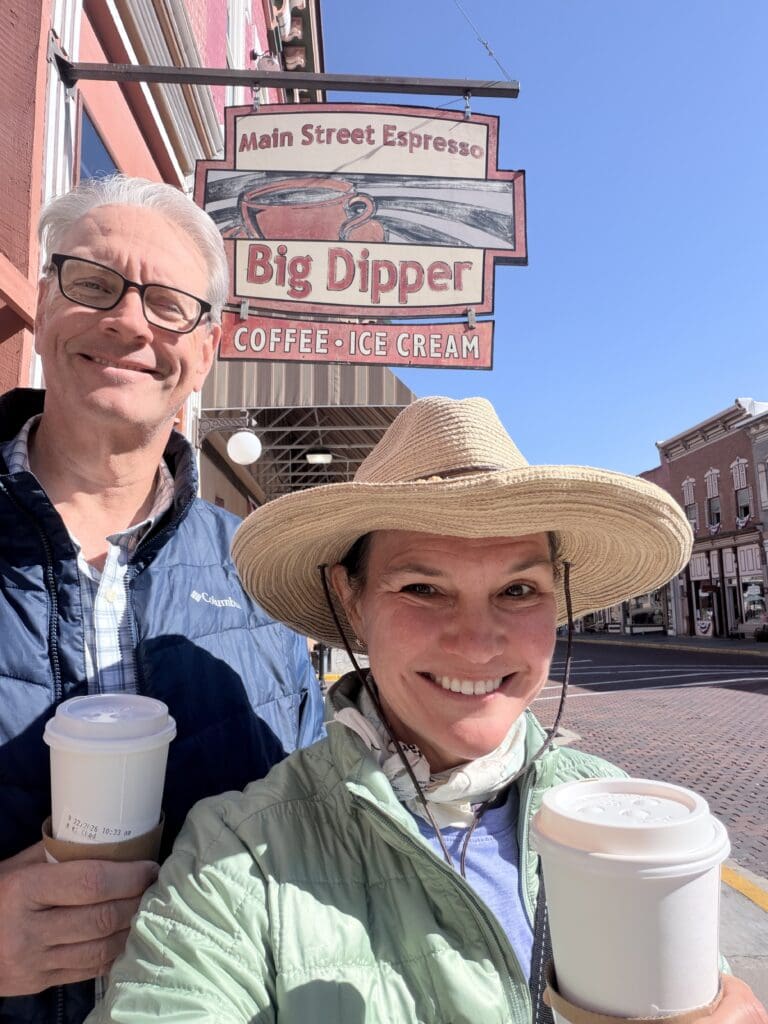
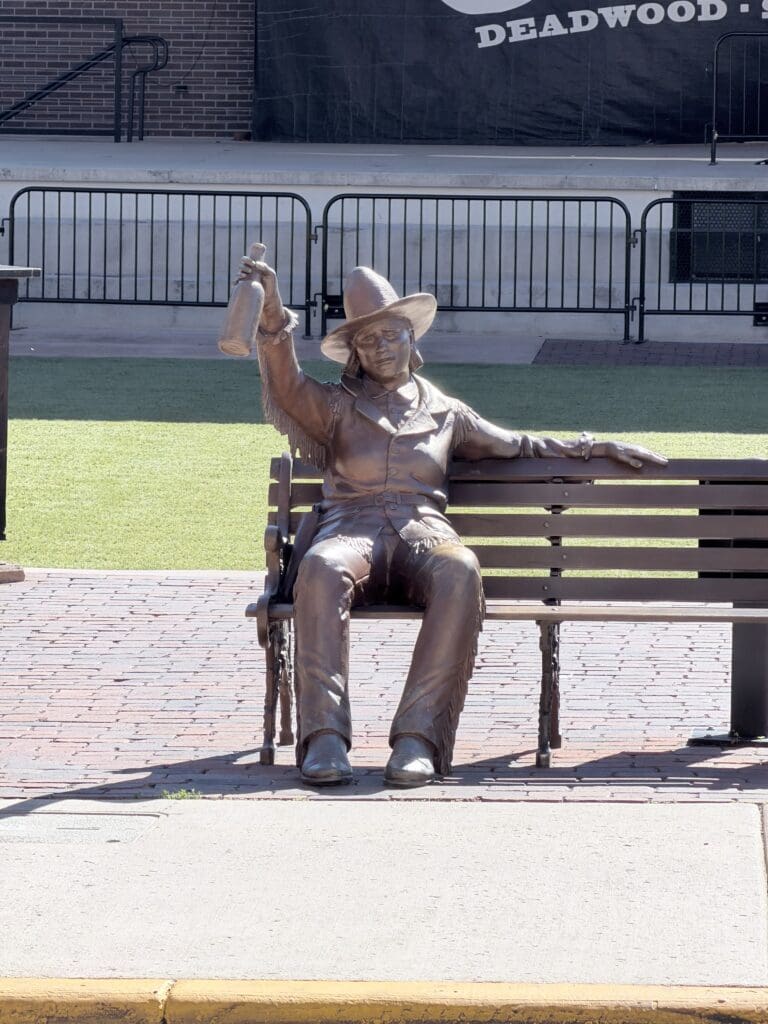
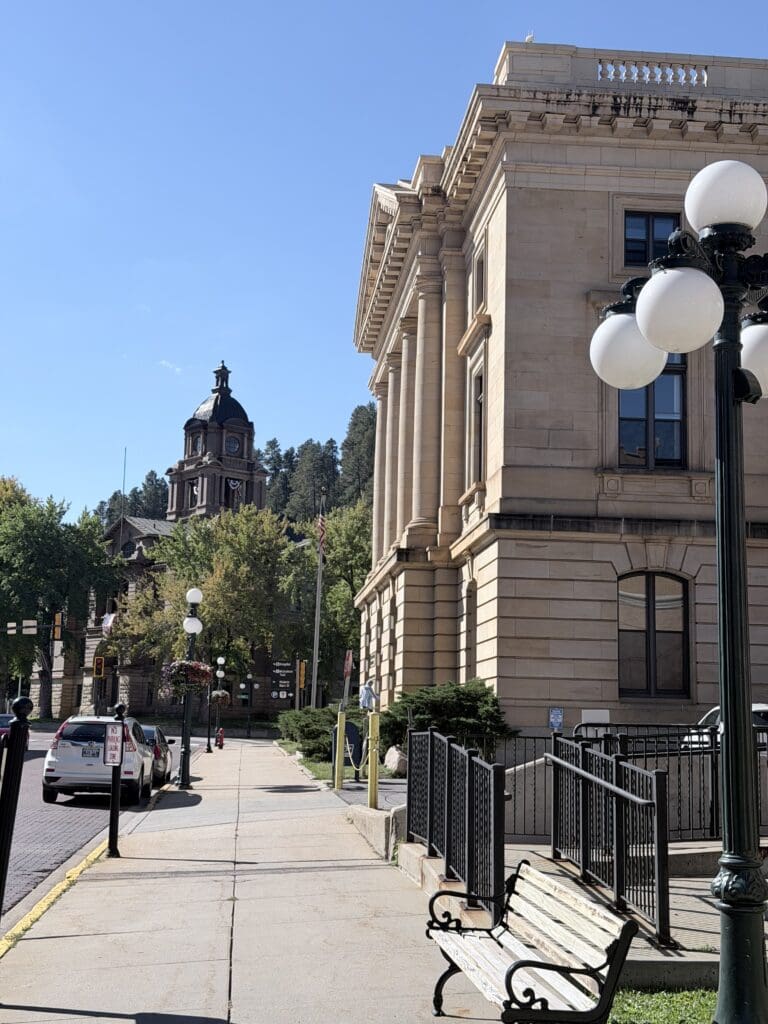
As the gold-rush boom faded, Deadwood eventually fell on harder times. Legal gambling arrived in 1989, with some of the tax revenue dedicated to preserving the historic town. It’s an interesting arrangement: you can help save a piece of American history simply by making poor decisions at a blackjack table. There is real history here, but between the saloons, casinos, and reenactments, you have to look beyond the entertainment to find it.
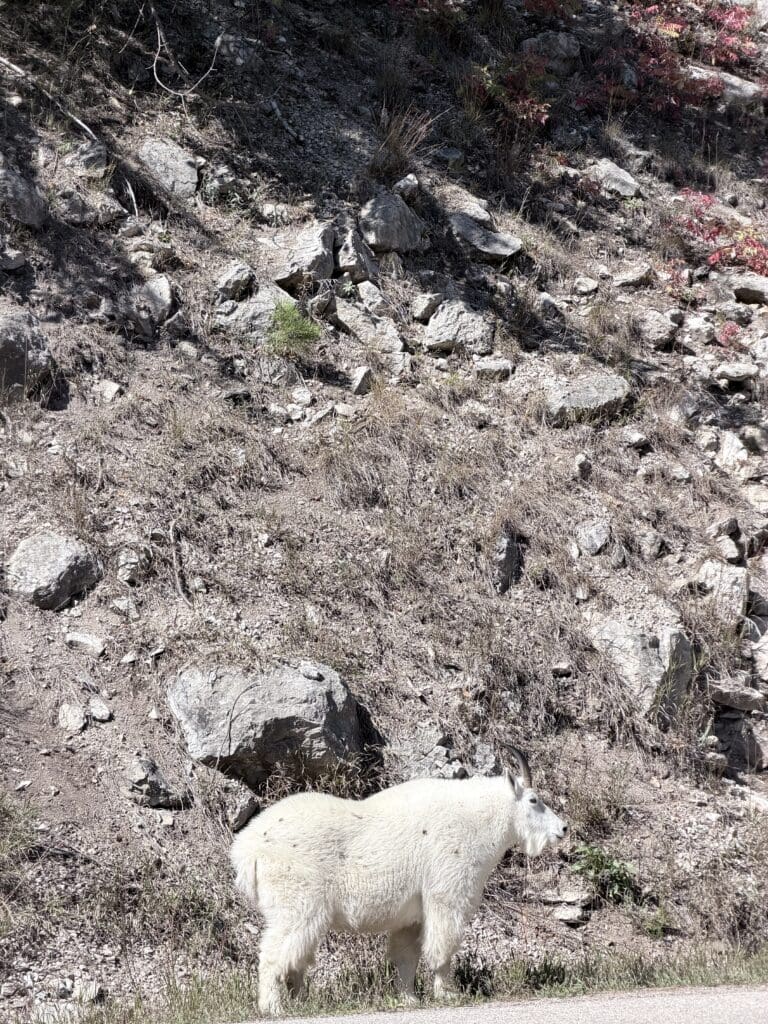
There was no time for me to contribute to historic preservation through gambling, though. Backroads had other plans for my money and, more specifically, my legs. We headed to Spearfish Canyon, where we got back on our bikes and rode downhill alongside the river. The scenery was beautiful, and we spotted mountain goats along the way. We were told something about the introduced population and concerns about inbreeding, but I didn’t retain enough of the explanation to responsibly comment on the goats’ family trees.
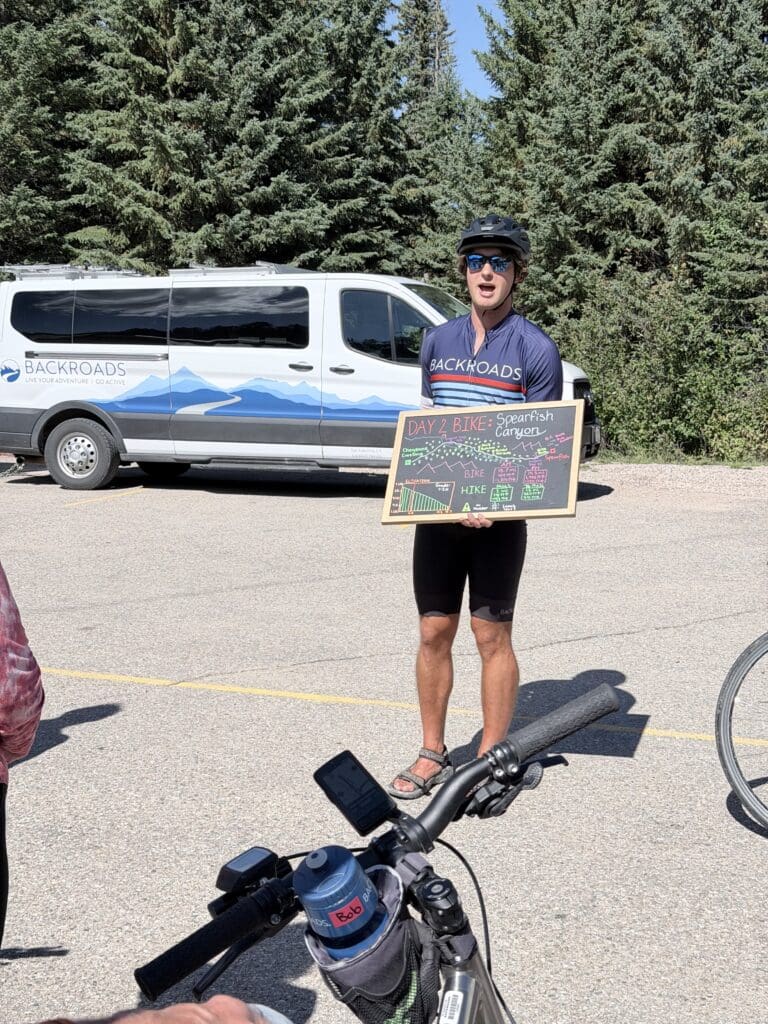
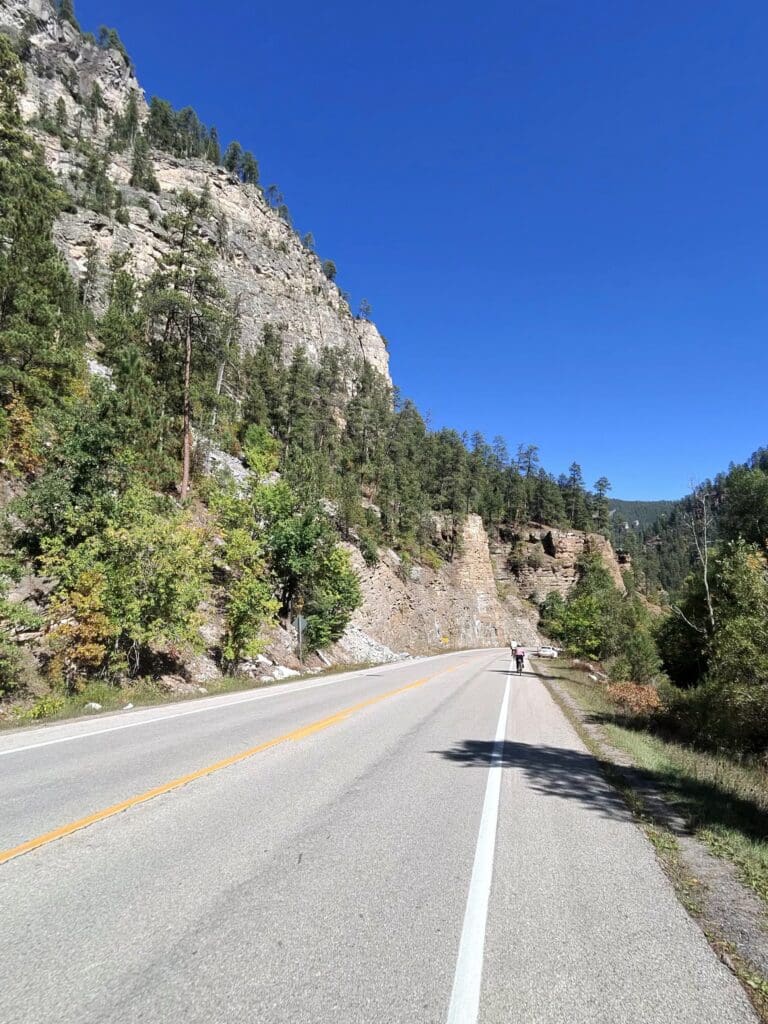
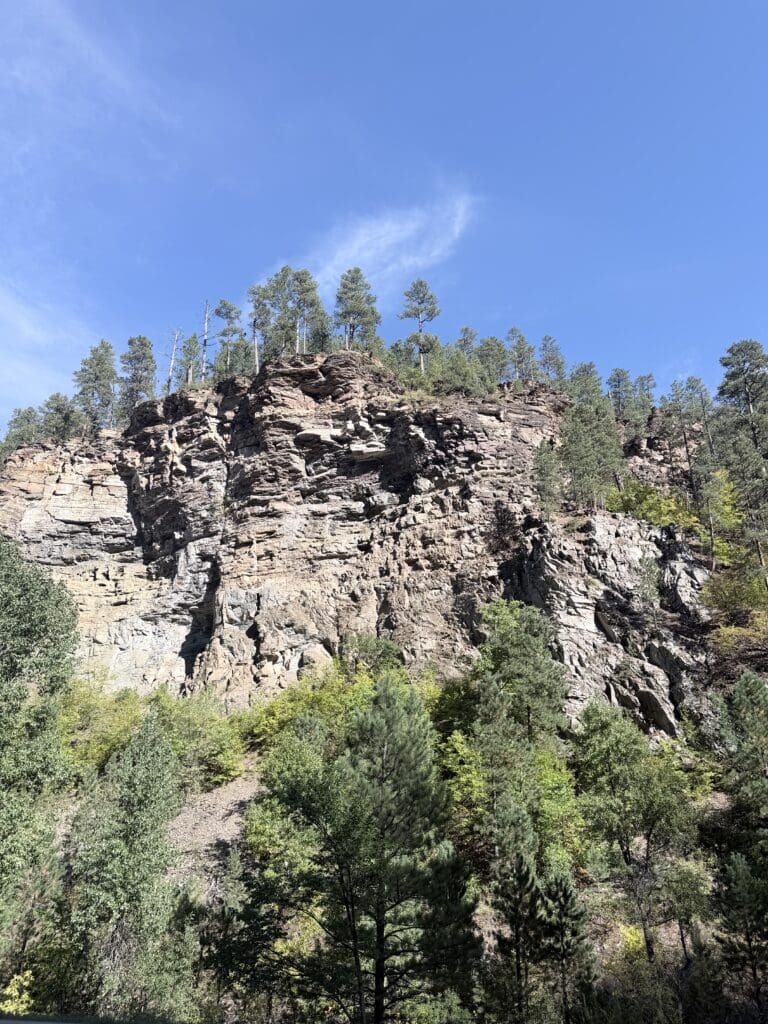
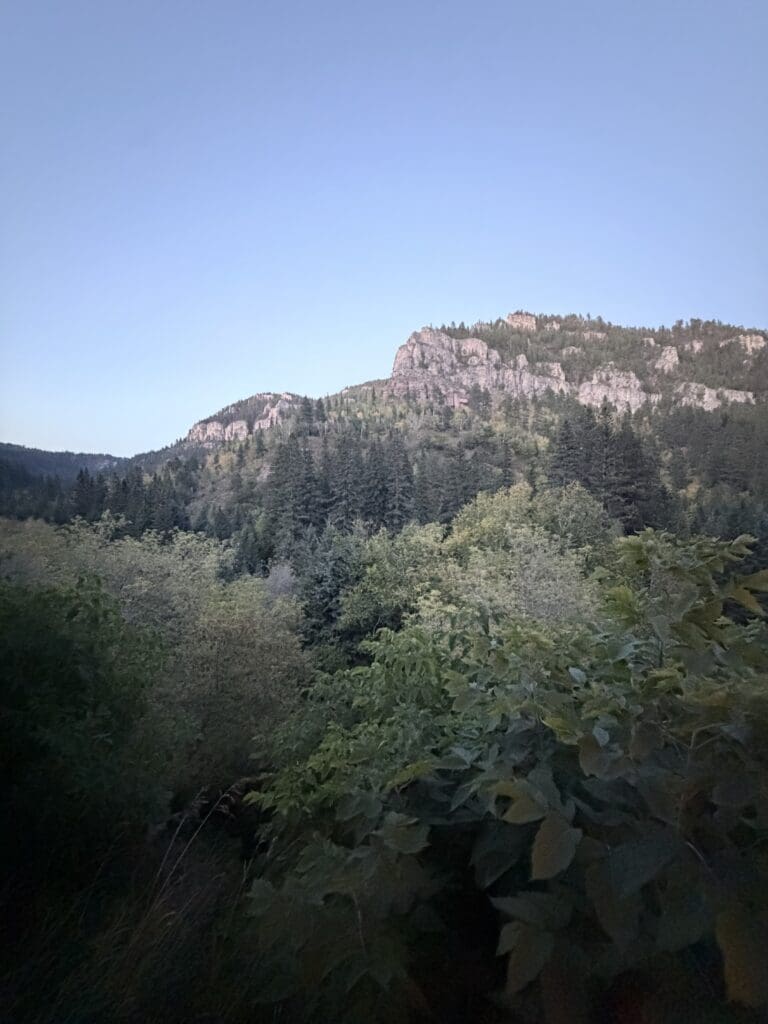
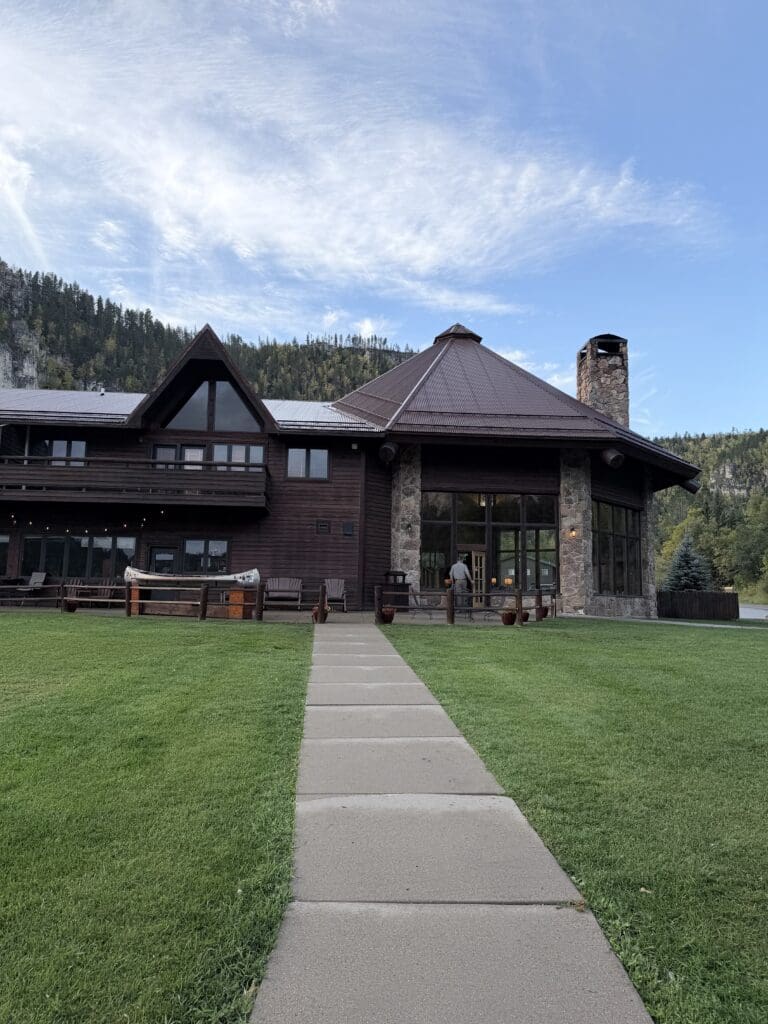
At the bottom, we had a lovely picnic lunch and a choice: take a ride back or pedal uphill. Chad and I chose to pedal, which always sounds like a sensible idea while you’re still sitting down eating lunch. Fortunately, seeing the canyon from the opposite direction made the return trip worth the effort. The views were lovely, and we rode all the way back to Spearfish Canyon Lodge.
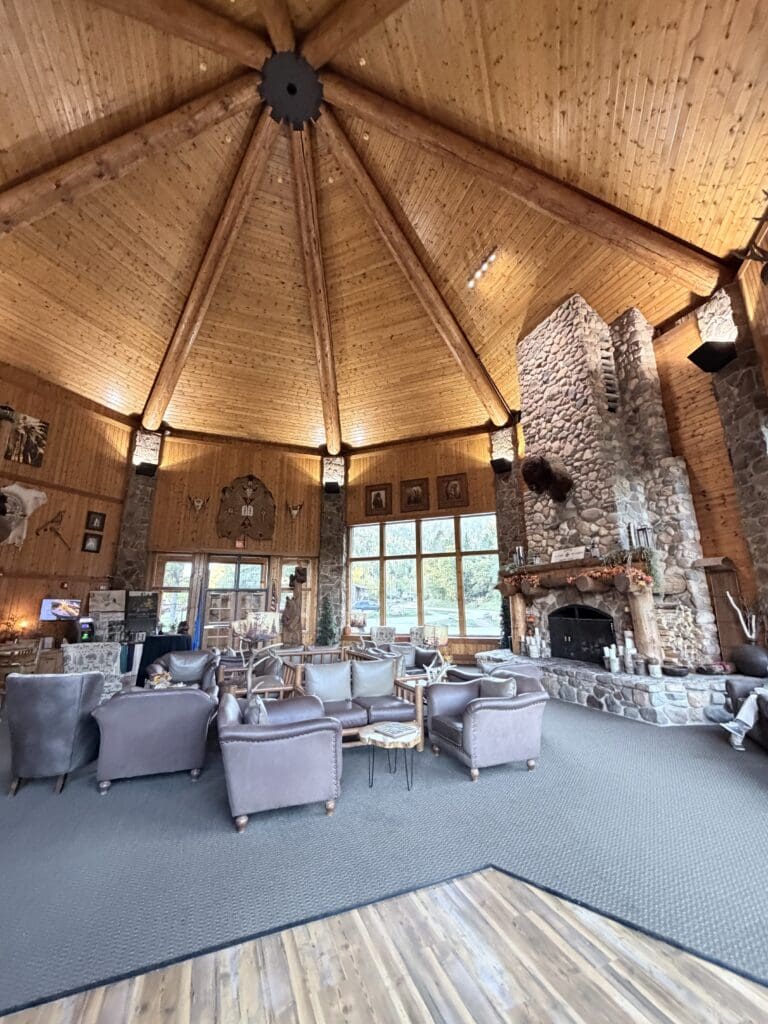
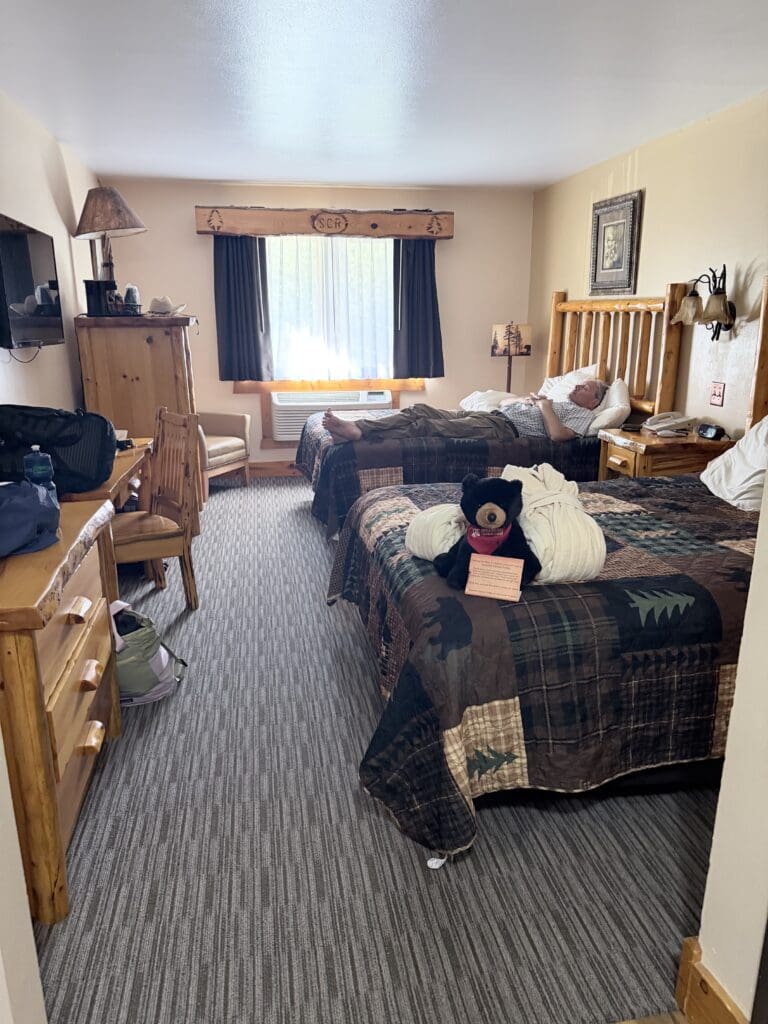
Our room had that comfortable, cozy national park lodge feel. Cell service was essentially nonexistent, but the Wi-Fi worked well, so I could still communicate with the outside world without having to stand in a parking lot holding my phone toward the heavens. The weather had also improved, giving us beautiful skies and a nearly full moon rising over the canyon.
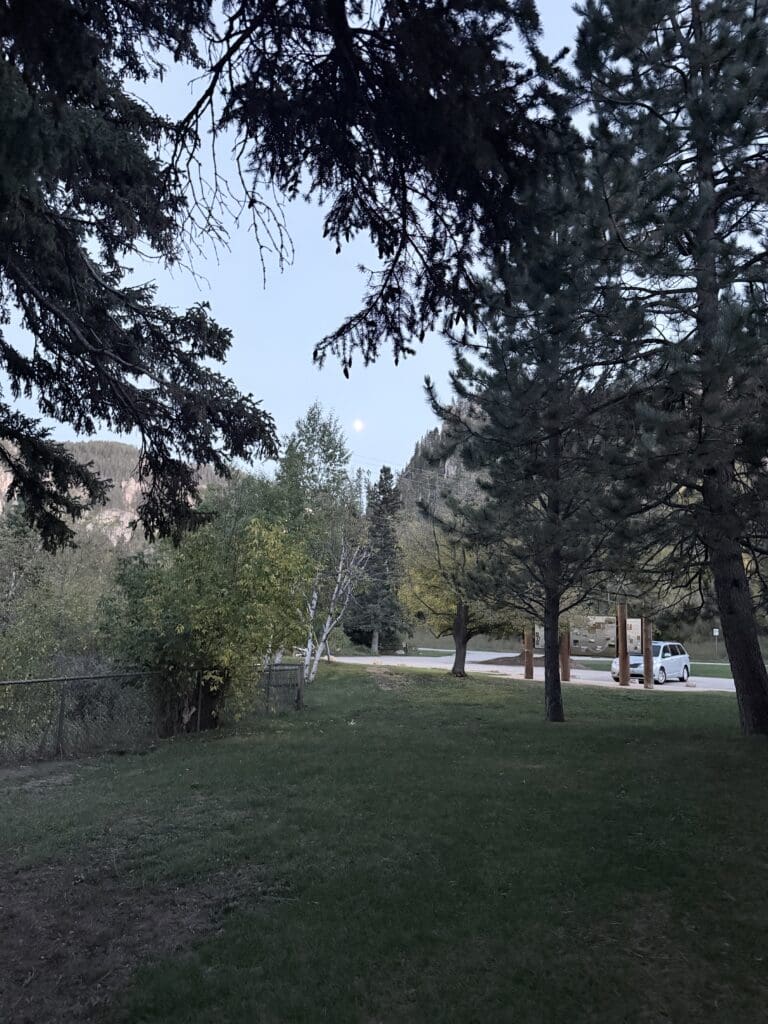
After a good night’s sleep, it was back on the bikes. Apparently, we had not yet spent enough time sitting on something the size of a folded napkin.
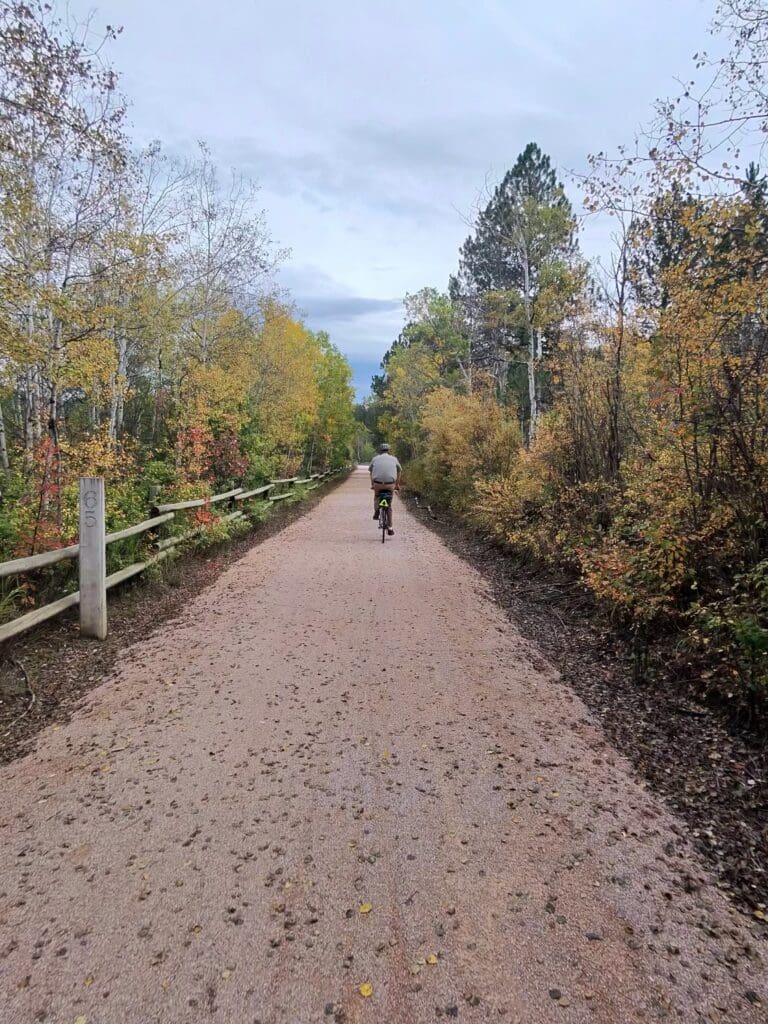
This time we rode the George S. Mickelson Trail, a former railroad route converted into 109 miles of trail through the Black Hills. If you’re planning to bike in South Dakota, put this one on your list. The gentle railroad grades made the climbs manageable, and one of the great advantages of traveling with Backroads is that you can start in one place and finish somewhere else. No turning around halfway through and retracing every mile just to retrieve your car.
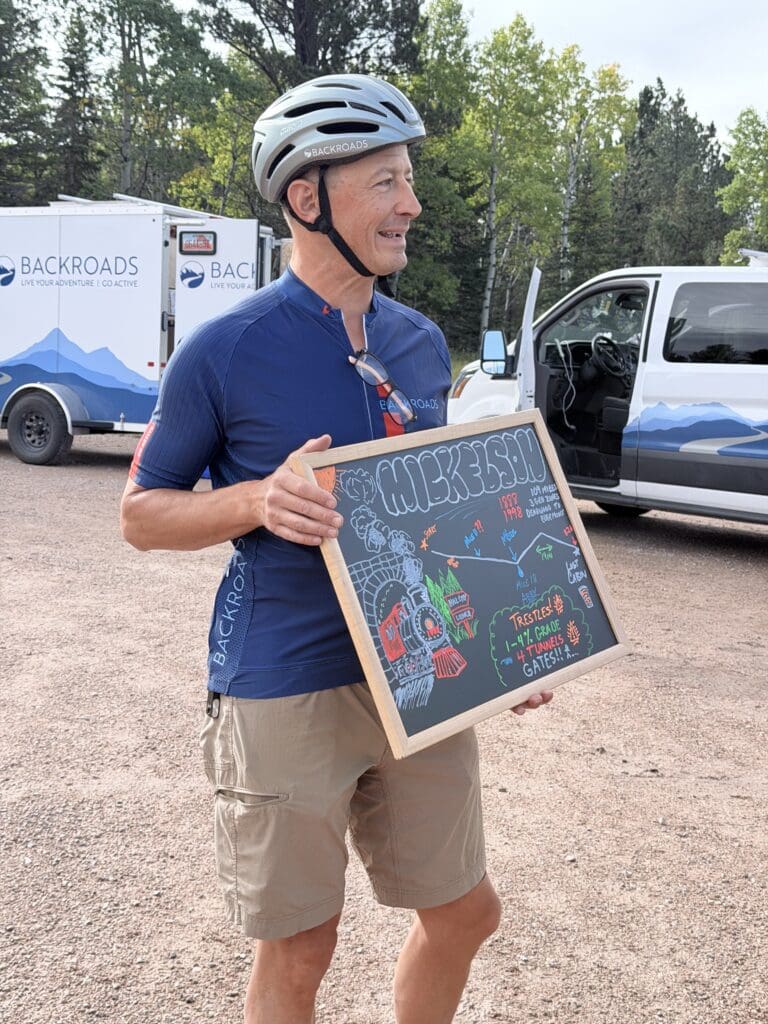
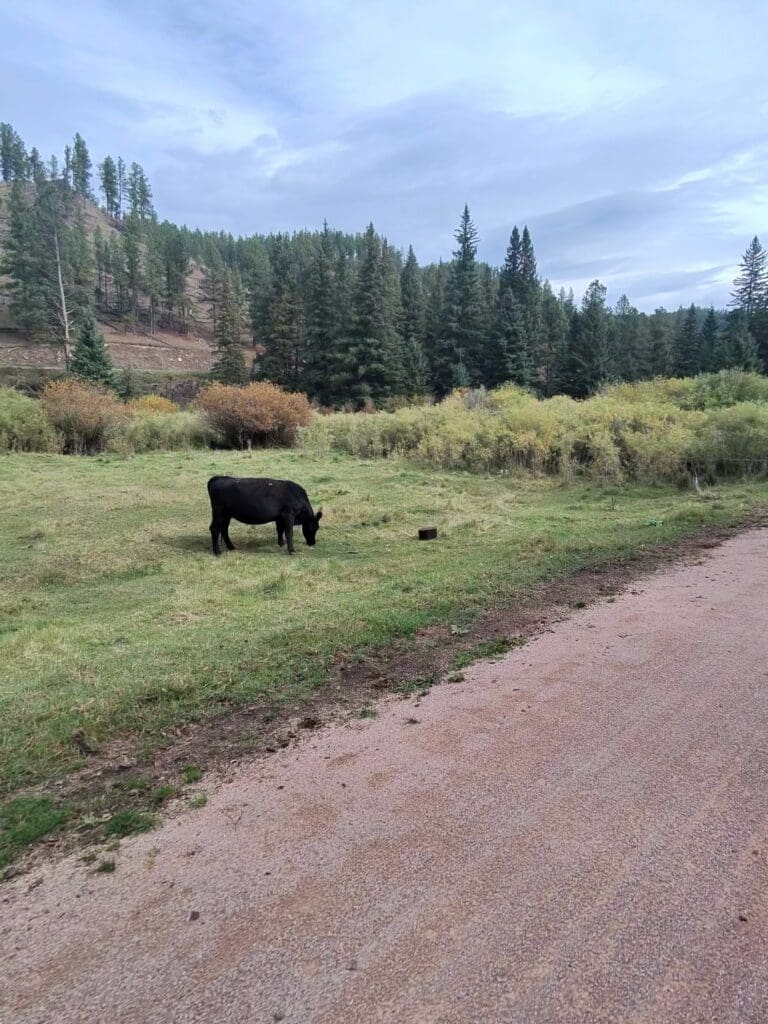
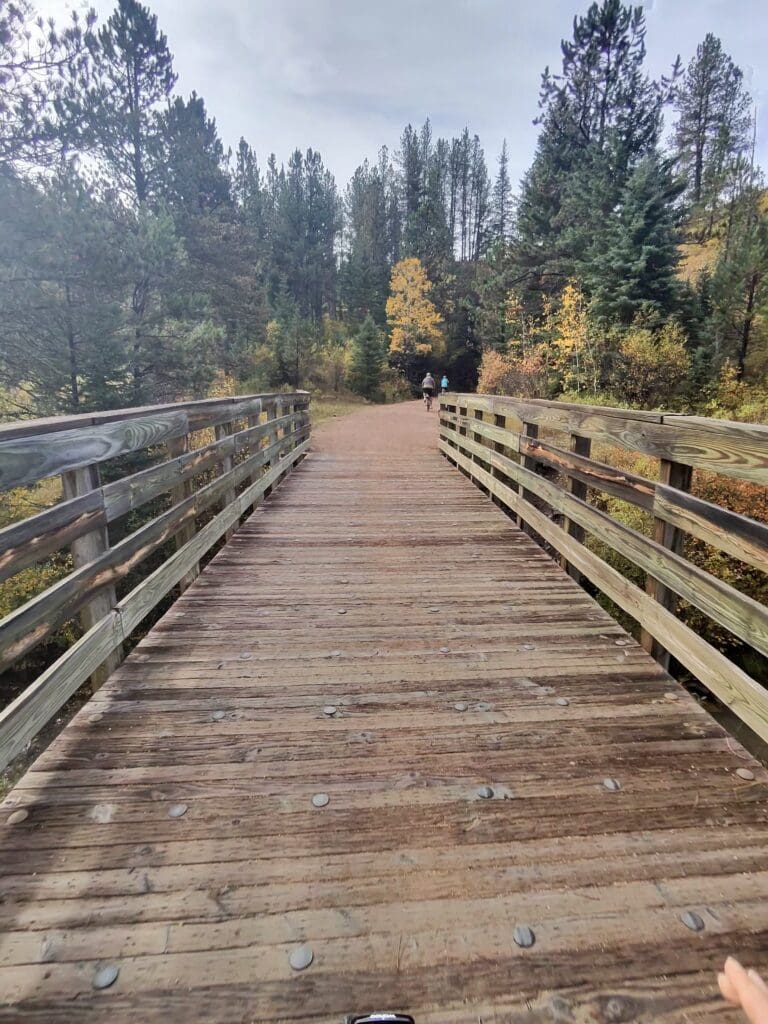
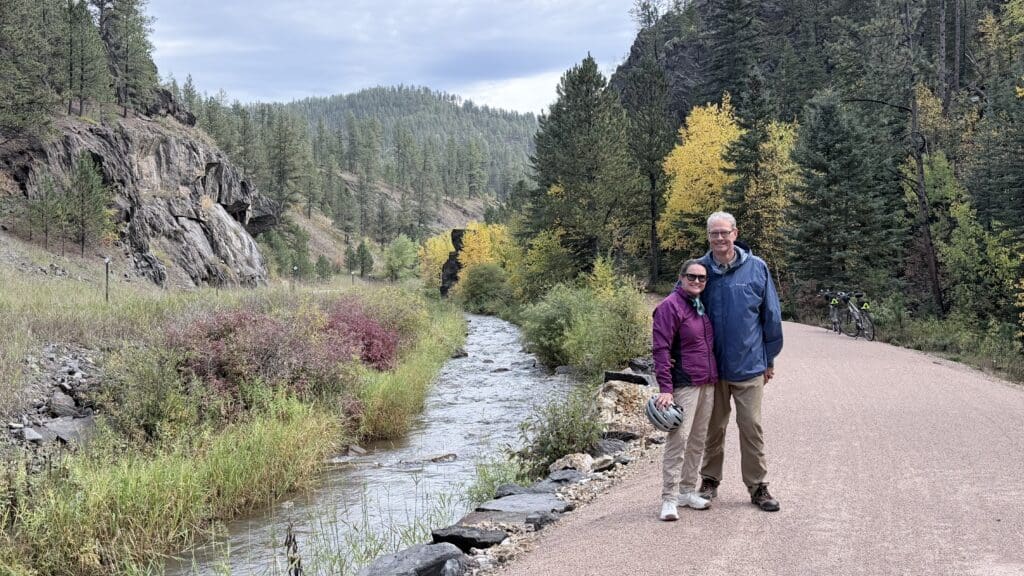
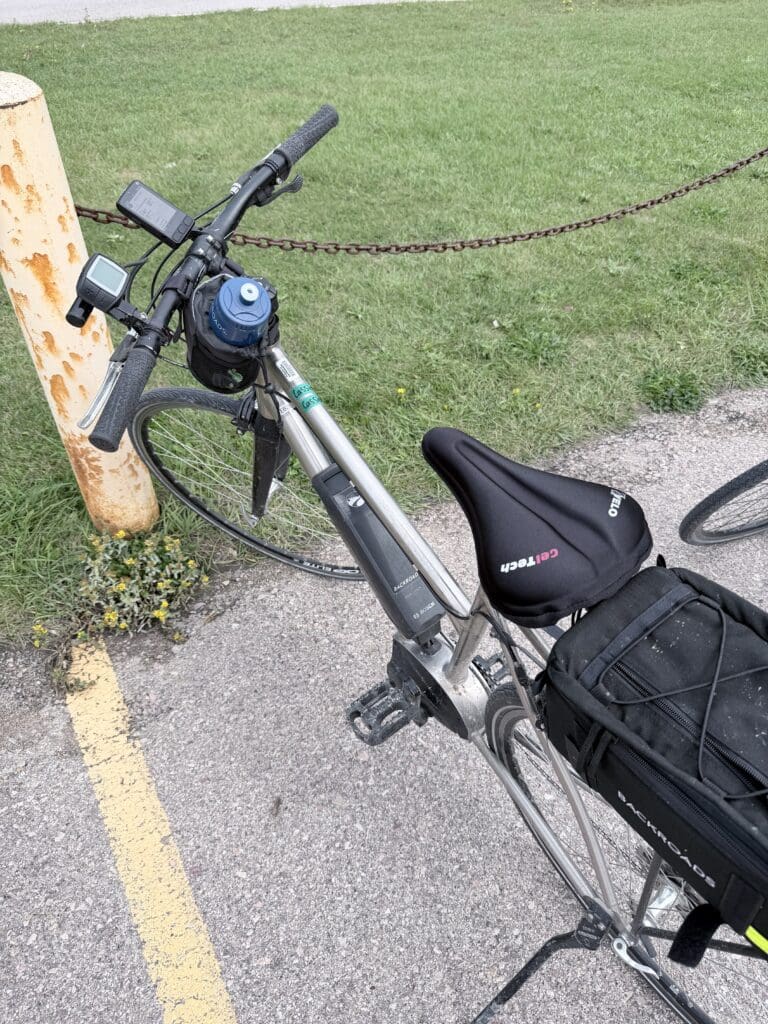
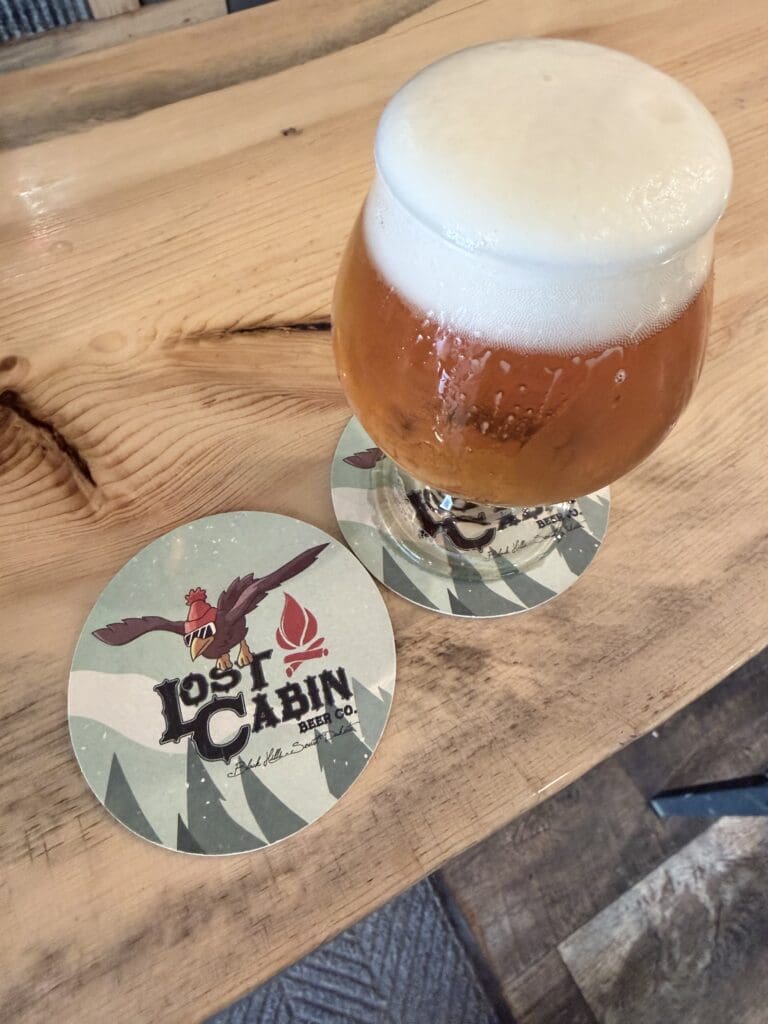
We rode about 33 miles and finished with lunch outside at the Lost Cabin Beer Garden in Hill City. This was also where we said goodbye to our bikes. I had thoroughly enjoyed the riding, but my tush was ready to end the relationship. We parted on good terms.
From there, we took the shuttle to Crazy Horse Memorial, where the scale of the project is difficult to comprehend even when you’re standing right in front of it. This isn’t someone chipping away at a large rock. It’s an entire mountain being turned into Crazy Horse on horseback, with a planned height of 563 feet and length of 641 feet. Suddenly, taking decades to finish something seems a little more reasonable.
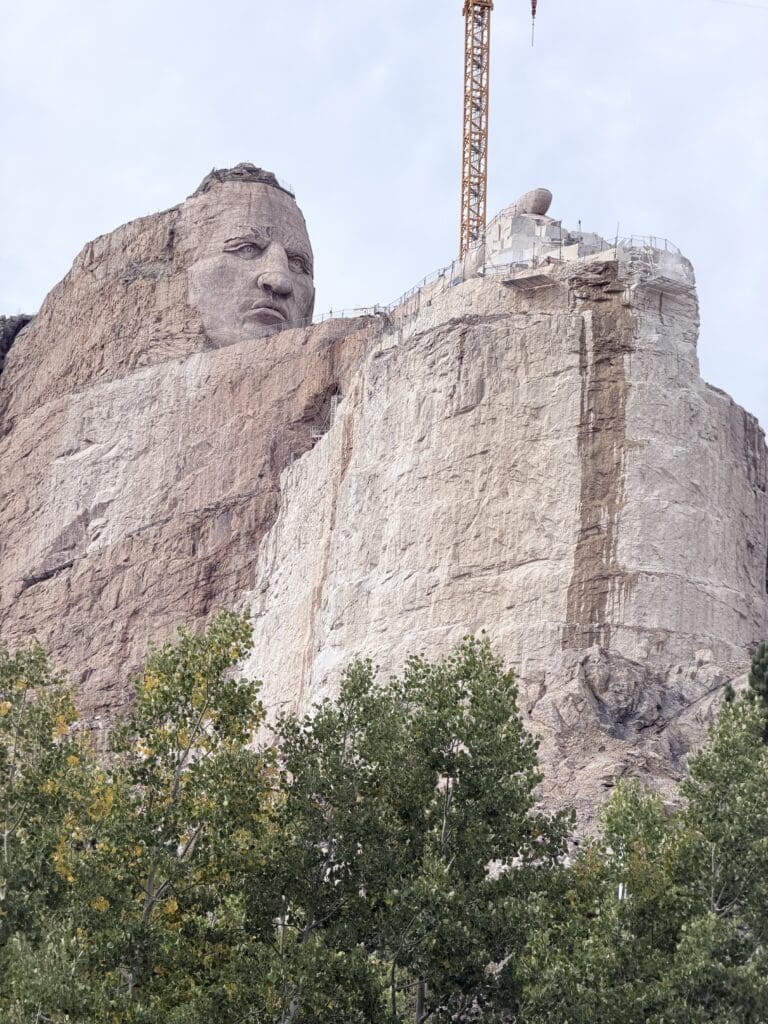
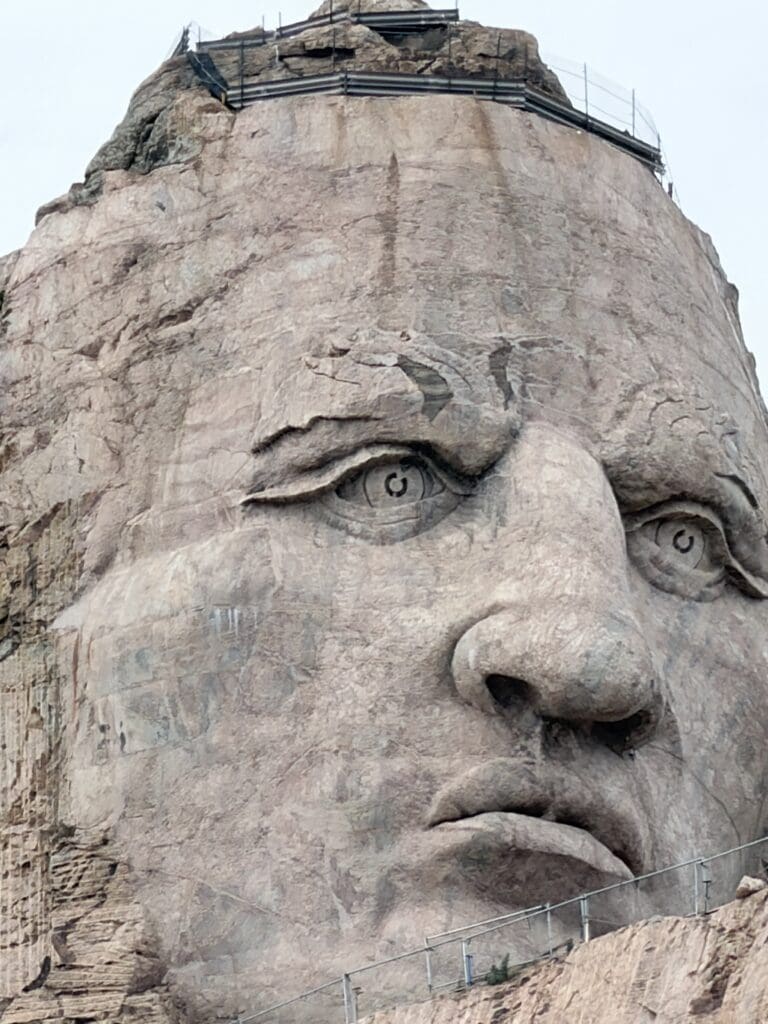
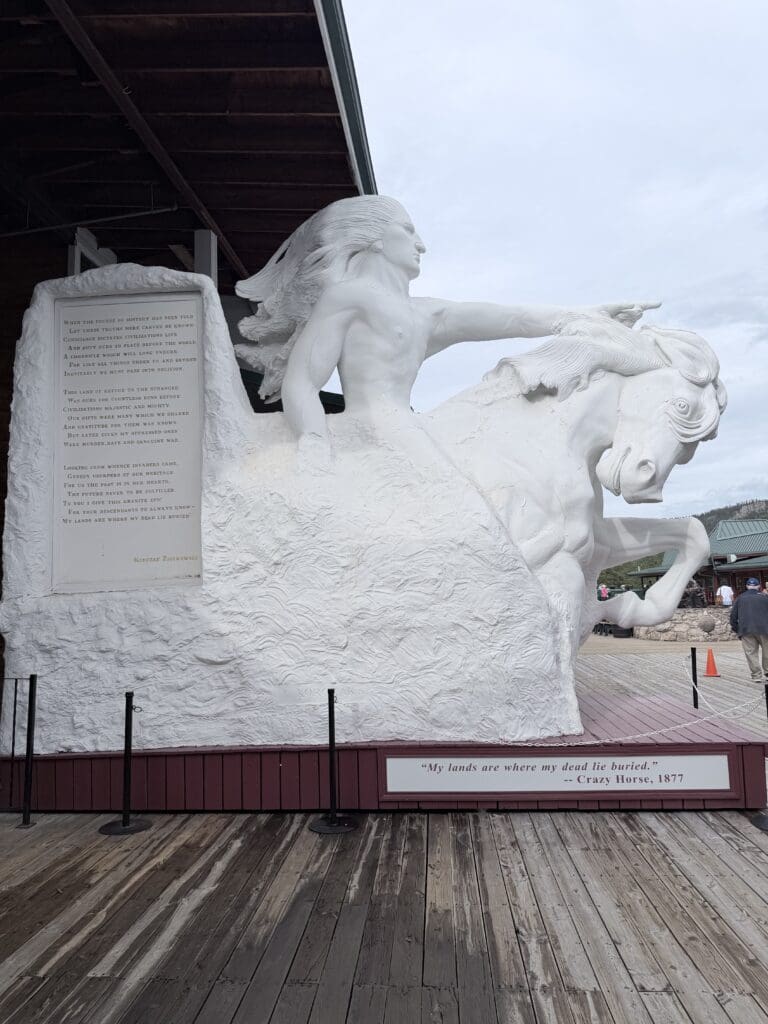
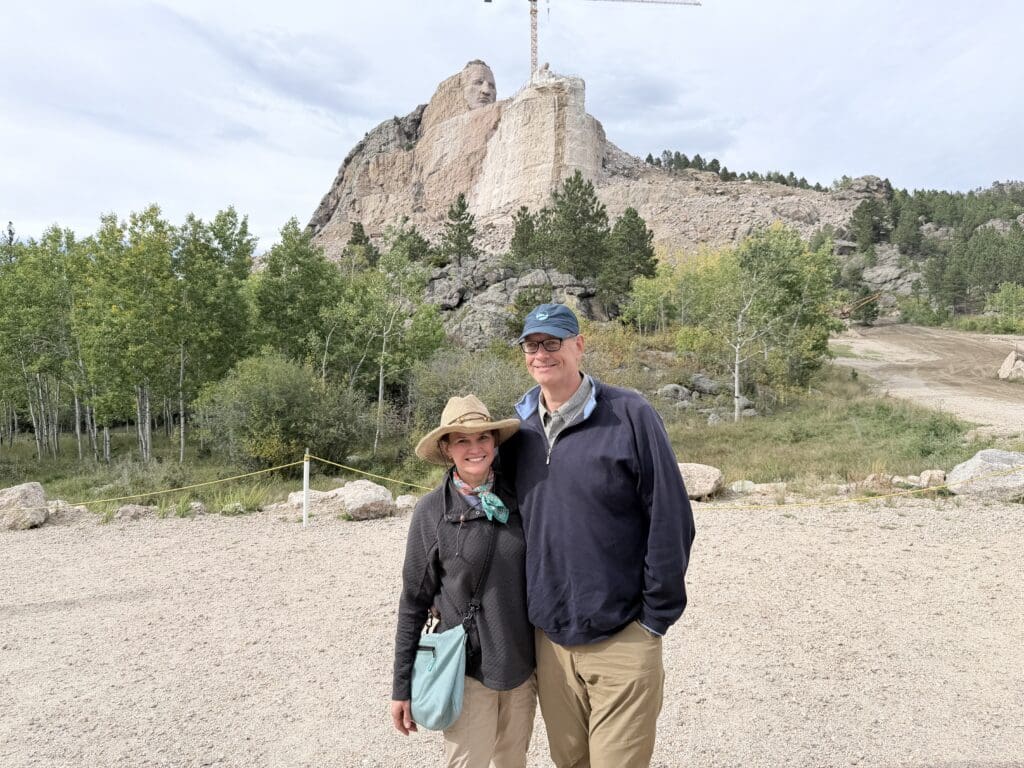
The first blast took place in 1948. Lakota leader Henry Standing Bear wanted a memorial honoring Native American heroes and recruited Korczak Ziolkowski, a sculptor who had worked at Mount Rushmore. Korczak dedicated the rest of his life to the project, and his wife and family continued the work after his death. Their story is now closely woven into the story of the memorial itself.
I found that part complicated. A monument intended to honor a Native American hero also tells a great deal of the story of the white sculptor and his family. Not everyone agrees with the project, including some Lakota people who object to carving a sacred mountain. It is an extraordinary thing to look at, but I left with questions as well as admiration.
Our local guide was on his very first day, so we were all participating in his orientation to some extent. He didn’t have much information yet, and most of what I learned came from looking things up afterward. I wish him well. Starting a new job is hard enough without being expected to explain a mountain.
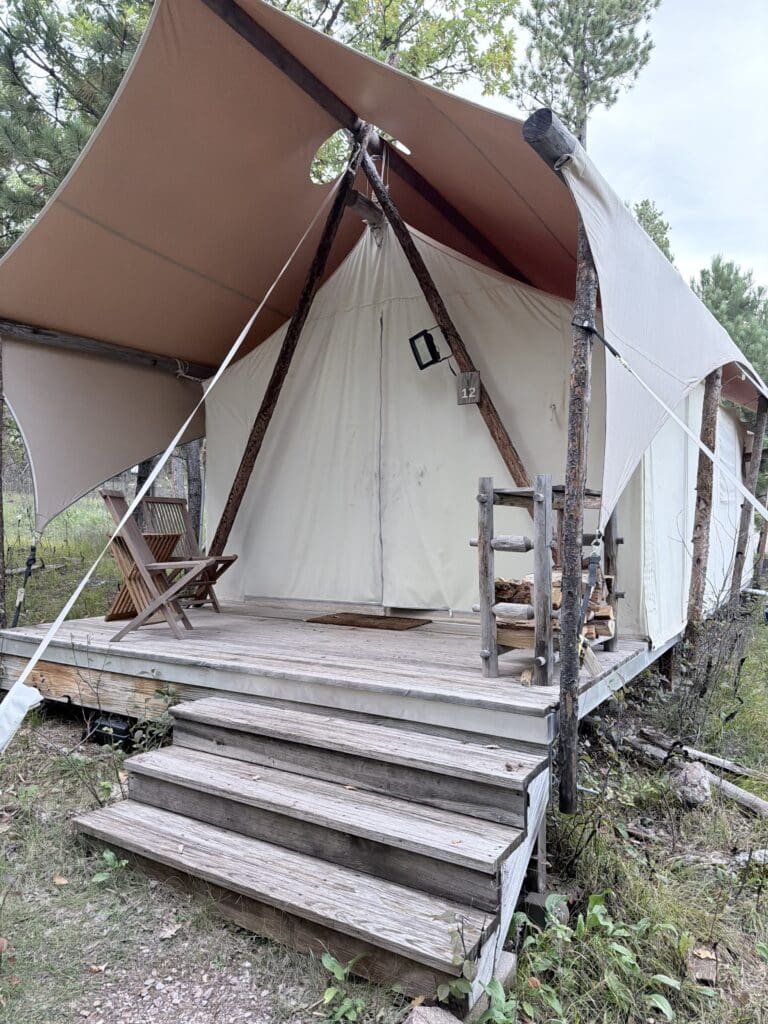
After walking through the museum and, naturally, the gift shop, we climbed back into the vans and headed to our final accommodations in South Dakota: Under Canvas Mount Rushmore. We had finished with the bike seats. Now it was time to find out how much glam could reasonably be put into a tent.