

How We Accidentally Took the Hard Way to Machu Picchu
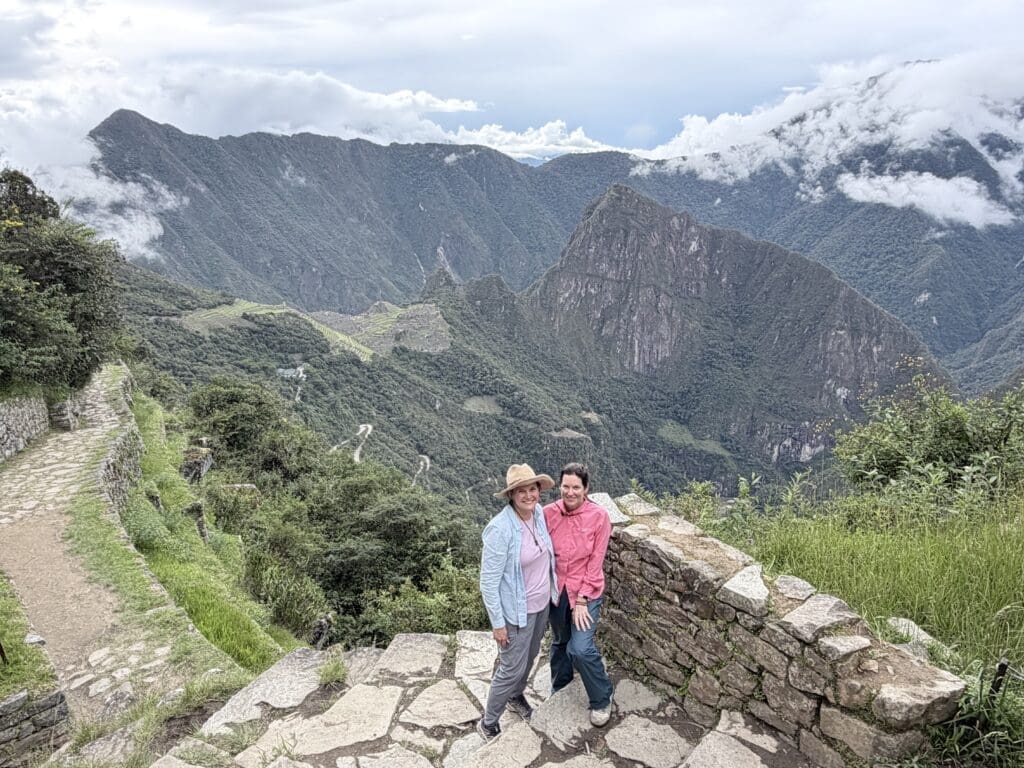
Wow. What a day.
It began, as all great adventures do, with someone cheerfully announcing that we would now be leaving an hour earlier than previously discussed. We were out the door by 5:30 a.m., which meant breakfast and bags needed to be handled by 4:45. Nothing says “vacation” like doing logistics in the dark while your body is still negotiating whether it’s technically still yesterday.
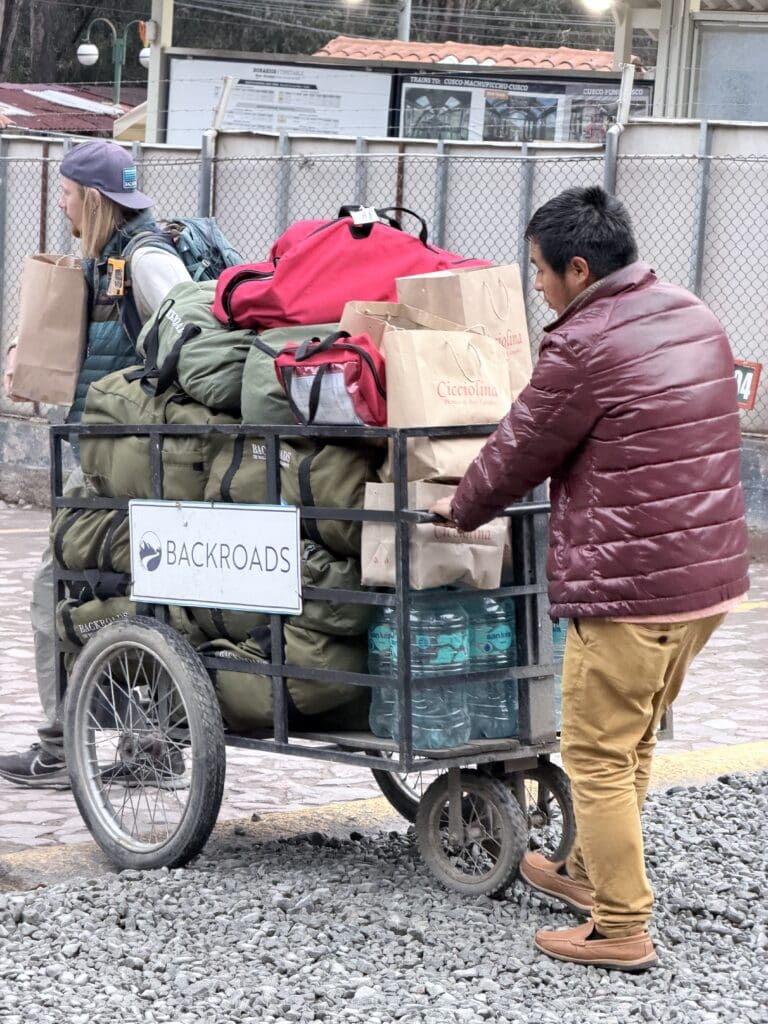
There was also the small matter of luggage restrictions on the train, so we repacked for two days in Machu Picchu into matching green duffel bags. Efficient. Minimalist. Slightly smug about how capable we were.
Della and I were up by 4:15, zipped, sorted, and to the restaurant for what was, frankly, a very civilized breakfast considering the hour. Leaving Hotel Sol y Luna felt like saying goodbye to a particularly charming houseguest situation where someone else cooks for you and no one asks you to unload the dishwasher. We piled onto a short bus ride back to town, boarded the train, and set off toward KM 104—the jumping-off point for our 7-mile, 2,337-foot climb to the Sun Gate above Machu Picchu.
The train itself was plush and lovely, the kind of experience that makes you feel like you should be wearing something slightly more linen-forward. I tried to write, but between the gentle rocking and the completely unreasonable beauty outside the window, productivity never stood a chance. I ended up chatting with a delightful French scientist seated next to me, which felt like the better life choice. Della, meanwhile, went quiet and closed her eyes. At the time I thought maybe she was resting. In hindsight, this was the opening scene of a much more dramatic subplot.
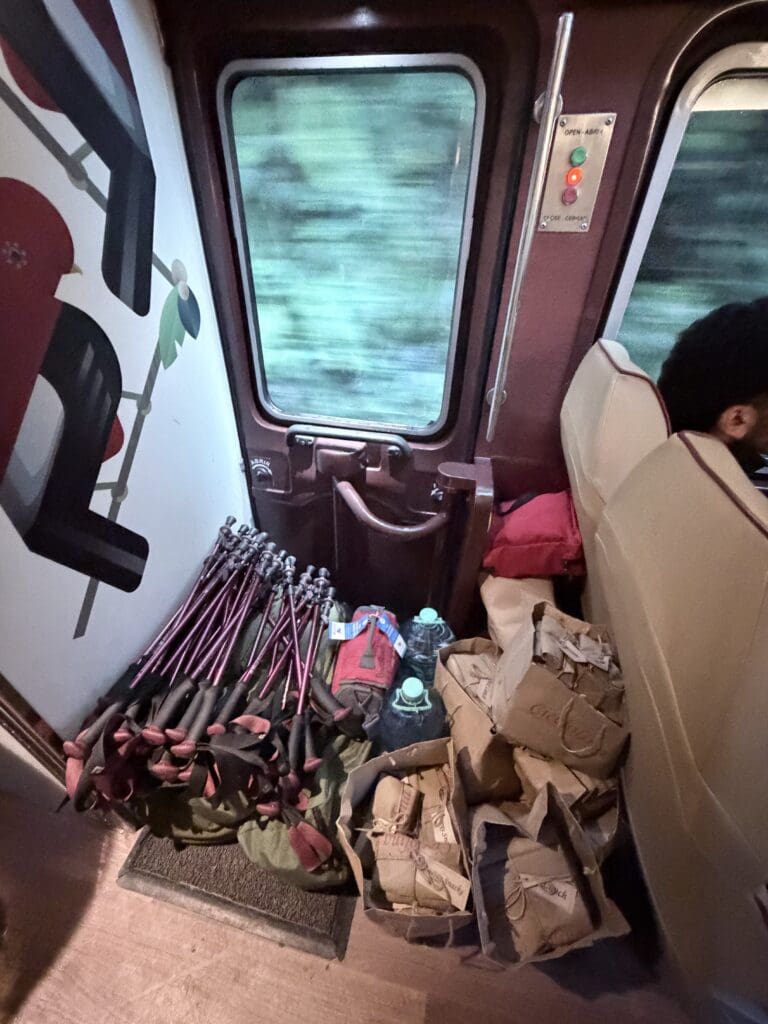
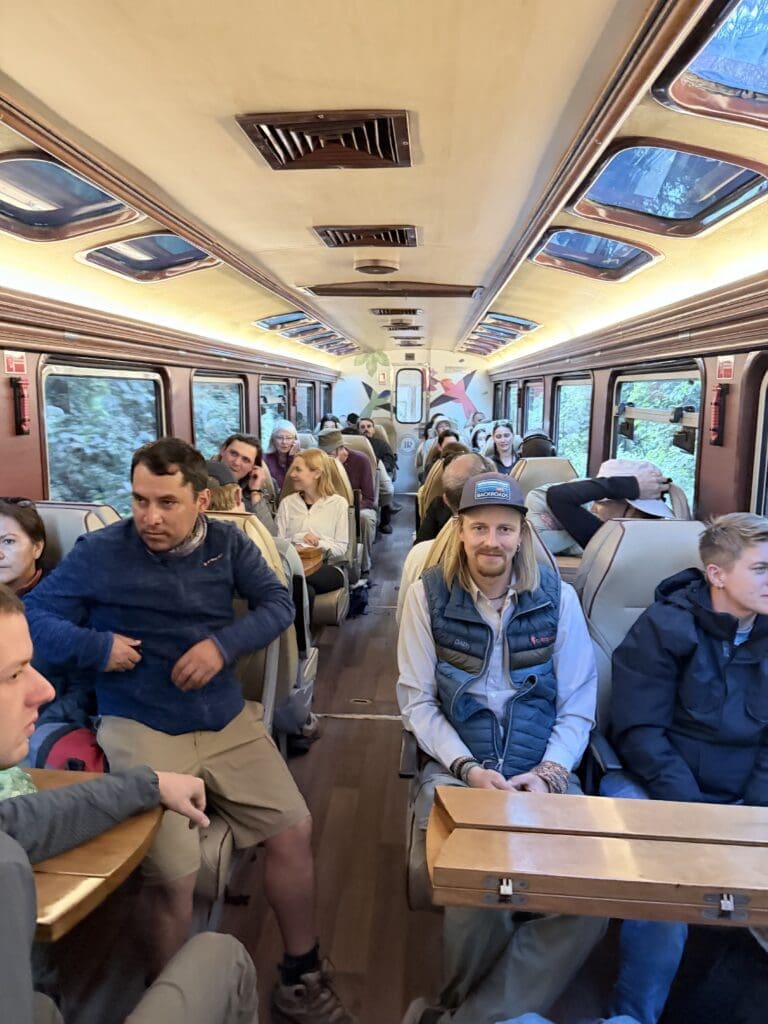
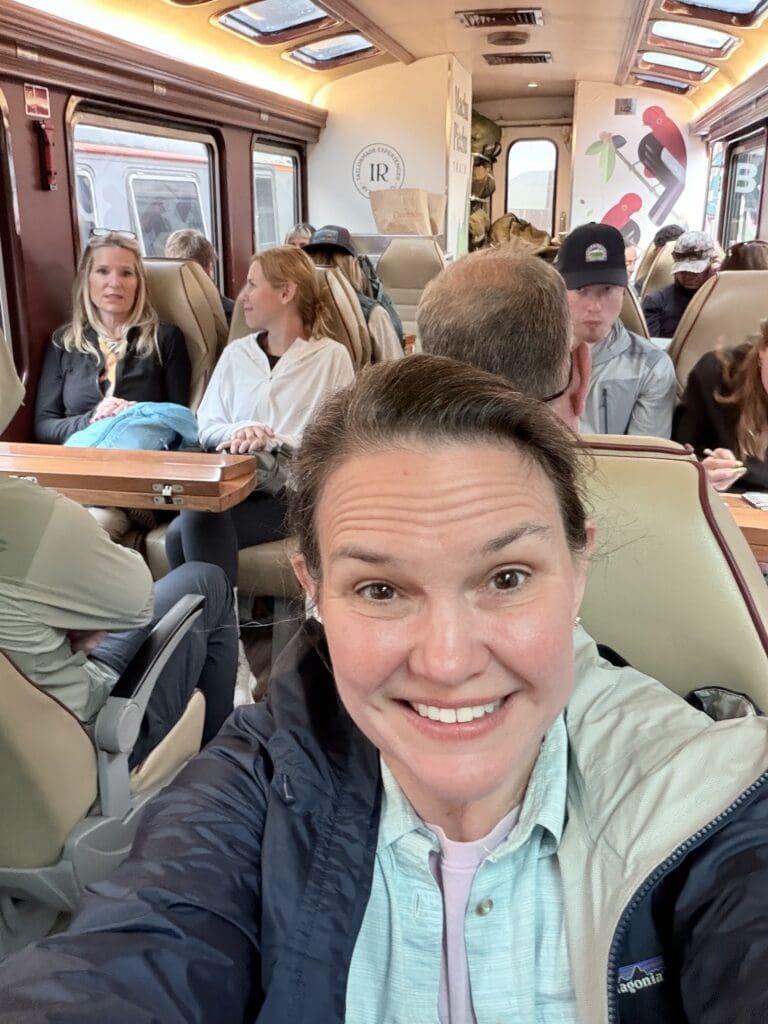
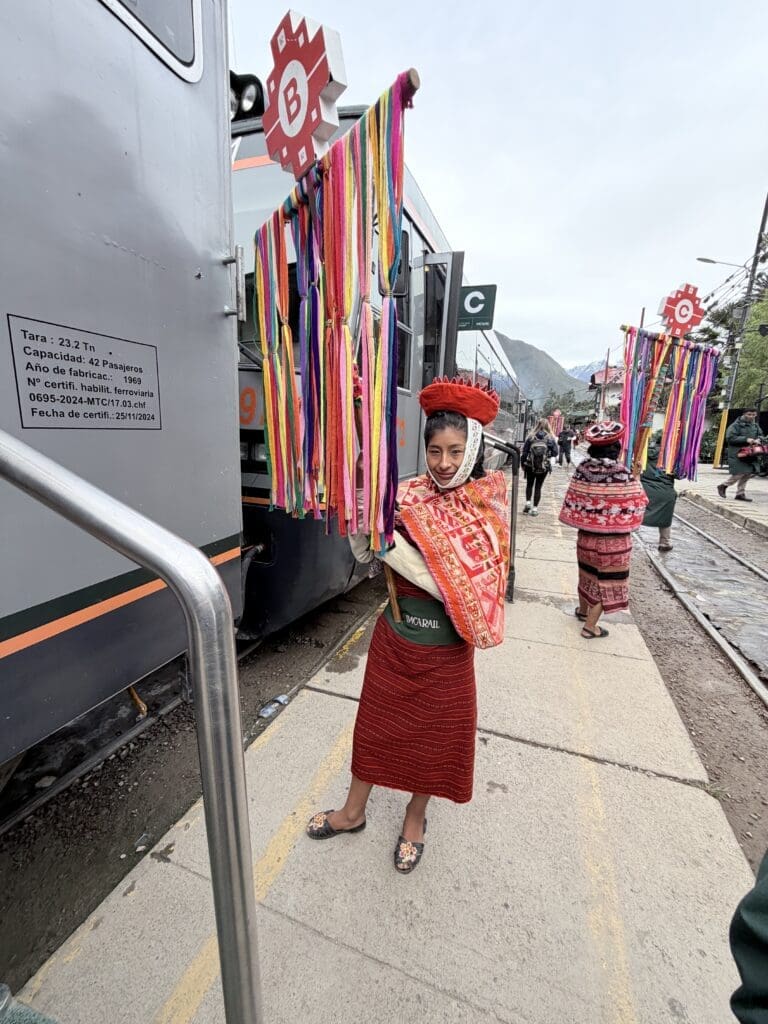
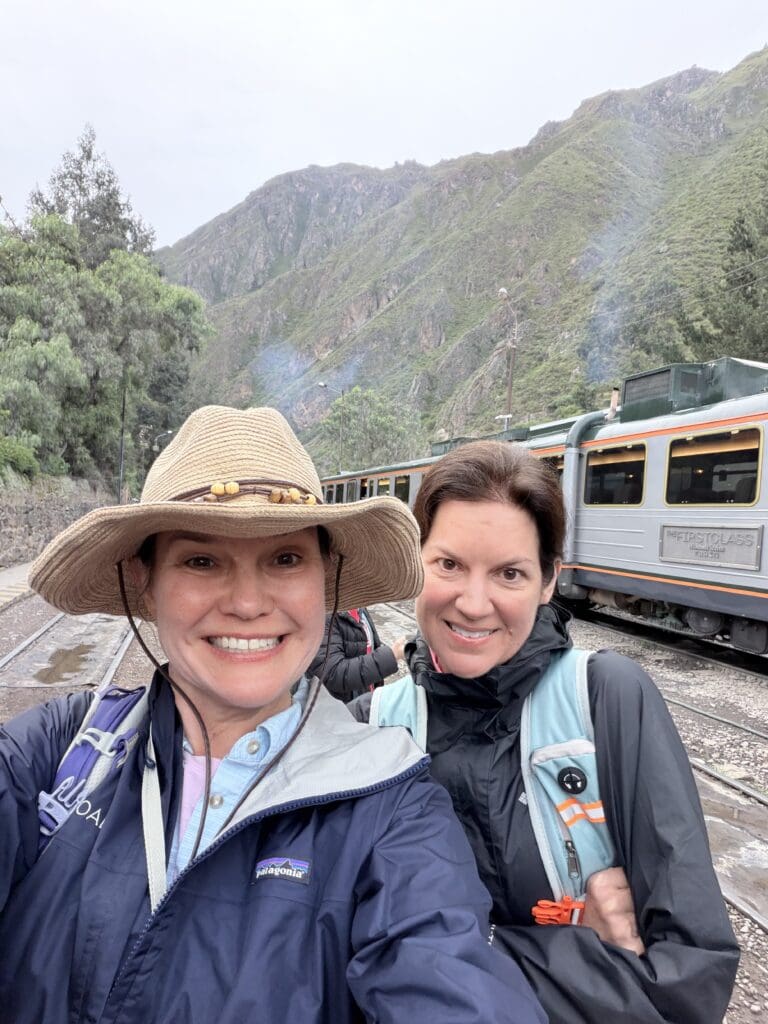
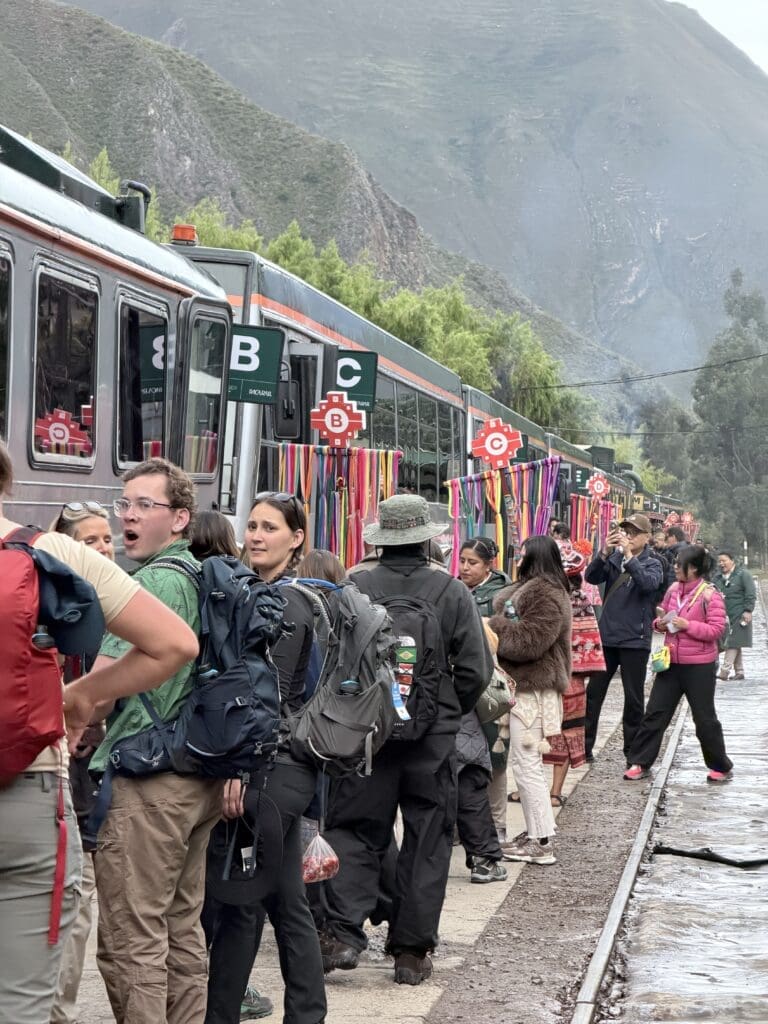
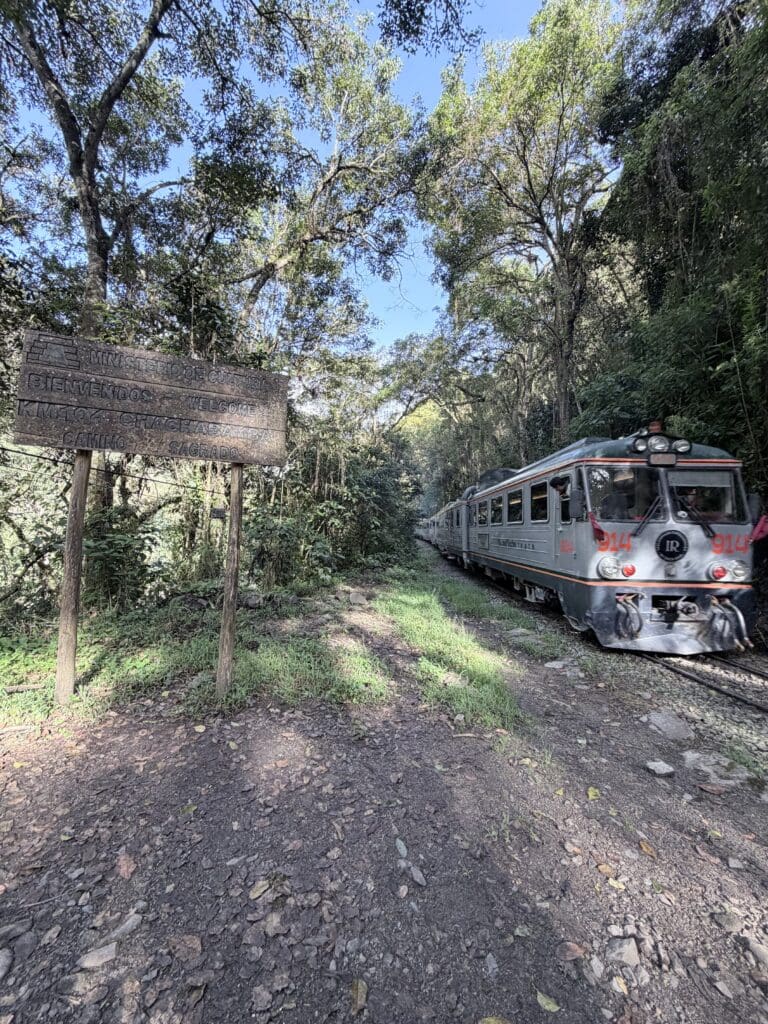
Then, without ceremony, the train stopped. Not at a station. Not near a building. Just… in the middle of the forest. We stepped down onto what can generously be described as “earth,” crossed a bridge, and were told, essentially, “Congratulations, you’re on the Inca Trail now.”
It was also at this moment that Volker announced a “small change of plans.” The main trail was closed, so we’d be taking a secondary route. The good news: bonus ruins. The less-good news: the elevation gain would now be… condensed. Which is a polite way of saying “steeper and sooner.”
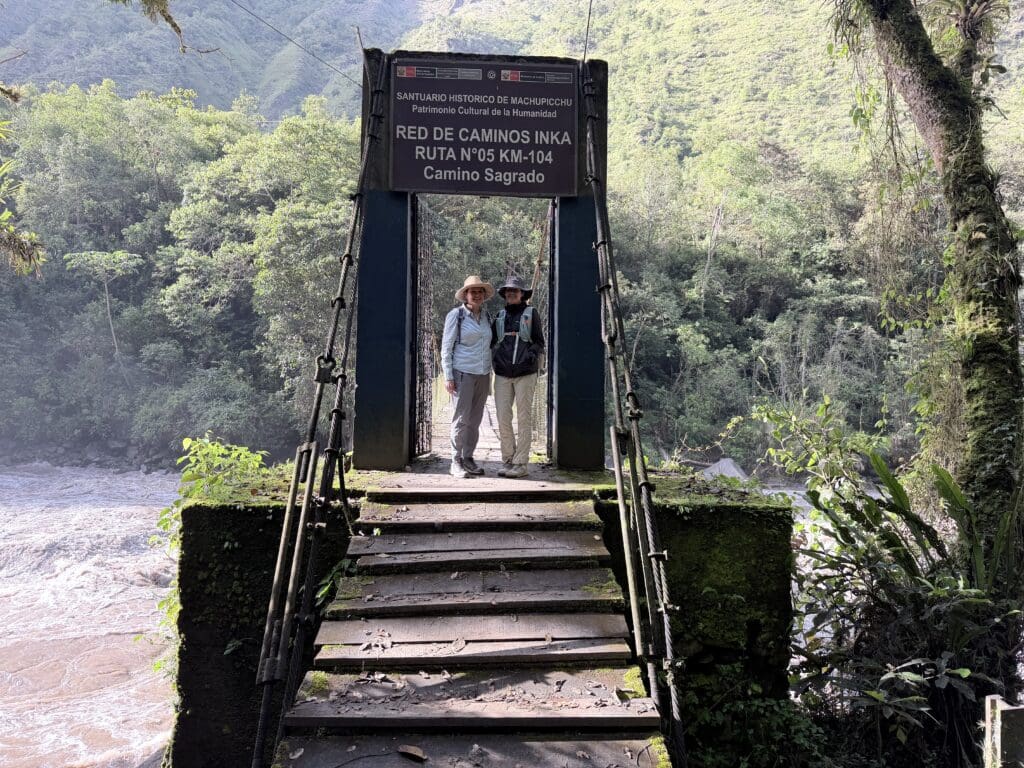
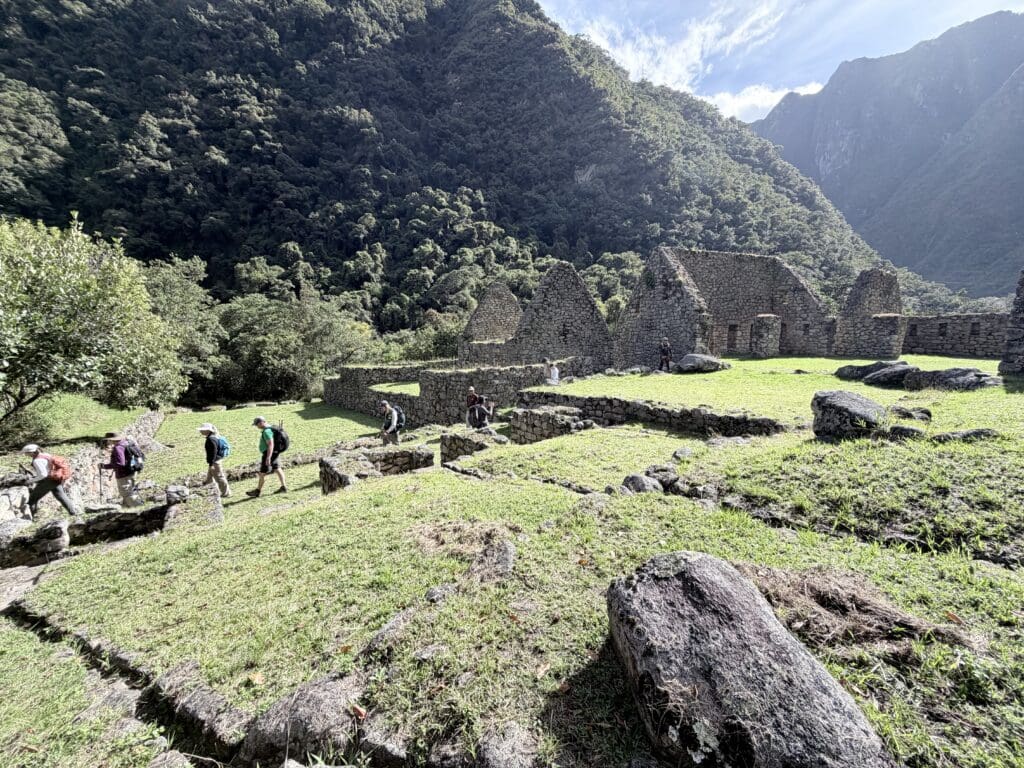
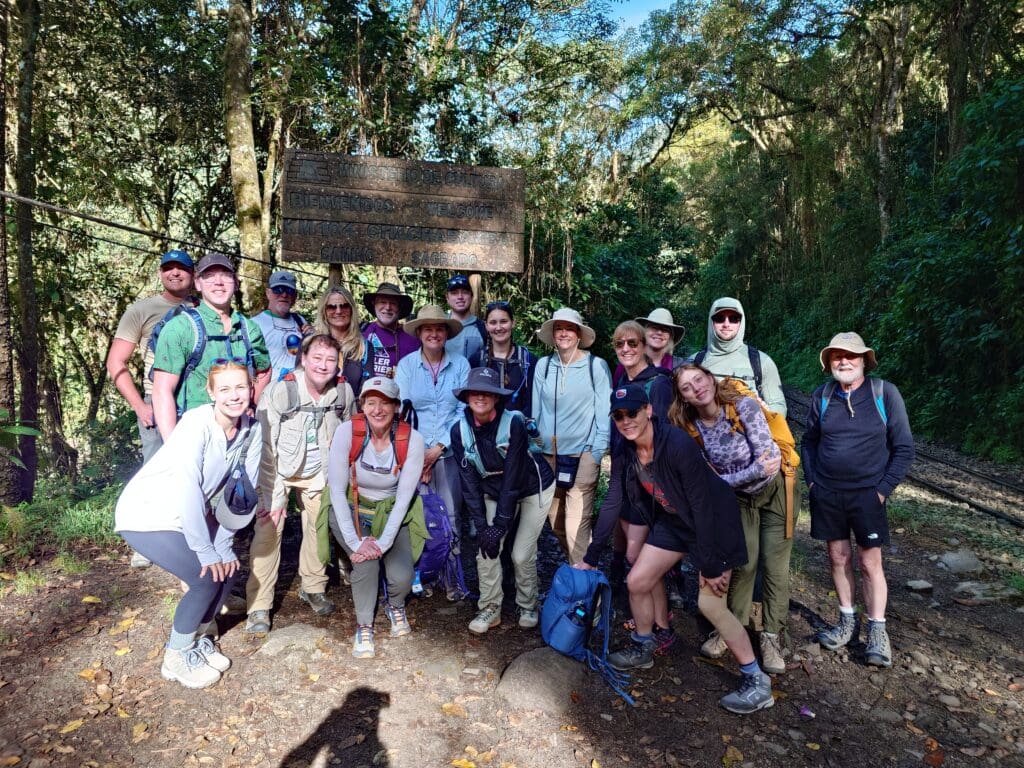
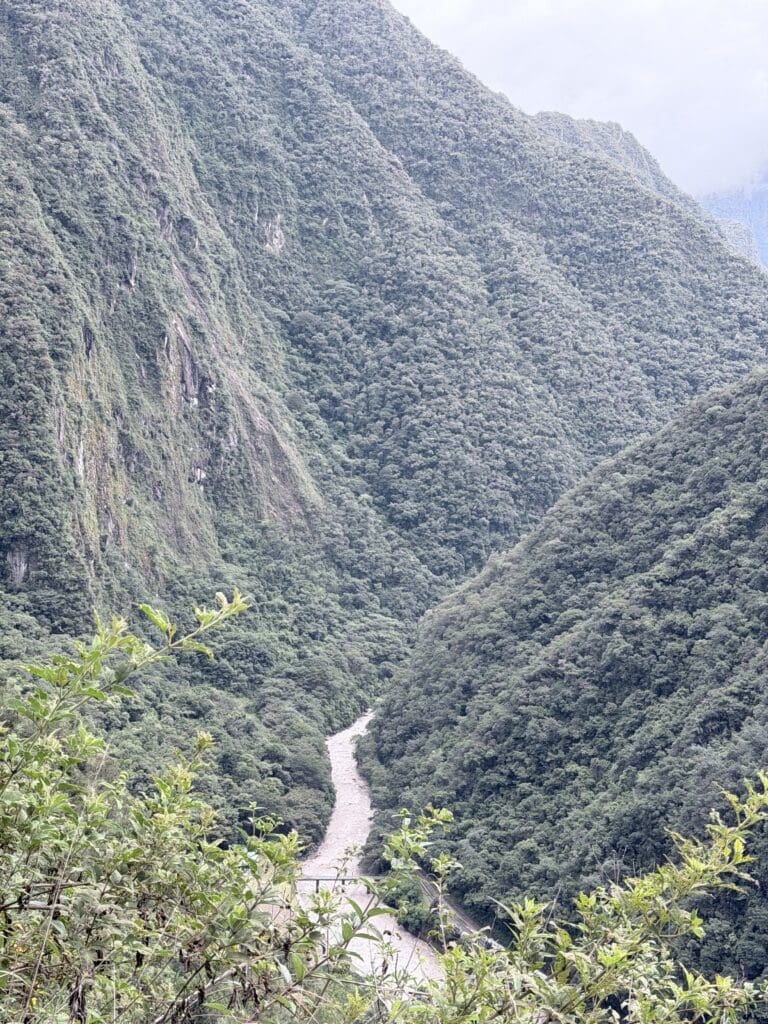
We started out along the river, even going slightly downhill, which felt like a delightful and suspicious gift. I lingered for photos (and, if we’re being honest, oxygen), while Della powered ahead. When I finally caught up, the trail tilted upward and Della casually asked if I needed to stop for pictures. I confirmed that yes, I absolutely did, and also that this had nothing to do with needing to catch my breath, which is a lie I tell with great conviction.
I suggested we let everyone pass and regroup. She looked at me and said, “I think I’m going to get sick.” And then she did. Right there on the trail.
There is a very specific moment when your brain goes, “This is not ideal,” while your face tries to remain encouraging and calm. We slowed things down, hoping it was nerves. Then it happened again. And again.
Another woman in our group decided to hang back with us, partly because she also felt a bit off and partly because misery, as it turns out, enjoys company with good conversation. Meanwhile, Volker shifted into full guide mode—measured pace, calm voice, quiet radio chatter that definitely meant something logistical was happening behind the scenes.
I was furious with myself for not packing Zofran. Of all the things I had thoughtfully organized, I had somehow skipped the one medication that would have made me feel like a useful human being.
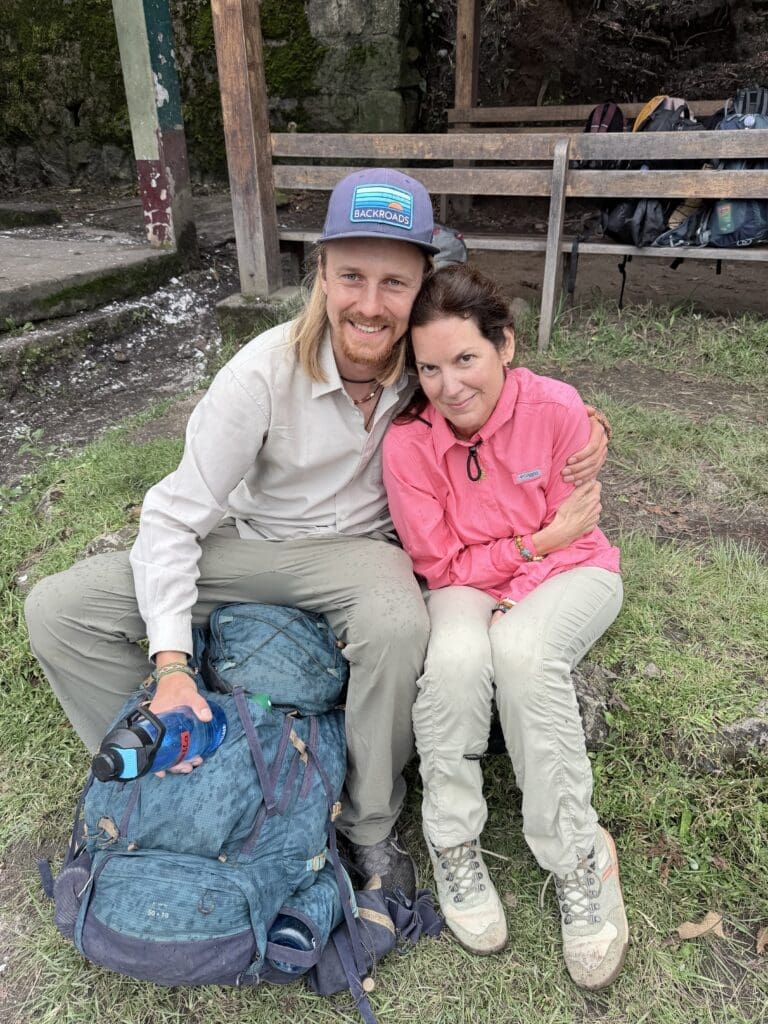
We kept moving. Slowly. Five minutes walking, stop, breathe, sip of water, repeat. There was no option to turn around—the train was long gone—and watching your friend try to climb a mountain while unable to keep anything down is a special kind of helpless.
We reached a small way station, celebrated the first leg like we had just summited Everest, and Volker went to high-five Della, which she managed and then immediately threw up again. It was, objectively, not a high-five moment.
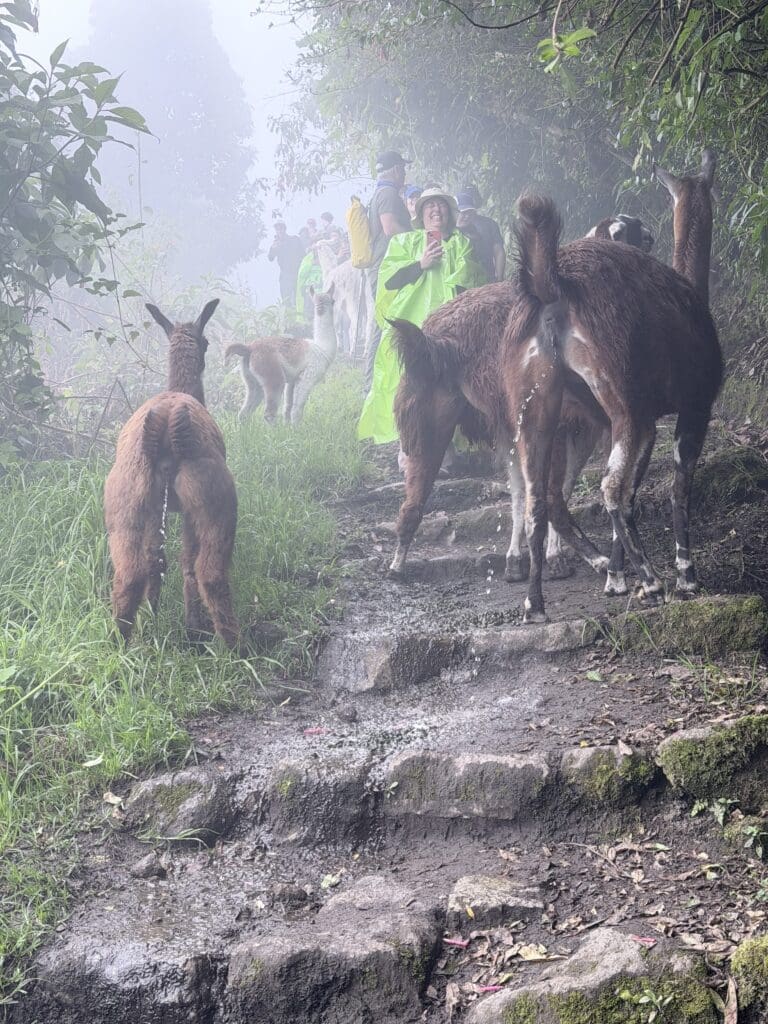
There were llamas there—of course there were llamas—wandering freely, entirely unbothered by human struggle. Some had babies. Some were standing squarely on the stairs to the bathroom, also using the stairs as their bathroom. This created a llama waterfall with the certain smell.
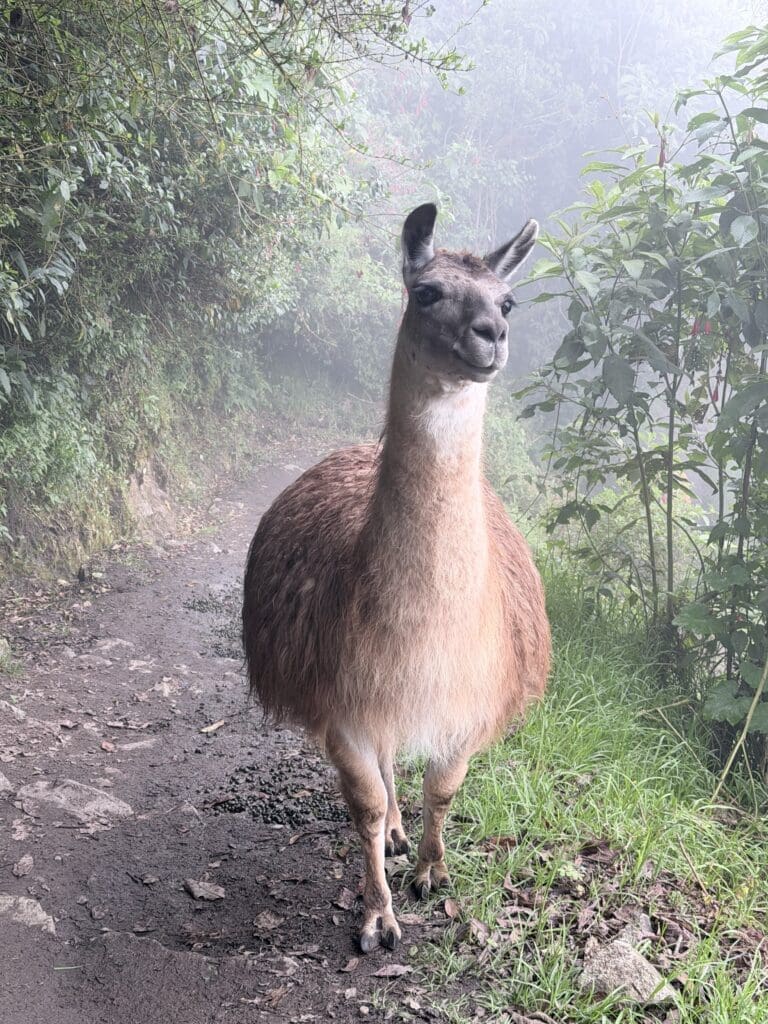
It started to rain, just enough to justify raincoats and add a little cinematic drama. Della lay down on a makeshift bench while plans were quietly adjusted. Two guides stayed with us while the rest of the group moved ahead. Then—like a small miracle—a fellow traveler produced Zofran. We gave Della a dose, and within a bit, she was able to keep tiny sips of water down.
From there, it became a rhythm. Five minutes, stop, sip, go. Kirby, one of the guides, carried Della’s backpack on his front and seemed to materialize instantly any time she needed water. The guides were calm, capable, and clearly calculating every possible contingency, including the one where they’d have to carry someone out. I tried to be helpful. Mostly, I hovered supportively.
We eventually cleared the worst of the climb and moved into rolling terrain. Then came the “Monkey Steps”—a steep, near-vertical section where you’re encouraged to use both hands and feet. It’s only about 20 meters, which sounds short until you’ve already hiked five miles uphill and your legs are filing formal complaints.
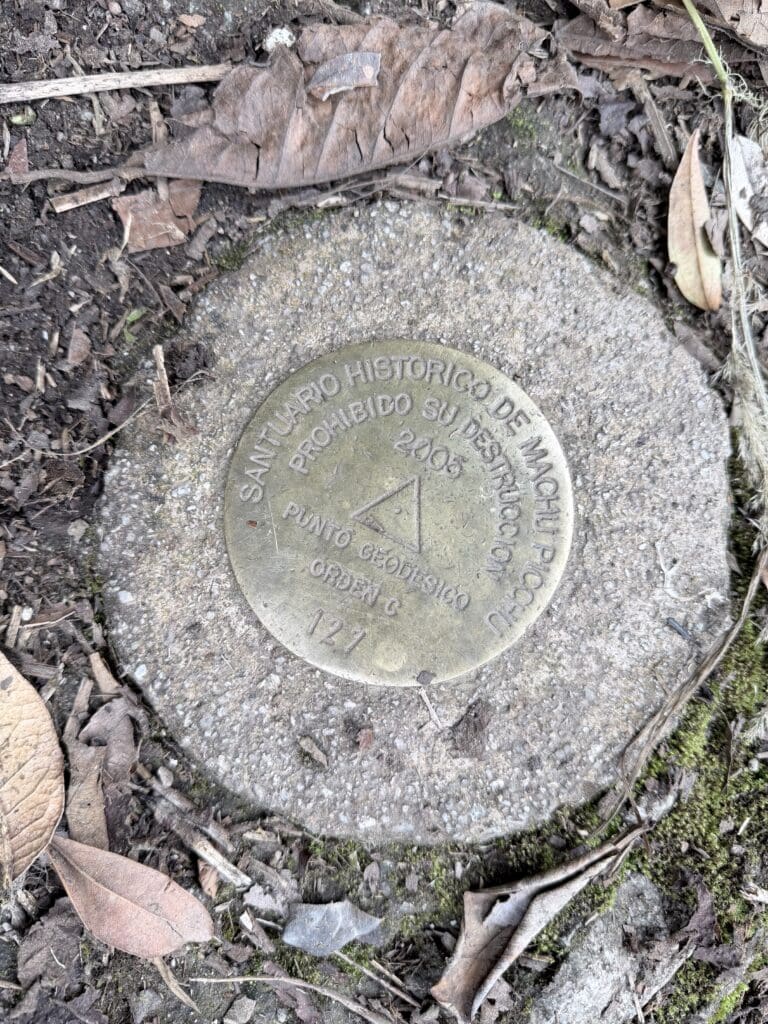
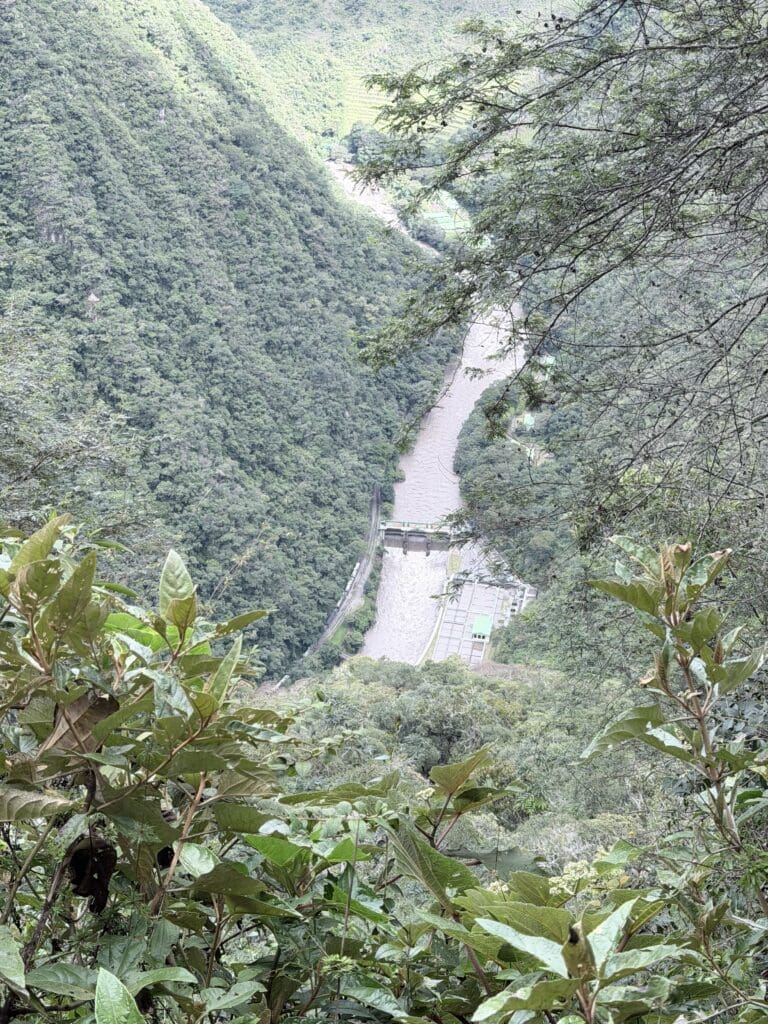
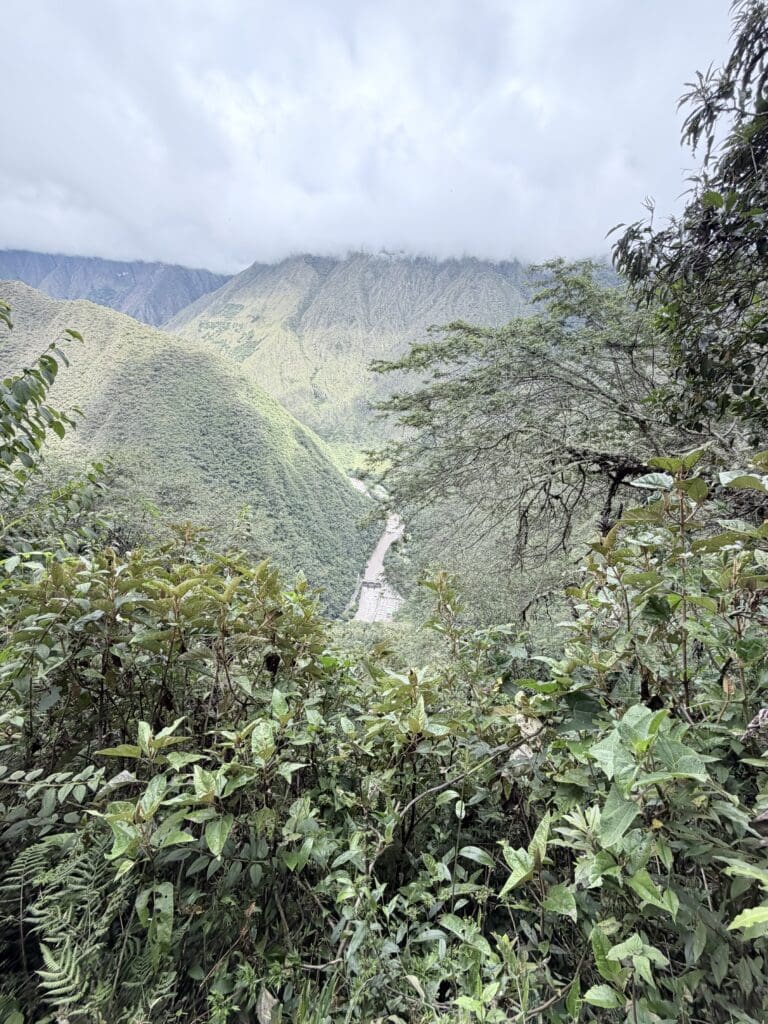
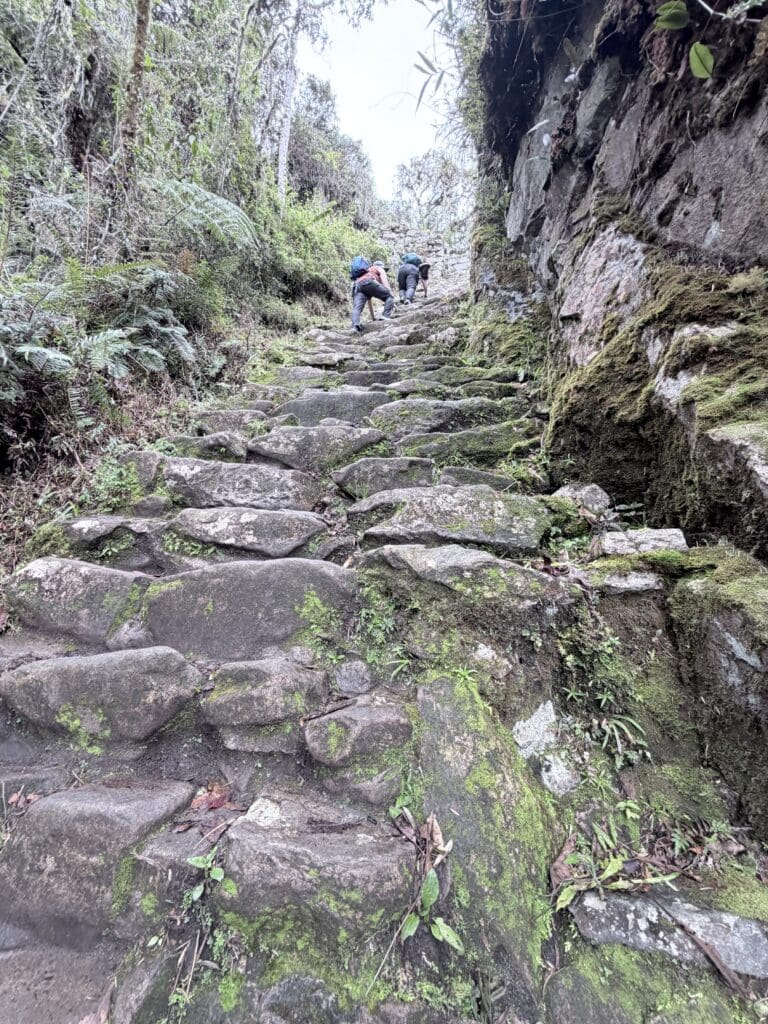
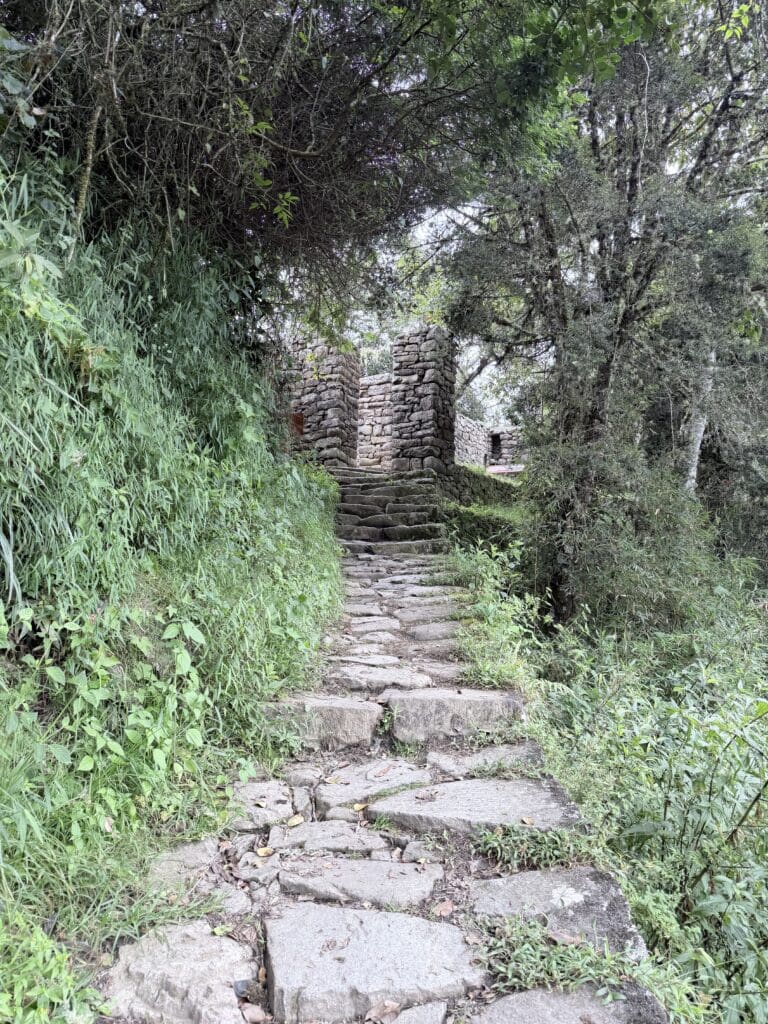
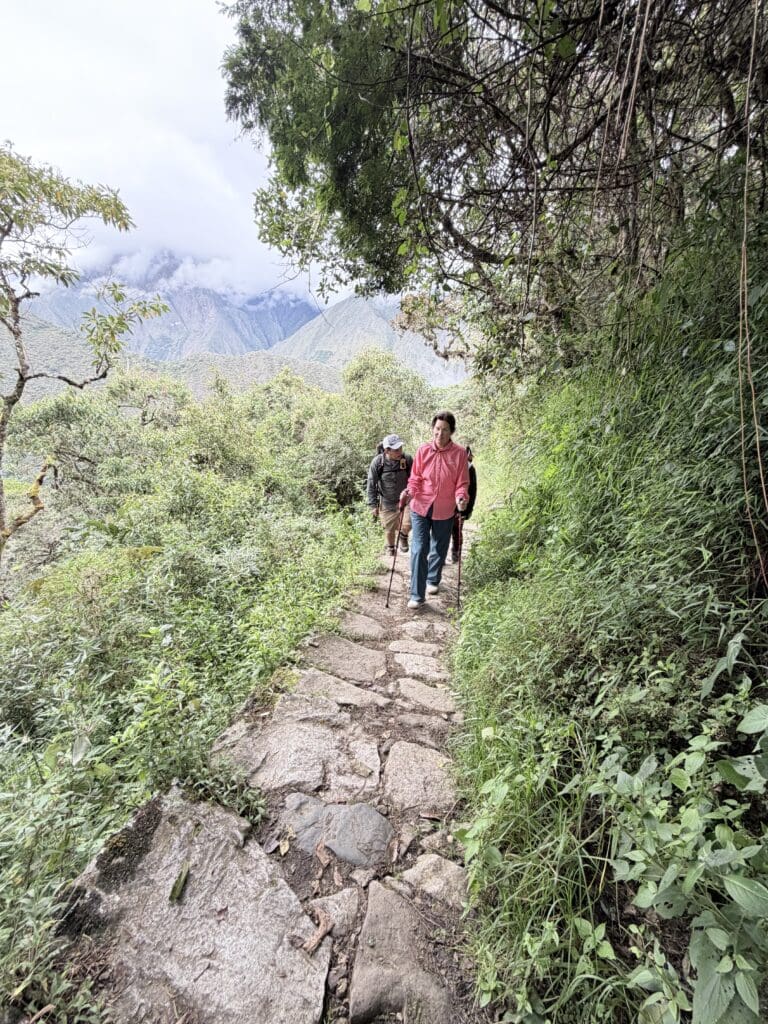
But by then, the Zofran had kicked in, and Della was holding water down. That felt like victory. And then—we made it. The Sun Gate.
We walked up just as the clouds parted, revealing Machu Picchu below like it had been waiting for its cue. Some of our group had been there for 45 minutes staring at fog. We arrived, and the curtain lifted. I’m not saying Pachamama was involved, but I’m also not not saying that.
We lingered just long enough to take it in before heading down. I offered Della candy, thinking sugar might help. This was optimistic. Shortly after, she got sick again. We gave her the last Zofran and began the final descent—about an hour, mostly downhill, over uneven stone steps that reminded your feet they had been through something.
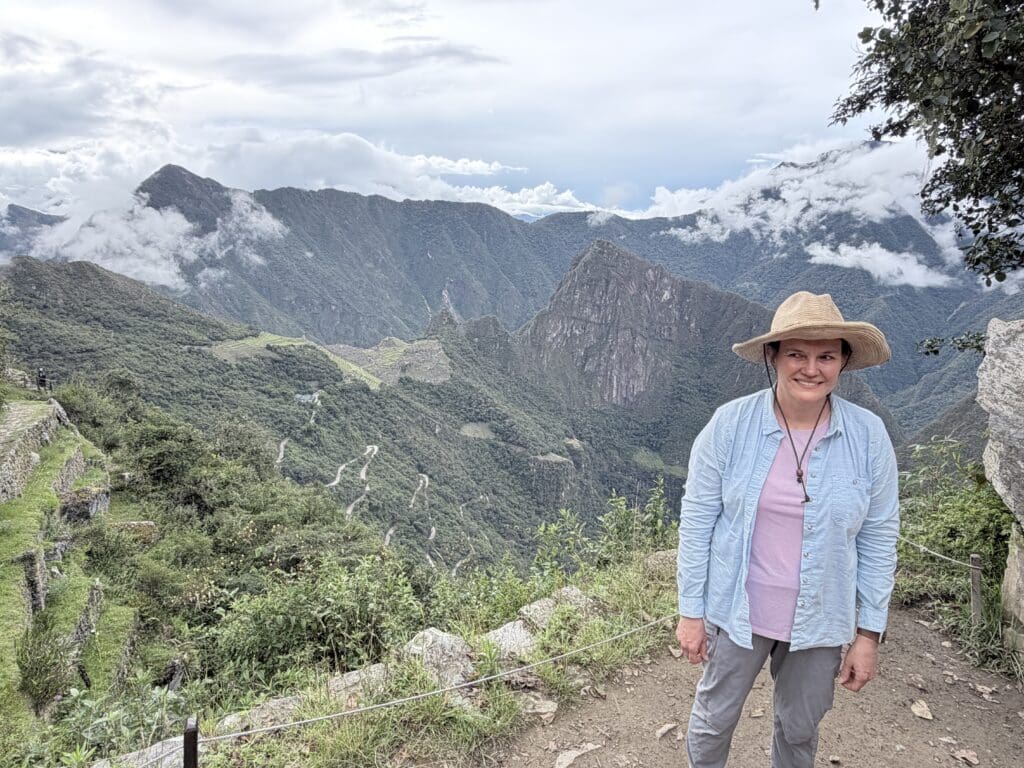
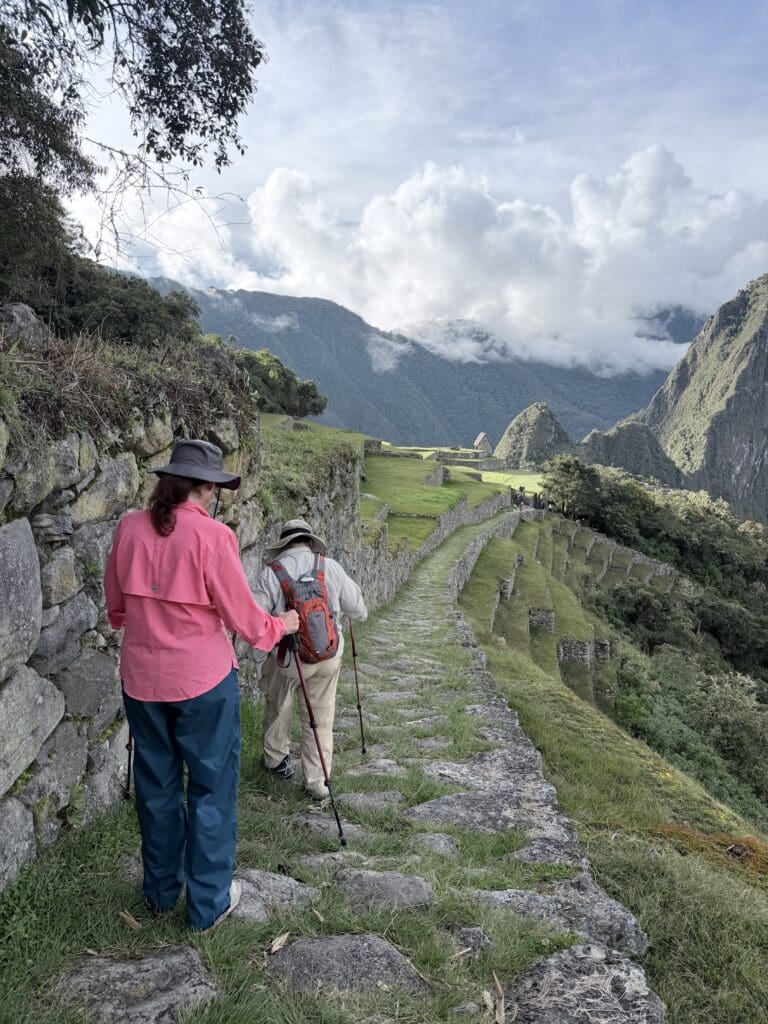
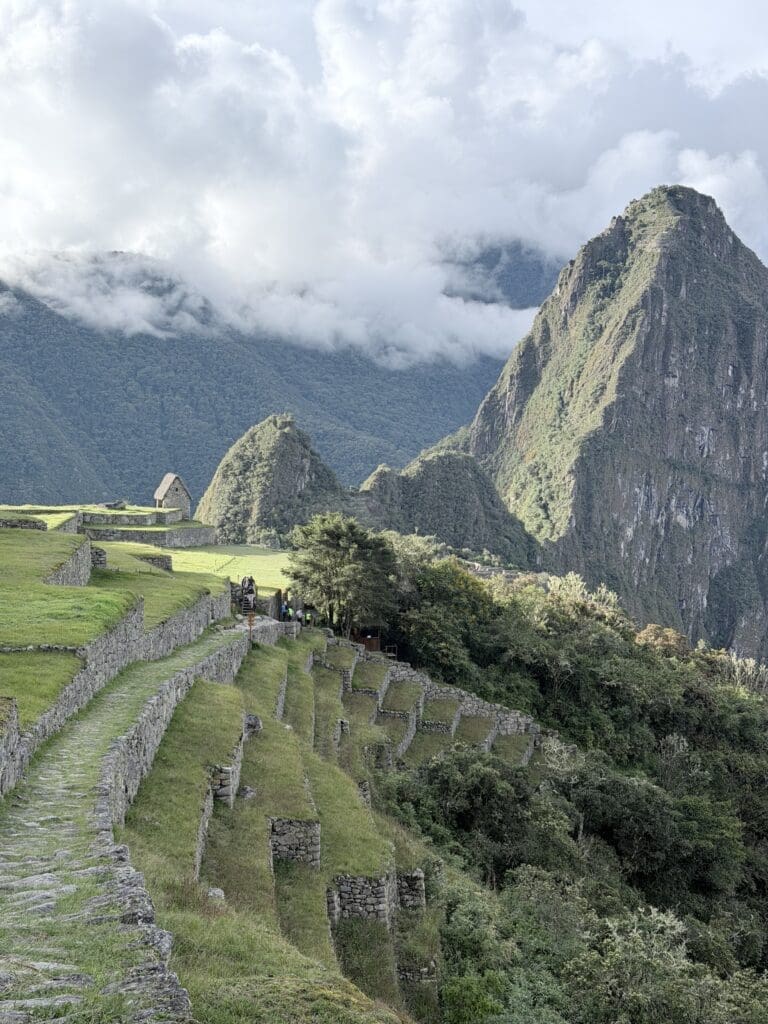
The clouds drifted in and out, the air cool and misty, and as we got closer, Machu Picchu revealed itself again. The weather, honestly, was perfect—just enough rain to keep us cool, just enough cloud cover to make it feel mystical rather than punishing.
And somewhere along the way, Della started talking again. Laughing even. Which felt like the real sign that we had made it.
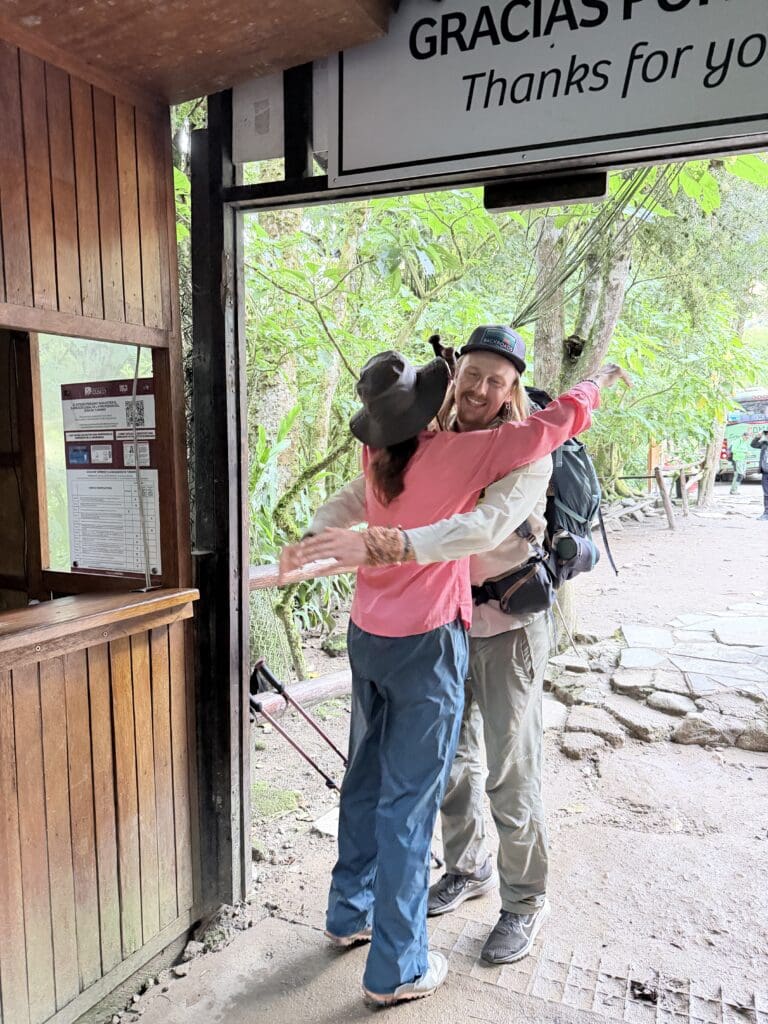
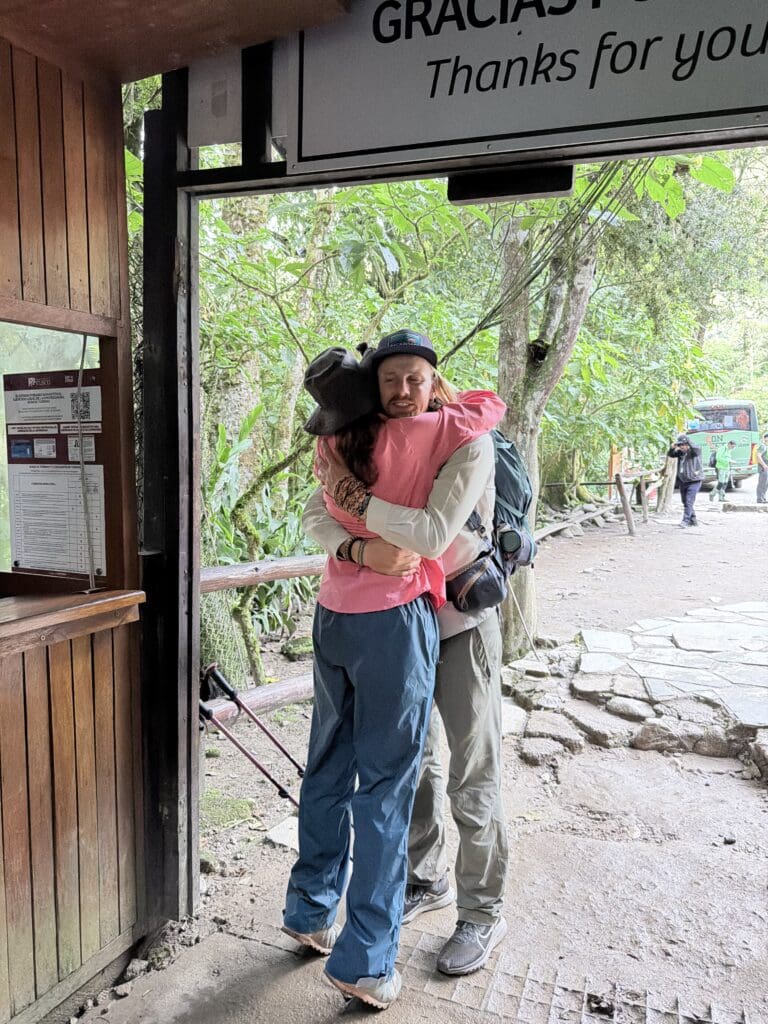
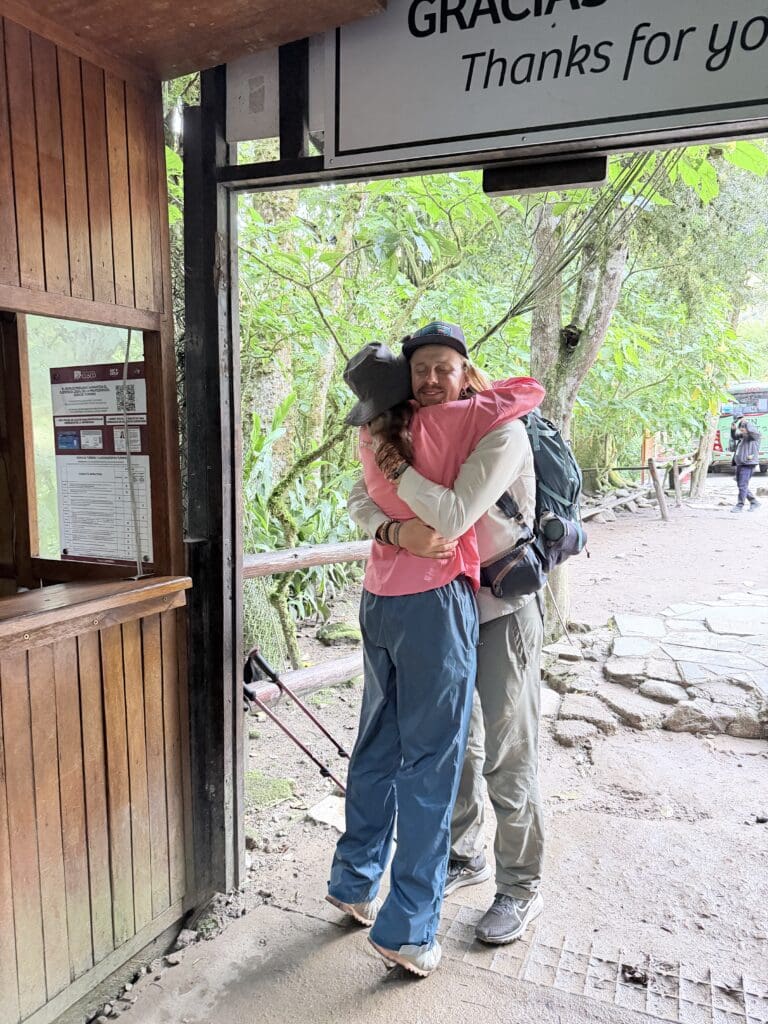
We walked down into Machu Picchu, caught the last bus to the town, and headed to our next stop: Inkaterra Machu Picchu Pueblo Hotel. The bus, of course, whipped down the mountain in tight, zigzagging turns—undoing in about 12 minutes all the elevation we had worked very hard over the entire day to earn. Once again down by the river.